Hudson Yards

Hudson

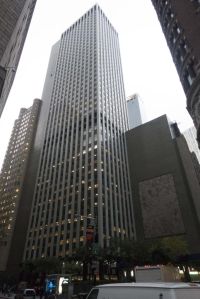
Time Warner ‘Leaning Towards’ Hudson Yards

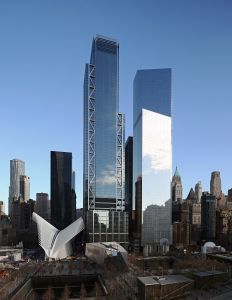
Time Warner is “leaning towards” selling its 1.1-million-square-foot headquarters at 60 Columbus Circle and moving to Hudson Yards, Following the cue from anchor tenant Coach, last month SAP and L’Oréal cut deals to lease 115,000 and 402,000 square feet at Related Companies’ South Tower, respectively, bringing it to 80 percent occupancy.

A media company with the influence and scope of Time Warner would be a game-changer for the Yards, some believe.

“The next tenant is an important moment for the district because it starts to build real momentum with tenants from other parts of the city,” Derek Trulson, a broker at Jones Lang LaSalle, who represents Extell Development Co. in leasing its site in the area, told the Journal. Read More

Stat of the Week

Power5

The Power 5: The City’s Top 5 Markets

In honor of this week’s Power 100 rankings of real estate professionals, I figured I would create the first annual Power 5 rankings of the top submarkets by year-to-date leasing activity. To make things even across all 17 submarkets, they are based on leases signed and renewed as a percentage of the submarket’s total inventory. So without further ado, here are the Power 5.

Read More

1Q13

1347978_19284953

Which Way is Up: Manhattan’s Market Boundaries are Beginning to Blur

From the outside, 222 Broadway fits the stereotype of the Downtown financial office tower.

But when Bank of America downsized, leaving roughly 250,000 square feet of space vacant, a series of tours guided by its new owner, L&L Holdings, quickly blasted that stereotype away.

Condé Nast committed to 80,000 square feet at the tower in early March. WeWork, which provides collaborative workspace for tech and media companies, was next in line. Read More

Postings

CO 3-19 Postings, Page 22

Lower Manhattan, By the Numbers

While the story in Midtown South over the past two years has inarguably been Class B and, to a lesser extent, Class C buildings and their increasing cachet among tech startups, the story in lower Manhattan is still all about Class A properties. With approximately five million square feet of new inventory coming online next year with the completion of 1 World Trade Center, the market will boast some of the most efficient and modern space in all of Manhattan.

More immediately, however, approximately two million square feet of space at the World Financial Center is expected to be made available by next month, thanks to lease rollovers by Nomura and Deloitte, among other major tenants. With such availability of Class A space, no wonder the asset class saw a 30 percent uptick in leasing from last February. Jonathan Mazur, director of research at Cushman & Wakefield, clued The Commercial Observer in on some other big statistical changes in lower Manhattan last week and gave us a sense of what’s to come in 2013. Read More

Obituaries

Sherman Cohen

Sherman Cohen, Real Estate Developer Who Transformed Third Avenue Into Residential Destination, Dies at 91

Sherman Cohen, the real estate developer who propelled Cohen Brothers Realty & Construction Corporation into the ranks of the city’s top development firms, has died.  He was 91.

Mr. Cohen, known for his quick wit and sharp dress, founded the company with his two brothers in 1959, later building it into a New York City mainstay along with his son, Charles Cohen.

“It’s the end of an era,” Charles Cohen said about his father.  “He pioneered new neighborhoods and improved the quality of life in so many communities across the city.  He built big residential buildings in areas where people at the time were not looking to build or live.” Read More

Post-Tropical Storm Sandy

2012-11-01 17.52.48

Prepare They Did, Yet Property Owners Hit Hard by Sandy

In the face of one of the worst natural disasters in the city’s history, commercial real estate landlords braced for Hurricane Sandy, employing every measure possible to hold property damage to a minimum and keep tenants safe.

But not even prophetic foresight could have allowed the city’s landlords—or New York City as a whole—to prevent much of the destruction that the mammoth storm wreaked across the five boroughs.

The road to recovery, especially in low-lying coastal areas like Staten Island, Coney Island and the Rockaways, will take months, if not years. Lower Manhattan went dark for days, with many companies largely shutting down due to power outages and salt water flooding, which is especially corrosive to mechanical equipment.

“It’s—It’s—It’s just a mess,” said Jordan Barowitz, a spokesman for the Durst Organization, who struggled to find words to describe the destruction in Lower Manhattan. Read More

Lower Manhattan

Financial West submarket.

Financial West Submarket Still Waiting, Waiting, Waiting for Market Boost

An improved transportation hub at South Ferry and the overhaul of Battery Park have yet to translate into gains for the Financial West office market.

The area west of Broadway and South Street and south of Albany and Liberty Streets had the lowest average rent and highest vacancy rate among downtown submarkets in the third quarter, according to Cushman & Wakefield. Read More

The Sit-Down

dfdfdfd

Cushman Retail Team Bullish on Lower Manhattan Leasing

The list of luxury retailers jockeying for space in Lower Manhattan the past several years, particularly along Wall Street, has been impossible to miss. The same holds true for investment in residential in the area, with Rose Associates taking on the former AIG headquarters at 70 Pine Street, 8 Spruce Street standing tall and the upper floors of the Woolworth Building even potentially on the verge of being transformed into luxury condos. All signs point to retail having a moment. Sensing the trend three and a half years ago, a team from Cushman & Wakefield installed itself in the middle of it all. Senior Directors Michael Stone and David Tricarico and Senior Associate Carl Wunderlich spoke to The Commercial Observer last week from their office at 100 Wall Street.

The Commercial Observer: Can you tell me a little bit about the retail team here?
Mr. Stone: We’ve been with Cushman & Wakefield a little over seven years, our team. About three and a half years ago, we were asked if we wanted to come down to the Wall Street office and establish a retail presence in our Lower Manhattan office. We have a strong office leasing component down here, and they’ve traditionally, for the past 40 or 50 years, dominated office leasing in Lower Manhattan, and we thought, based upon the fact that high-end retail deals were starting to get done on Wall Street and Broad Street, that it was a good idea for one of the big firms—and ours especially—to move a team down here. So we decided, because our practice area is really throughout the city, and we need some mobility and flexibility, that it was a good idea to assist the company in expanding retail. Read More

the lead indicator

Sam Chandan.

Managing the Risks of a Changing Lower Manhattan, Post 9/11

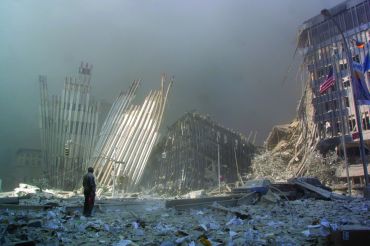
However long in coming, the Lower Manhattan that is emerging in the distant wake of that terrible day, September 11, 2001, speaks to our capacity for hard-fought renewal. Next to the rising icons of stubborn resolve, Downtown shines with new streetscapes, new hubs of transportation and a burgeoning residential population that is slowly lifting its environs from its erstwhile commitment to Brutalism.

Even with a tower at its heart, the Sidewalk Ballet is re-entering the downtown ethos, albeit under conditions that are more structured and punctilious than organic and spontaneous.

Lower Manhattan is decidedly a market in transition. The “purposeless giantism and technological exhibitionism” that Lewis Mumford called to account for “eviscerating the living tissue of every great city” is increasingly less apropos as a characterization of Downtown’s neighborhoods. The demographic shift facilitated by Liberty Bonds’s repurposing of under-tenanted office properties receives due credit. By all accounts, the last decade’s introduction of new residential space will support a markedly more livable community as office, retail and hotel inventory comes online. Read More

The Sit-Down

Janno Lieber and Serge.

Silverstein Properties’ Janno Lieber and Serge Demerjian Talk WTC

In the years it has taken to rebuild the World Trade Center site, Janno Lieber, a top executive at Silverstein Properties, has become the face of the company’s efforts to develop its collection of skyscrapers at the site. Serge Demerjian, a development and construction manager who joined Silverstein from the architecture firm Skidmore Owings & Merrill in 2006, has become a behind-the-scenes asset at the firm, leading its efforts to negotiate the site’s infamous complexities and rebuild the millions of square feet of commercial office space that was lost 11 years ago. Both men spoke to The Commercial Observer last week about all the challenges of building the towers. Read More

Lower Manhattan. (Photo courtesy of Joe Woolhead)

Are We There Yet? A World Trade Center Progress Report

The Silverstein Properties marketing center on the seventh floor of 7 World Trade Center has the air of a sacred vault. After entering past the sliding glass doors, visitors are greeted by a hallway lined with pictures documenting the World Trade Center’s sometimes contentious, sometimes momentous journey from somber graveyard to gleaming new development featuring state-of-the-art office space and retail.

Pictures depicting union construction workers at a 2010 protest and Larry Silverstein unveiling Jeff Koons’s balloon flower monument outside 7 World Trade Center compete for space with five LCD televisions broadcasting Silverstein promotional videos.

But the most effective marketing in the entire suite may be the building itself. Read More