

Trove Partners’ Ian Slater on New York’s Pied-a-Terre Tax and Owners’ First Moves
The residential broker, who works a lot in the city’s luxury market, said clients have reached their ‘wit’s end’ and are already looking to sell second homes
By Isabelle Durso July 30, 2026 11:20 am
reprints
Last week, the Mamdani administration made good on its promise to enact a tax on New York City’s wealthiest homeowners.
The city’s Department of Finance published an online database of more than 31,000 properties and property owners who might be subject to a new pied-a-terre tax. When the surcharge passed in May, city and state officials initially estimated roughly 10,000 properties would be subject to the tax.
While the list sent out last week doesn’t represent the final roundup of homes set to face higher levies, it does include several notable addresses — and notable homeowners.
Among the numerous billionaires, CEOs and business leaders on the list are Citadel CEO Ken Griffin — somewhat of a given — “Shark Tank” investor Mark Cuban, IMAX CEO Richard Gelfond and Blackstone CEO and co-founder Stephen Schwarzman. Several A-list celebrities also made the list, including fashion icon Anna Wintour, actor Cynthia Nixon, singer Taylor Swift, filmmaker Woody Allen and actor Alan Cumming. Former New York Times critic Nicolai Ouroussoff, international art dealer David Zwirner and journalist Julie Satow were also notable mentions.
As for properties, prominent luxury residential buildings and developments on Mamdani’s list included the Jenga Tower at 56 Leonard Street in Tribeca, Witkoff Group’s 150 Charles Street in the West Village, MetroLoft’s 443 Greenwich Street in Tribeca, Vornado Realty Trust’s 220 Central Park South on Billionaires’ Row, the One57 condo tower in Midtown, and 15 Central Park West in Lincoln Square.
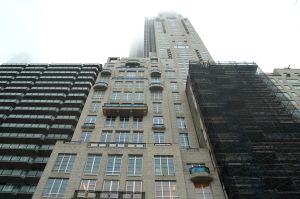
When it was first announced, the pied-a-terre tax drew sharp reactions from New York’s real estate industry with concerns about market disruption, flawed rules and political theater, but it doesn’t seem like the tax has affected the city’s luxury market just yet.
Still, the city began notifying homeowners by mail last week of their potential liability. And a lot of those homeowners are already ready to sell their second homes to avoid any headaches caused by the tax, according to Ian Slater, a real estate agent at Compass and co-founder of Trove Partners, one of Compass’ real estate teams.
“I’m having people definitely reach their wit’s end,” Slater said.
Commercial Observer caught up with Slater on Tuesday to discuss his clients’ reactions to the pied-a-terre tax, how it might affect the luxury market in the long run, and whether developers might scale back new luxury developments in the wake of the tax.
This interview has been edited for length and clarity.
Commercial Observer: You said your clients are already asking you to sell their properties, even though the list isn’t final yet. What exactly are they saying?
Ian Slater: This has been death by 1,000 cuts for a couple people. They’ve been keeping an eye on what’s happening with this. Obviously, the letters also went out at the beginning of this month. And now this list of 31,000 names is being released, and the mayor is telling people to check their mail. So it’s just drawing a lot of attention to it.
And I think that people before, maybe they were just starting to consider what this was and whether they qualified. Now, it’s starting to settle in that they do qualify, and they’re starting to quantify it.
Coupled with that is the fact that we’re coming up on the fall market, when people typically make the decision to list. New York is cyclical. We get a lot of listings in the fall and spring.
I’m having people definitely reach their wit’s end. I’ve had two people call me in the past two days and ask me for proposals. I have a whole group of people who have tenants that are toward the end of their leases, and instead of re-leasing it, they’re saying it just makes more sense to sell. It sort of moves up the timeline for that. And then I have a lot of buyers who are just keeping an eye on the market and who are maybe pivoting more toward renting.
Do you think a lot of people are looking to rent out their properties as opposed to selling?
The issue there is that on the high end — like really high end, where we tend to operate — people don’t really prefer to rent their space out. They want to have it sit empty, or sell it.
So I don’t get a ton of people on the super high end who are deciding to rent it out. Although I have seen more higher-end listings that have come to market. It was something sitting empty, and now they’re more incentivized to rent it out.
In terms of selling, there’s always multiple factors that go into making people sell. This isn’t like a COVID-19 time or 2008 time where it’s a crisis. It’s death by 1,000 cuts, you know, and for some people, that’s unbearable. They decide to move on, or they just have their options.
How do you see the pied-a-terre tax impacting New York’s real estate market in the long run?
I think that this is a bit to be foreseen. But what people are now is a little bit confused, and this new list is only adding to the confusion. Confusion is never good for markets.
The reality is that the pied-a-terre market is a very small portion of the market. But it tends to be the most pressworthy. It tends to be the highest end. So it’s what people talk about. However, the majority of the market is New Yorkers buying homes for themselves to live in as their primary home. So it really doesn’t change the market that much.
Whenever there’s a new tax in the market, there’s a chilling effect on the market. It’s just simple economics. People are going to be taxed more. They’re going to be willing to pay less for the apartments, and there’s going to be more sellers in the market, which theoretically will drive the prices down.
The question is, are there more factors driving the prices up? Like is New York in a golden age driving the prices up? Yes. Is the rental market being extremely high driving the prices up? Yes. Are all of the new IPOs driving the prices up? Yes. Any broker would be lying to you if they had a really clear vision of what it will do to the market, but I think, net, the market will probably be pretty much fine.
You’ll still continue to see banner sales, and you’ll still continue to see the prices generally climb. I think there will be a short period where the amount of contracts are going to go down, or maybe lag a little bit behind your typical number of contracts. But, interestingly enough, I’m getting so many strong requests for all of our listings right now. It’s typically a very quiet time of the year.
When pied a terre was announced, a lot of people were saying it was going to drive a lot of wealthy people away from New York. Do you agree with that?
It absolutely will drive people away. I have clients who have absolutely made the choice under Mamdani not to buy in the city or to leave the city. Hyper-wealthy clients.
So there’s no question: If you continuously target the rich, they are hypermobile. Eventually they will break, and they will leave, and they will take their tax revenue with them. Some people value the schools in New York more than others. Some people value the culture in New York more than others.
Frankly, my name is on that list. I’m a full-time resident. But I personally value the schools, culture, career, climate, transportation, social network too much. It would take a lot to tax me out of the city.
But, if you’re of a certain wealth level, and if your job isn’t inherently tied every day to New York City, you’re free to bounce. And I have people who have. I think it’s going to be a hard thing to actually track. I think once we see the tax rolls at the end of next year and two years, we’ll start to be able to quantify it a bit.
Do you think most people will just take the tax?
I think most people will just take it.
New York always had publicity laws. It’s not like nobody knew where I lived before. They googled my name. It’s on the internet. It’s in every single property record. That didn’t change.
The list is just drawing attention to what the values are, for sure. In an era of growing resentment of the wealthy, that’s not going to make certain people comfortable. This list is creating confusion, because people already didn’t know if they owed this tax or not, and now they are further confused and are on this list that’s being circulated.
As a New Yorker, I’m extremely conflicted on the tax. As a broker, I’m very against the tax. There’s a lot of people in New York who use their apartments part-time and don’t pay into the tax rolls. So I understand where the drive behind this is. At the same time, I think that if those people dump their pieds-a-terre, it will net out less taxes for the city overall.
At the end of the day, it’s more of a political stunt to appease the base than it is to actually raise money. I think it’s been tried multiple times in the past, and finally Mamdani had to fill a budget gap and was able to get the state to break on it, and has been successful now. I can’t really foresee how it helps us in any way build affordable housing or pay for any other services, but I guess their vision of perfection is the enemy of progress.
So we’ll see. But I do think that if you have several billionaires leave the city and stop paying into it, you kind of get rid of that tax base really quickly, and all of a sudden you’re a little bit worse off than you were before — a lot more confusion and anti-business sentiment, which ultimately will net drive down property values across the board.
Do you think a lot of developers will scale back new luxury developments because of this?
It’s a good question.
The demand for very prime high-end property has not shifted that much. I still think developers are going to be building very large four- or five-bedroom apartments. If you look at some of the recent buildings that have been built — like 1122 Madison Avenue, 80 Park Avenue, 140 Jane Street — these huge apartments sold out basically off-market at huge numbers.
It’s still the most rewarding structure for a developer, and it’s where most of the demand still lies. I don’t really see that demand growing up enough to make them build smaller apartments. I do think there is an argument for building more in the $3 million to $5 million range and keeping it under the top pied-a-terre tax limit because it just avoids that question for buyers.
Isabelle Durso can be reached at idurso@commercialobserver.com.


