New York City’s Pied-a-Terre Tax Hasn’t Affected the Luxury Market — So Far
Sales are actually up after that controversial video by you-know-who proposing the levy
By Amanda Schiavo June 24, 2026 11:42 am
reprints
Pied-a-terre tax scare? Au contraire! For now at least.
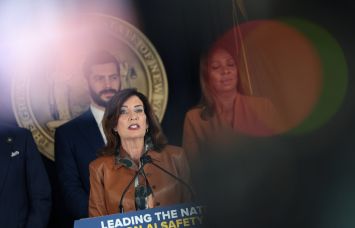
On May 26, the New York State Legislature enacted a tax targeting the wealthiest homeowners in New York City, a group that Mayor Zohran Mamdani and Gov. Kathy Hochul feel haven’t been paying their fair share.
In an effort to get wealthier Gothamites pony up so the city can fund things like free child care and cleaner streets, an amendment to Article 30-C of the New York State Tax Law was added to tax city homes not listed in tax filings as primary residences. There are two phases to this tax law, which sunsets on June 30, 2031, and applies to owners of one- to three-family residential properties, stockholders in co-operative buildings, and condominium unit owners.
Phase one, which runs July 1, 2026, to June 30, 2028, levies rates between 4 percent and 6.5 percent on properties with an assessed value of $1 million or more. Phase two, which runs from July 1, 2028, to June 30, 2031, means a yearly fee on a second (or third, or fourth, etc.) home worth over $5 million based on the price.
The tax, after adjusting for the disconnect between assessed and market values for co-ops and condos, is expected to raise $500 million for the city, according to an analysis by New York City Comptroller Mark Levine.
And while the city may — or may not, depending on whom you ask — benefit from the pied-a-terre tax, the overall consensus among the real estate industry and adjacent fields is that targeting the city’s big spenders isn’t a good plan, and has the potential to drive them away. It “may ultimately prove to be one of the most disruptive pieces of real estate legislation New York state has passed in years,” Bob Knakal, chairman and CEO of investment sales firm BK Real Estate Advisors, wrote in Commercial Observer in early June.
“We can have a debate on whether or not this will deter purchases in New York — every state has separate tax structures for residents versus nonresidents,” said Alexander Goldfarb, managing director and senior research analyst at investment and securities firm Piper Sandler. “The bigger issue is just the attack on the rich. These people are willing to spend a lot to buy an apartment in New York, and they tend to be big spenders. They’re going to be doing everything that pumps a lot of money into the economy. So do you really need to hit those people up and single them out?”
When the tax was first proposed in the spring, there was an initial knee-jerk reaction that the law would result in luxury developers and buyers avoiding New York City like the plague, not wanting to be unfairly targeted and taxed, especially given the way Mamdani announced the planned tax.
In an online video, Mamdani stood outside Citadel founder Ken Griffin’s apartment at 220 Central Park South, calling out the billionaire, and saying it was time for those with the most to contribute more to the city.
“This is an annual fee on luxury properties, worth more than $5 million, whose owners do not live full-time in the city,” Mamdani said in the video, before turning and looking up at the residential tower where Griffin owns a unit. “Like this penthouse, which hedge fund CEO Ken Griffin bought for $238 million. This pied-a-terre tax is specifically designed for the richest of the rich, those who store their wealth in New York City real estate, but who don’t actually live here.”
The video resulted in a public feud between the mayor and Griffin, with the latter’s company casting doubt on whether it will continue with its planned 1.9 million-square-foot office tower at 350 Park Avenue, which Citadel is building in partnership with Rudin and Vornado Realty Trust.
The feud highlights a key point of Mamdani’s campaign, but the irony is — and industry legends agree — that had the mayor not shouted the tax from the rooftops, it likely would have gone unnoticed. (But, then, how would Hizzoner’s constituents find out?)
“If the mayor had kept this quiet, and didn’t point out to the people where Griffin lives, and made a big deal out of it, it probably would have gone under the radar,” said Stuart Saft, a partner with law firm Holland & Knight. “Somebody that wealthy isn’t really following things that closely, but then he blasted out about taxing the rich, when in reality anybody who has a high income in New York is paying 50 percent of their income in city, state and federal taxes, and so he’s not really taxing the rich, he’s taxing the highly paid. … They’re taxing you based upon the value of your home.”
Nicholas Rochedieu, a partner with PKF O'Connor Davies, is of a similar mindset.
“It got the right people’s attention,” Rochedieu said. “I think had it been quiet and people realized this is just an incremental add, it wouldn’t have made headlines. The right people would have figured it out, and it would have still caused a problem, but it wouldn’t have had that 15 minutes in front of the news cameras.”
When you clear away all the headline smoke, and close your ears to the sounds of politicians and billionaires snipping at one another, the pied-a-terre tax, while unpopular — and downright hated by some (Saft called it an “ugly” thing) — hasn’t yet put a stop to luxury second and third home sales in New York City.
From May 25, just after the Mamdani video, through June 21, 2026, there were 131 contracts signed for Manhattan residential properties valued at $4 million and above, according to Olshan Realty’s luxury market reports, which tracks signed contracts. Between May 26 and June 26 of 2025, there were 126 contracts signed.
During the week of May 25 to May 31, Olshan reported that there were 32 contracts signed, three more deals than the week prior, while June 1 to June 7 saw 36 contracts signed. There was a drop-off for June 15 to 21, with 28 contracts signed, but Olshan noted that this was a shorter holiday week.
But the tax hasn’t taken effect yet, and Saft said it isn’t a matter of what’s happened since it was announced, but rather what will happen during the rest of the year and beyond.
“The tax only was enacted two weeks ago, and it’s effective July 1,” Saft said. “So, people who already had contracted to buy an apartment couldn’t back out in two weeks. The question is, what’s going to happen in the next six months?”
“I think there is going to be less development,” Saft said, when asked to look down the road at the impact the tax could have. “We’ve already reduced the amount of affordable residential development, because these geniuses don’t think that developers should be allowed to make money, and that everything should be done with union labor. So we’re really at a low point in development there. The only development that was going on was expensive condos.”
The pied-a-terre tax will hit in two waves, the first in just a few days, and the second in a few years. While luxury sales and development haven’t been negatively impacted yet, experts agree it is a matter of wait and see.
Amanda Schiavo can be reached at aschiavo@commercialobserver.com.