New York City Housing Development Now Hinges on Certain Trends: Forum
Leaning on South Florida isn’t one of them — public-private partnerships and tax incentives are
By Larry Getlen June 1, 2026 5:10 pm
reprints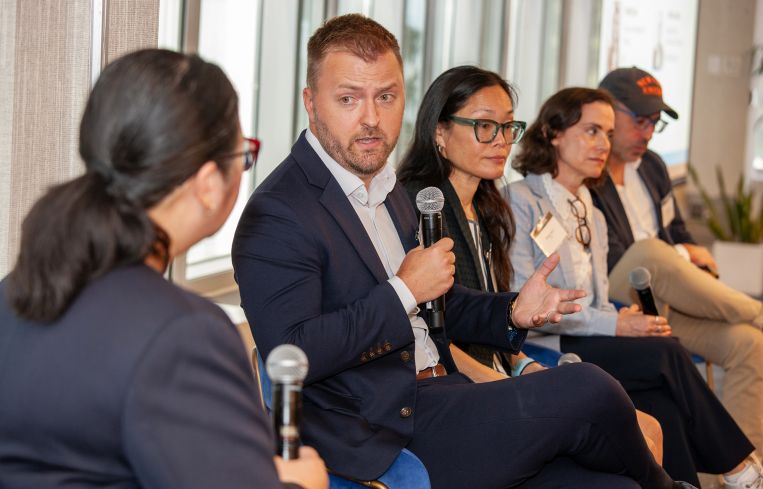
Since the election of Mayor Zohran Mamdani — and even before — much of the New York commercial real estate industry has been singing Florida’s praises as a low-tax haven that will prioritize business above all else, allowing developers to build, grow rich, and live without interference from local governments.
Every story has at least two sides, though, and the downsides of the Sunshine State often go unmentioned.
For one, Miami’s mayor, Eileen Higgens, is preparing a budget that includes across-the-board city service cuts of up to 25 percent should Gov. Ron DeSantis’s proposed reduction — and, for some, elimination — of statewide property taxes go through. The mayor’s proposed cuts would close public parks and cause massive reductions in services such as police and fire response.
But Miami also comes with a direct downside for developers: For all the bureaucracy developers and builders face in New York City, Miami’s can be even worse.
“In New York, when you know what you’re doing, you can get a building permit, or at least the foundation permit, between 12 to 14 months. In South Florida, it takes anywhere between 24 to 28 months if you are on top of it every single day,” Miki Naftali, chairman and CEO of Naftali Group, said at Commercial Observer’s Residential Forum held May 28 at Convene’s space at 601 Lexington Avenue.
“We’re building JEM, a 70-story, 1.6 million-square-foot building in Miami Worldcenter, and we’re investing over $600 million,” said Naftali. “If someone is investing over $600 million in a city and the zoning is residential, if you file for a permit and do everything right, you should get a permit. But there is a planning board. They have an opinion. They can tell you, ‘Oh, I don’t like this corner, I don’t like that corner,’ and someone sitting over there is trying to tell you how the building should look when you invested $600 million. That was a surprise.”
The Commercial Observer forum featured speakers from all ends of the residential spectrum tackling the subject of housing in New York City from all angles, including debating the negatives and positives of Floridian alternatives.
After the first keynote session of the day, which found Naftali being interviewed by Stuart Saft, a partner at Holland & Knight, the event broadened the narrative with a panel on the overall state of the market.
Moderator Andrew Wachtfogel, co-founder and managing principal at sales and advisory firm Redeavor Group, welcomed Jay Roberts, founder and CEO of developer Prosper Group; Elysa Goldman, senior vice president of development for developer Extell Development; Genghis Hadi, co-founder and managing principal at Nahla Capital; Ray Houseknecht, executive vice president of operations and head of residential for owner Rudin; and Ravi Kantha, founder and principal of the Kantha Team at brokerage SERHANT.
As the discussion turned to the subject of New York’s impending pied-à-terre tax, Hadi expressed both the belief that the damage it causes will be minimal and distress for what it could mean in a larger context.
“I think these laws will be built with sufficient loopholes that buyers will not actually feel the effect of it. However, it is not a positive,” said Hadi. “If we zoom out from the pied-à-terre tax itself, the trend we’re seeing, and the reason for our significant investment in a place like Florida, is a trend of buyers moving from tax-unfriendlier states to the tax-friendly states. That’s the bigger picture I take away from this.”
While Hadi went on to say that New York is, and will remain, the most powerful city in the world, and that those who want to be here will remain here, Roberts noted the disparity between in-migration and out-migration figures in these states.
“Ten years ago, New York City had 8.5 million people. Today, New York City has 8.5 million people. Ten years ago, California had 39 million people. Today, California has 39 million people,” said Roberts. “Ten years ago, Florida had 20 million people. Today it has 23.5 million, 16 percent growth. And, in the last five years, Florida’s also added $42 billion of taxable revenue.”
Hadi said that better communication and cooperation between the private and public sectors will go a long way toward building the housing New Yorkers need.
“I started my career in Low-Income Housing Tax Credits. They work,” said Hadi. “Housing gets built when the government engages with the private sector, and that’s all we ask for. Engage with us in a way that works so we can help you fix your budget issue.”
The next panel focused on how to make development conversions profitable, and what they mean for New York City neighborhoods. At least, that was the bulk of the discussion.
When moderator Jason Hershkowitz, a partner at Belkin Burden Goldman, asked the panel for parting thoughts about the city’s new mayor and his administration, panelist William S. Macklowe, CEO of the William Macklowe Company, hit back with a rant that had the assemblage in stitches.
“I think it’s great,” Macklowe said. “He’s really doing terrific things for the city. He’s really embracing business, and he’s saying our doors are open. We want capitalism, we want business, we want New York to survive as a city. And then I woke up.”
Macklowe then (mostly) dropped the sarcasm and let the room know how he really felt.
“Seventy million dollars to build a free grocery store is insanity,” Macklowe said. “There are no free buses. A rent freeze will be great, because if anybody here… I’m old enough to remember the `70s — wasn’t great. It’s going to take us back in time. So, there’s a wonderful retro appeal. What he should be thinking about is how to approach the city like a business. Proper fiscal governance, run the city like a business, don’t bloat it, and understand that New York City real estate taxes are 39 percent of the budget. That’s a lot of money. We don’t need to add taxes onto that to chase people away.”
Macklowe earlier said that New York’s 467m, which provides tax incentives for conversions to residential, is a rare instance of smart governance. “On a pure business case basis, conversions make a lot more sense than ground-up,” said Macklowe. “There’s a much lesser degree of execution risk, notwithstanding complicated floor plates.”
Macklowe noted that for developers considering ground-up development in New York, the 485x property tax incentive adds complication and risk, whereas 467m eases the path to conversions.
“467m, along with City of Yes, is one of the few examples of smart governmental policy,” said Macklowe, referencing the recent zoning overhaul. “It’s much more beneficial to convert under 467m than to take risks with 485x. It helps expand the fabric of one of the greatest cities in the world, and it brings live, work and play integration into central business districts. That’s what ultimately contributes to sustained economic vitality.”
The panel also featured thoughts from Joshua Benaim, founder and CEO of Aria Development, and Daniel Berman, executive director of MetroLoft, which has been a major force in New York conversions.
The general agreement with Macklowe’s statements about 467m was so strong among the panelists that Benaim used a famous Winston Churchill quote to express his feelings on the trend.
“For adaptive reuse and residential conversion, I like to think of it the way Winston Churchill famously quipped about democracy: It’s the worst form of construction except for all the others,” said Benaim. “It’s challenging, it’s very difficult, but it’s the coolest in my view.”
Next came a fireside chat where Max Gross, editor-in-chief of Commercial Observer, spoke with Frank J. Monterisi Jr., executive vice president at developer Related Companies.
Discussing the company’s Willets Point project in Queens — which, along with Sterling Equities, finds Related developing 2,500 units of affordable housing in addition to the city’s first soccer-specific stadium, a 250-room hotel, an elementary school and 40,000 square feet of public space — Monterisi described it as “stitching that part of New York into modern-day New York.”
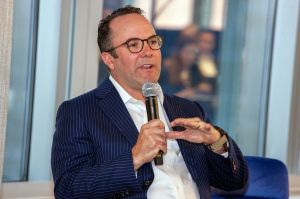
“It’s completely reimagining what was a sea of parking into something else,” said Monterisi. “If you think about economic development in New York, it’s certainly one of the greatest examples in the last few years of growing the pie.”
Monterisi also cited the project as an example of a strong public-private partnership, and an example of why those partnerships are so important in New York City development.
“The folks at [the city’s Economic Development Corporation] that I’ve worked with over the years, and at HPD and HDC and in the mayor’s office, it’s one of those things where everybody has to be pulling in the same direction,” said Monterisi, referring to the Department of Housing Preservation and Development and the city’s Housing Development Corporation. “That’s how you really get complicated projects like that done in New York.”
To that end, Monterisi said that he thought the Mamdani administration was headed in the right direction for getting these sorts of projects moving forward.
“He put out a housing plan a few days ago that was really thoughtful,” said Monterisi. “He’s being bold and ambitious about what he wants to do, and he’s brought some great people into his administration, like his deputy mayor for housing and planning, Leila Bozorg. She’s been in the housing world for years, and she really knows how to get things done. What I have found over the years is that having good partners on the public side when you’re a private developer is a huge part of the equation.”
That said, on the topic of 485x, Monterisi said that Related will not be building any 99-unit buildings, but rather will wait for the legislation to get fixed or modified.
The next panel dealt with how developers design residential spaces with lifestyle in mind, and what sort of amenities attract today’s New Yorkers.
Moderator Samantha Sheeber, managing partner at law firm Starr Associates, spoke with Jason Hill, director of marketing at developer Domain Companies; Elizabeth Koutsoubis, associate principal at architecture firm KPF; Sophie Scott, vice president of leasing and marketing for Fetner Properties; and Anna Zarro, president and principal at conversion One Wall Street and marketing firm AZ & Co.
Scott noted that the COVID-19 pandemic changed the way people in the city thought about the very nature of their apartments, giving amenities a renewed importance.
“Prior to COVID, there was an assumption that people live outside their homes,” said Scott. “So, if you’re in the city, you want to experience the city. You’re not going to cook at home, you’re going to do XYZ outside the home, and so for a while there were smaller spaces, smaller appliances, etc. COVID changed the way people live. The expectation became, ‘I will be cooking from home. I do need space for a desk. I do want bright open spaces.’ Amenities have a greater importance, but also the intentionality behind them.”
The day’s final panel addressed the changing playbook for workforce and affordable housing in the city.
Miriam Harris, head of transit-oriented development for the Metropolitan Transportation Authority, noted that the phrase in her title is becoming more of a buzzword in city discussions around widespread development.
“Our zoning-for-accessibility program allows private developers to get as much as a 20 percent bonus on their property — that’s 20 percent more housing — to create elevators and accessible stations,” said Harris.
Harris was joined on the panel by Noah Hale, managing director and head of development at developer Fairstead; Jennifer Sun, executive vice president of planning at the New York City Economic Development Corporation; John Valladares, managing director for development and affordable for Slate Property Group; and moderator Sheila Pozon, partner at Herbert Smith Freehills Kramer.

The event’s finale was a fireside chat between moderator Kelly Mack, president of Corcoran Sunshine Marketing Group, and Victor Sigoura, founder and CEO of Legion Investment Group.
Mack noted that in a sparse, low-inventory market, Sigoura has managed to spearhead three massive projects in some of the city’s most sought-after neighborhoods — 1122 Madison Avenue, 38 Gramercy Park East and 11 West 13th Street.
Sigoura said that while developers turned their collective attention to Florida post-COVID, he kept his attention here.
“We stayed focused,” said Sigoura. “We said, ‘Look, New York is New York. It’s the greatest city in the world, and with these kinds of supply and demand dynamics, we should stay home and focus here.’ So we did that.”
Larry Getlen can be reached at lgetlen@commercialobserver.com.