Cassie Durand of CBRE: 5 Questions
By Mark Hallum January 30, 2026 3:41 pm
reprints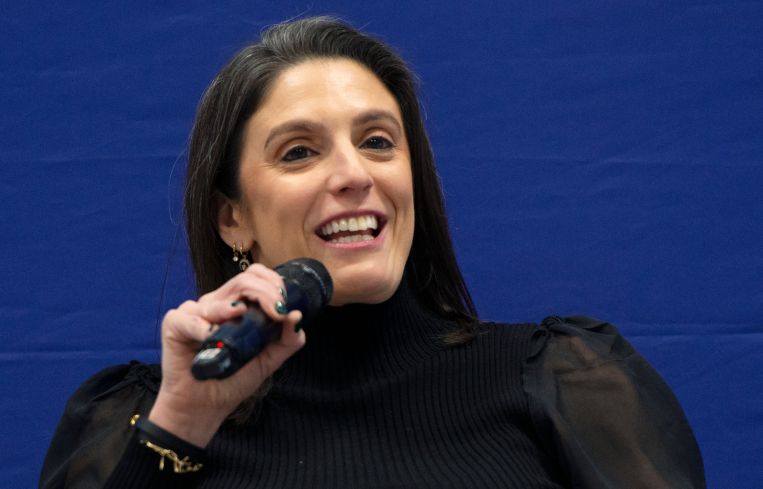
Cassie Durand, executive vice president at CBRE, has spent the last 14 years taking the firm’s retail brokerage business in an unconventional direction, so much so that the term “broker” seems to downplay the services she provides to her clients.
Durand helps tenants such as spa and bathhouse chain Othership build out a nationwide presence, as she helped the company expand to New York City from Canada in 2024. Durand has found a niche with clients that aim to deliver an experience rather than a product.
Durand’s team doesn’t just help find space for global brands and early-stage entrepreneurs, they also work alongside their clients as part of their team. Her team follows a macro approach to major expansions in tandem with clients’ business plans and funding abilities.
One strength Durand sees in the brands she has been working with since the pandemic has been less reliance on products imported from abroad. Importing products from overseas has been hectic over the years amid shipping constraints and tariff threats, exposing the expense and risk of building out space and installing necessary infrastructure (like improved water supply and electricity).
Recently, Durand negotiated leases for digital-based fitness program Hero’s Journey, which signed a 17,941-square-foot lease at CIM Group’s office condominium at 225 Fifth Avenue in mid-January, and immersive arts and entertainment company Meow Wolf, which signed a deal at Seaport Entertainment Group’s Pier 17 for 75,000 square feet in March 2025. She also completed a 10,730-square-foot lease for an Encanto experience in Northern Virginia in 2023.
Durand sat down with Commercial Observer in early December to discuss her team’s recent work and the hurdles of bringing global brands to the U.S.
This interview has been edited for clarity and length.
Commercial Observer: How has your team evolved over the years to suit the changes in the retail market?
Cassie Durand: I was always extremely interested in the global marketplace, and early on in my career I developed a deep, global network within the real estate and retail industry. I spent a lot of time on the ground in markets like London and Paris, getting to know my colleagues but also the retailers local to those markets.
Over time, that’s developed into a really important and fun part of our business where we help global brands launch their U.S. businesses.
Coming out of COVID-19, I had the opportunity to reset how my team was structured, and I really had to consider what my clients needed the most, and that was information and confidence, and how they’re going to put their best foot forward.
At that point, I brought on an incredible location intelligence strategy resource onto my team as a dedicated resource to my clients, and that’s been a huge differentiator in how we service our clients.
Tell me about how you’ve strategized bringing these global brands into the fold of the New York City and U.S. markets.
The business that we’ve built in New York has become a very natural extension and evolution into having a national advisory arm to our business that is often global in nature as well. A lot of times what happens with a global brand, or any concept, is looking to launch in an impactful way. It will usually happen in New York.
At that point, we are working with founders and CEOs with no real estate department. We’re an extension of their team, which puts us in a position to be truly strategic advisers to our clients from day one.
I think that has become a critical component to success because there’s so much that’s unknown. Being able to tell them more than just say ’Here’s the asking rent and the possession date,’ but provide all the analytical, demographic reasons why this makes sense for you. Here’s the traffic information to validate your decision, and here’s recommendations for your construction team, project manager, your building engineer and your attorney.
All those extra things that have nothing to do with the deal itself have been a needle-mover in our process with those types of clients.
How does looking at their footprints abroad tell you how they’ll perform in the U.S. markets?
I think what is helpful given our very broad, global perspective is that we’re actually able to compare how things work in the U.S. to how they work at home.
I can see our clients light up because it’s clicking for them and feels more digestible, tangible and less overwhelming when they feel like they’re not missing anything.
What are some hurdles of finding and leasing space for clients like Othership, which have a unique set of requirements for locations?
There are a ton of zoning requirements and occupancy to contemplate for clients like Othership, so it’s quite layered and complex, and the reality is that it will certainly work differently than where they did their last deal.
There are a lot of potholes to step in, so we hand-hold extremely tightly when the requirements are as complex as an Othership to make sure we spot those blind spots early to soften that learning curve.
But it requires a significantly more sophisticated approach to vetting real estate, because if we just walked our client into a space simply because it had the right square footage and ceiling height … . We really try to go 10 levels deeper to make sure that we’re showing actual real estate and are using our time wisely before we go to lease.
I think just a lot more due diligence is required and knowing what the right questions are to ask to uncover potential challenges.
It sounds very much like a special forces approach to brokerage.
That’s why I use the words “consultant” and “strategic adviser” much more often than I do “brokerage,” because I think brokerage is just one piece of what we do, and I think those words do a much better job of capturing our true value.
Mark Hallum can be reached at mhallum@commercialobserver.com.