Paul Goldberger On the ‘Fundamental Messiness’ Behind New York’s Success
The architecture critic, whose new book lays out how imperfections define great cities, talks about his favorite recent New York projects and the commercial real estate industry’s role in architecture today
By Larry Getlen November 17, 2026 7:00 am
reprints
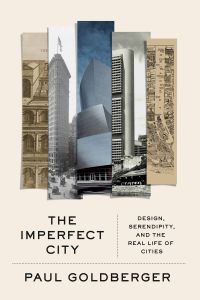
In his new book, The Imperfect City: Design, Serendipity, and the Real Life of Cities — released through Knopf on Nov. 17 — Pulitzer Prize-winning architecture critic Paul Goldberger makes the argument that the world’s greatest cities are those that find just the right serendipitous balance between laissez-faire development and government planning and regulation.
Commercial Observer held an in-depth conversation with Goldberger about how this applies to New York City, including how both local government and the commercial real estate industry are contributing to the city’s continued greatness, and how both could do even better.
This interview has been edited for length and clarity.
Commercial Observer: This book is about how the best cities are a combination of the planned and the serendipitous. Talk about why you think “contained chaos,” as you say, is the ideal path for a city.
Paul Goldberger: It comes from a lifetime of looking at cities and realizing that the ones that try to plan down to the last square foot either fail, or they’re just not very good. And yet, being completely laissez-faire doesn’t work either. Every city I really like has a combination of these things.
Planners think that the more you plan or regulate, the better the result will be, and commercial developers say that the less you regulate, the better the result will be. In fact, neither side, left to its own devices, is going to give us the city we want.
A lot of the best things in cities come from the tension — the give and take — between them.
It’s a bit messier that way, but great cities are a little messy. You don’t want them to be totally messy or they’re dysfunctional, but if they’re perfect, then they’re kind of dead. That’s why the book’s title is The Imperfect City. It was meant to be a bit ironic, but it’s also a positive thing. It’s OK if cities are imperfect. We’re all imperfect as people, and cities are part of human life. They’re always evolving.
You refer to the Manhattan grid as “a brilliant exercise in flexibility and permissiveness, as well as the beginning of the commodification of real estate.” How did the Manhattan grid impact the city’s evolution?
There’s certainly a connection between the grid and New York getting its character.
The most important single thing that made New York a financial capital, though, was the decision to build the Erie Canal, which was one of the boldest infrastructure decisions in American history. That connected the Midwest to the Atlantic Ocean, and it meant that all goods going in either direction went through New York.
The railroads came in soon after, but it was just enough time to establish New York as the essential trading port, which meant that the financial industry grew bigger and bigger here.
The grid helped because the evenness of the blocks meant it was really easy and natural to divide lots into same-size rectangular parcels that could be easily exchanged and had roughly similar value. That encouraged seeing real estate as a commodity. And the grid was being laid out just as the city’s growth was accelerating, so more and more development happened. It became quick and efficient.
But the real genius of the grid is that it allowed you to do almost anything within it. It seems like the most assertive planning you could imagine because, back in 1811, when the city barely made it past City Hall, they suddenly said, “We’re going to lay it out to 155th Street,” which seemed crazy at that point. It turned out they underestimated what would be needed.
Within that, however, they never said what you could do within the grid, so over time, all kinds of different things happened in New York. It was not until more than 100 years later that the first zoning laws came into being, which began to put some restrictions there. But even so, New York has always been about a certain kind of freedom. The grid was an amazing framework within which you could do all kinds of stuff.
You strike a clear balance between government planning and the actions of the commercial real estate industry, finding merits and flaws in both. Talk about the role you think the commercial real estate industry has played in some of the things you find great about New York City today, and some of the things about it you find not so great.
I’m not anti-commercial real estate industry, but I don’t think they’re the saviors of everything, either. At one point, I worried that this book might be misinterpreted by city planning types as a libertarian’s approach to city planning, because it talks a lot about the limits of planning.
On the other hand, though, it’s not saying that the real estate industry should be allowed to do [whatever it wants]. So much development now is financed by global investment capital, which has very little interest in the specifics of a place. They look at a building in terms of the profit and return per square foot, and not in terms of its impact on a neighborhood, street, block or a whole city. We need to have some sense of responsibility for that, though I don’t know that I blame developers. I blame city planners for not stepping in and being restrictive enough.
Now, economic forces are pushing toward bigger and bigger buildings. Some of them are fine. Some of them are not so great for the city. We need more of a sense of the balance between planning and the free market.
The other thing behind my writing this book, and maybe even the most important part of it, is that when I walk around New York, I look at some neighborhoods and think, “This is pretty much OK, and it happened not by any planning or regulation.” It just kind of happened naturally. And you realize how, at one time, the natural forces of the world and forces of real estate development produced things that are so good. Now, we have a harder and harder time doing that.
Why do you think it’s harder today for those entities to work together to create an interesting and balanced city?
The economics of land, labor, construction and building have all changed since the 1920s and 1930s, when so much of the city that we like developed.
If you look at buildings along Park Avenue or the Upper East Side, those were not acts of philanthropy. They were put up by the profit-making commercial real estate industry, with the same desire for profit that that industry has today, and yet it turned out a little better. Now, some of it was also zoning restrictions. For some of it, we needed the added restriction of historic district designation to hold the whole thing together.
And, yet, I kept asking myself how come this doesn’t happen naturally anymore the way it used to? I think it’s the enormous increase in the cost of land and in real estate value, which has been a good thing for so many people, not just for developers. It’s been a very good thing for people who bought co-op apartments 40 years ago. They’ve done really well.
So, again, it’s not just a matter of developers. It’s a matter of, how do we keep it going and hold it to a manageable scale?
The other thing I think about a lot is why can’t we make ordinary buildings that are better than they are? This one is really on the architecture side of the equation, not the real estate industry side. Those buildings I referenced on Park Avenue weren’t trying to be great architectural masterpieces. They were just buildings. But they were really nice, and they’re still really nice, and we still admire them and like them and pay good money to live in them.
We can’t build ordinary stuff that’s so good today. We can build great, fantastic, wonderful buildings when we want to, and put a lot of money into them and make them special. We build great museums. We build extraordinary houses. Sometimes great airports or train stations. But we don’t build great ordinary, everyday buildings the way we once did.
Is that at least in part because of the shift to glass?
We have great buildings like the Seagram Building and Lever House that are made of glass. But the first glass buildings were not only more beautiful as objects on their own, but they also played against a masonry city. When the Seagram Building was surrounded by stone and brick buildings, it was even better than it is now.
But, when everything is glass, there’s something different about it. The city feels more brittle, less approachable, less organic — less a lot of things. I love really good glass buildings. But when you build a whole city of them, it doesn’t work as well as a whole city of limestone buildings.
Is it possible to estimate how long glass will be the dominant material for New York skyscrapers? Do you think there will come a time when they go out of fashion and are replaced by something else?
We are seeing a lot of composite materials in limited ways, but not in supertalls. We’re also seeing the use of mass timber in larger buildings, though less in New York than some other cities. We’re behind the curve on that.
Glass has been used a lot not only because it can be economical, but also because technology has brought a lot of advances within the glass industry. People once thought that we’d see the end of glass buildings because they were so energy inefficient. Now, they’re largely competitive with other kinds of buildings because of triple glazing. A glass building is no longer a porous thing. So glass got a new lease on life that was not predicted a generation ago because of technological advances.
There is also an aesthetic pendulum, and I think people are getting a little tired of a certain kind of glass. Hudson Yards was not helpful there. It’s not a good sales tool for the pleasures of glass buildings all around.
Also, the enormous economic success of Robert A. M. Stern Architecture’s condo buildings like 15 Central Park West, 220 Central Park South and 520 Park Avenue showed how responsive the market is to buildings that are built of stone or brick, even today. We have not seen very much of that in commercial real estate yet, but we have in residential real estate, and we’ll continue to.
That’s definitely one of the big questions for the next decade.
You mentioned how economic forces are creating larger and larger buildings. In the book, you discuss how buildings have gotten bigger but people have not, and how we as individuals are affected by a sense that the scale of the city is larger than it was. How do you think the enormity of New York City buildings has affected the average New Yorker?
I think it’s subtle. I mean, the buildings may not be subtle, but the effect is subtle. We become used to seeing less sky, which is depressing and makes city life less appealing in many ways.
What I most regret is the loss of random, messy streetscapes like Second and Third avenues on the Upper East Side, where there didn’t used to be that many tall buildings. Where there were tall buildings it was fine because there was a block or two of old tenements that had nice restaurants on the bottom and cheap apartments above. It was a nice mix. That’s disappearing bit by bit as more and more sites are assembled and more big buildings come.
These are not mega — we’re not talking about 100-story buildings — but the impact of a bunch of 30-story buildings on Second or Third avenues, where there used to be four-story buildings, is at least as great as the impact of 90-story buildings on 57th Street. We’re seeing that change, which I think people do feel makes the neighborhood less appealing.
The loss of a certain kind of … I don’t think the word “funky” is ever used in this book, although it probably should have been, because the loss of funkiness is one of the things I do regret. How do you keep funkiness when you have, and want to have, continuing ongoing development? Because a city has to grow and change, or it’s dead.
So, that’s a challenge, and we haven’t really figured that out yet. Thankfully, we haven’t lost all of it. New York’s fundamental messiness keeps pushing through along with its fundamental determination to build big and grow, and do all those other things it does.
On the government side, what are some changes you’d like to see in New York City’s zoning regulations?
I think we have gradually been making many of the best changes. The City of Yes plans have made affordable housing quite a bit easier. I also think we’ve done well in the last few years with much more construction on the East River waterfront on the Brooklyn and Queens side. I don’t think most of those buildings are that good, but it’s the right thing to do to build there, and to have changed the zoning to allow it.
I’m not always a fan of design controls. They can push things to a middle ground. They may help you avoid the worst, but they also often freeze out creativity and great unusual things. If you had uniform design controls on Fifth Avenue, we never would have had the Guggenheim Museum, for example. You have to know when to break the rules. What we have now is a lot of ordinary, mediocre stuff along the Long Island City waterfront and throughout Greenpoint.
In Williamsburg, I think the Domino developments from Two Trees are significantly better than the average, and that’s the result not of the city, but of an enlightened private developer deciding to invest in something better, and building at large scale but in a civilized way with public space very well integrated into it. It can be done. We need to incentivize that more, but I don’t know how you regulate it. Maybe you lead by example.
Look at the work Foster + Partners has done — the J.P. Morgan Chase building, the beginning of the construction on 350 Park Avenue, 425 Park Avenue. Three commercial buildings by the same architect, and every one of them is going to represent a significant level of design for commercial development. The market is beginning to demand certain things in the same way the condo market has come to demand certain things, and all that is to the good.
Speaking of the condo market, to get back to the question about what could be done, I would like to see a much tighter form of regulation of transfer of development rights, so that you could not do a supertall as of right. We’ve seen so many of those buildings due to the aggregation of air rights. I think the city needs to make that somewhat tighter, and create some mechanism that would allow for at least a review of circumstances. There could be a formula — maybe if X percentage of the square footage in any building is attributable to transfer of rights, then that triggers a review so it cannot proceed as of right.
You mentioned Two Trees. Who are some other developers you feel are doing excellent work in New York City right now?
L&L Holding Company, which did 425 Park Avenue, did something significant there. Vornado has a complicated record, but it’s one that has included a lot of good development. Even though this is not what you’d call the architectural avant-garde, 220 Central Park South is a very good building, and a case of a private developer simply saying, “I want to do it better.”
In this case, Vornado wanted to position that building above everything else in the market, but they understood that good architecture and good urbanism was the way to do it. It’s an elegant solution to a very difficult problem, which is: How do you get that many units on that piece of land? They broke it up into the lower unit on Central Park South and the tower behind it, which is the same model Zeckendorf used at 15 Central Park West. In both cases it was a very sophisticated, elegant solution to a problem of urban design and architecture.
There are also some small developers that are very, very good. Alloy Development in Brooklyn has done some wonderful stuff, and I talk in the book about a small company called Tankhouse. They are doing really cutting-edge stuff. One of the partners, an architect, is a former partner at Foster + Partners, and his partner is the son of a very famous architect. Most of their work is done by SO-IL, which is a young avant-garde Brooklyn firm. It’s a very unusual combination of people that are committed to doing good work that’s not large in scale. Can it be scaled up without further compromise? I don’t know, but it’s interesting to think about right now.
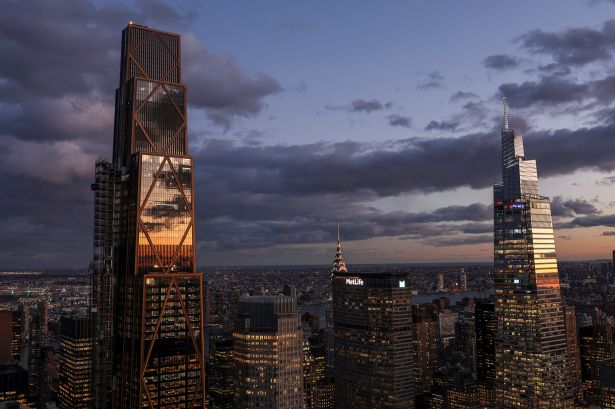
I’d like to get your thoughts on some recent projects that have attracted a lot of attention. Let’s start with One Vanderbilt.
The short answer is that it’s far better than it could be, and not as good as I wish it were. Again, this is a case of regulation.
The city did enforce a significant amount of public amenities, so there are entrances to the subway and Grand Central woven into the building, which is all good, and a little plaza at what used to be the southern end of Vanderbilt Avenue. I think the building is handsome on the skyline. I’m not totally in love with the skin, but it is an interesting attempt to try to do something other than just glass.
On balance, it’s somewhere around an A-minus/B-plus for me, though much better than the building planned for the other side of Grand Central on the site of the Grand Hyatt, which I find very disappointing and kind of depressing, with architecture that’s trying too hard. I don’t think it will work very well with Grand Central or the Chrysler Building, which it will block, or One Vanderbilt. Compared to that, One Vanderbilt is a triumphant success.
Are there any relatively new buildings of note that you think are making a deep impact on the city, architecturally?
I’m not wildly enthusiastic about every aspect of the J.P. Morgan Chase tower, but I’m probably more positive about it than a lot of people. A lot of architecture people do not like it, and I have come to like it.
I find myself drawn to it. I like to look at it. I don’t mind walking past it. I feared it was going to be kind of heavy and overbearing, and it’s not. I mean, it’s not exactly modest and understated, but I think it does something very important in terms of reclaiming the whole notion of the bank as a building of enormous gravitas in a city, which is what banks used to be before they started becoming less places that mattered in terms of making you think your cash was safe in them, which is what they were designed for originally. They became more and more just ordinary, anonymous, anything-type buildings. This building is an interesting attempt to combine everything about the 21st-century skyscraper with the idea of gravitas in a bank, and I like that attempt very much. So, by and large, it’s a positive thing.
The FDR memorial [Franklin D. Roosevelt Four Freedoms State Park] on the southern end of Roosevelt Island is one of the great pieces of public architecture and public space in New York. It was designed in the 1970s by Louis Kahn, but it wasn’t built then for a lot of reasons, mainly money. The idea was revived about a dozen years ago.
I think this era has made a more important contribution in terms of public space than actual architecture. There’s the High Line, Brooklyn Bridge Park, Governors Island and the creation of the public park there, the East Side Greenway, Hudson River Park. Put all of that together collectively and it’s a phenomenal increase in not only the quantity of public space in New York, but in the development of new models of what public space could be.
That might be the best legacy of the last 15 years.
Larry Getlen can be reached at lgetlen@commercialobserver.com.