Presented By: Ariel Property Advisors
Executive Spotlight: Shimon Shkury of Ariel Property Advisors
By Ariel Property Advisors November 17, 2026 12:00 am
reprints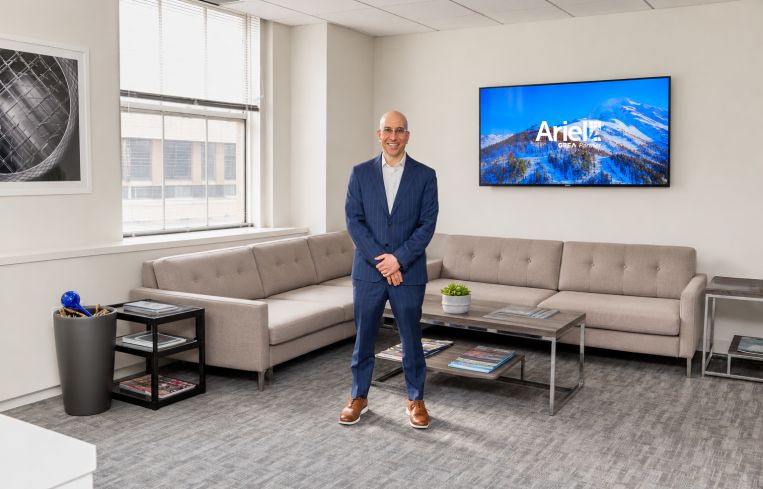
Shimon Shkury, president and founder of Ariel Property Advisors, spoke with Commercial Observer to discuss multifamily market trends, regulatory pressures, middle-market resilience, development opportunities, and refinancing strategies in New York City real estate.
Commercial Observer: Ariel’s Q1–Q3 All Asset NYC Report shows solid year-over-year momentum, though Q3 dollar volume softened against tough comps from outsized mega-deals last year. Looking past outlier institutional trades, what does transaction velocity tell us about the true depth of the middle-market? Outside of multifamily, which asset classes such as office or development sites are actually showing genuine organic growth?
Shimon Shkury: The middle market is very resilient. Year-to-date, New York City’s investment sales reached $23.69 billion across 1,914 transactions in the first three quarters of 2026, up 9.1% and 7.9%, respectively, from a year earlier. Dollar volume in Q3 2026, however, declined 25.2% from Q3 2025 to $6.73 billion mostly due to a few very large trades last year. In Q3, deal count edged up even as dollar volume fell and excluding transactions of $250 million or more, dollar volume actually increased 4%. That points to continued activity beneath the largest institutional trades.
Outside multifamily, I would highlight development and office, with an important distinction that capital is selective, and higher dollar volume does not necessarily mean more transactions.
Development volume increased 9.7% year-to-date to $5.24 billion, while transaction count was essentially flat. We saw three areas of conviction:
- Office-to-residential conversions. Programs such as 467-m help make conversions economically feasible. One example in our report is Nathan Berman and Idan Ofer’s $104.5 million purchase of 1 Whitehall Street. Manhattan accounted for 24 of the city’s 42 conversion transactions through September. Activity continued in Q3, although the pace slowed.
- Rental development sites. 485-x is helping developers move projects forward. This year, our platform has arranged $45.7 million in Gowanus site sales, including 604 Union Street for $11 million in Q3. This is a concrete example of capital committing to future housing supply.
- Luxury condominium development in prime locations. This category is highly selective. Alchemy Properties’ $58.5 million purchase of 56 North Moore Street in Tribeca illustrates where developers still see an opportunity to justify land and construction costs.
The office sector also showed broader participation. Office transactions rose 5.6% year-to-date to 95, even though dollar volume declined 2.8% to $5.2 billion. Buyers are differentiating sharply between buildings with credible leasing and repositioning opportunities and those requiring too much additional capital.
The common thread is that capital moves when the economics work and the rules provide clarity.
Ariel’s Q3 Multifamily Report highlights that rent stabilized buildings are adjusting to a complex mix of regulatory policies. Between the rent freeze, the legacy of the Housing Stability and Tenant Protection Act of 2019 (HSTPA), and the City Council’s recent passage of COPA, how are investors underwriting rent stabilized assets versus predominantly free-market and affordable assets?
Our platform looks at the multifamily market through three lenses: the numbers, the investors and the lenders. Together, they show that New York’s multifamily market is really three distinct investment markets.
First, the numbers. New York City’s multifamily sales totaled $6.99 billion across 1,044 transactions in the first three quarters of 2026, up 7.9% and 11.5% from last year, according to Ariel’s research. Dollar volume for the third quarter, however, fell 23.3% year-over-year to $1.84 billion, the lowest quarterly dollar volume since Q1 2024.
Predominantly rent stabilized buildings totaled approximately $1.27 billion through the third quarter, about 18% of total multifamily dollar volume. But volume alone does not indicate a recovery because the $449 million Pinnacle bankruptcy sale in Q1 accounted for roughly 35% of that segment’s activity.
Buyers of rent stabilized assets are focused on a low acquisition basis and a higher current yield. In many cases, we’re seeing pricing for rent stabilized buildings selling at more than 50% below their pre HSTPA 2019 valuations. The decline reflects three pressures–HSTPA’s restrictions on income growth, higher interest rates and sharply rising operating expenses. The fundamental underwriting question is: What cash flow can this building sustain after realistic expenses and capital needs?
Our Investment Sales professionals working with rent stabilized buyers are predominantly dealing with experienced, private investors with long holding periods. Therefore, they need the investment to work under today’s rules, without assuming future regulatory relief.
Free market buyers have a different investment thesis. They can underwrite the ability to capture rental demand and grow income, while accounting for expenses, financing costs and expiring tax benefits.
Affordable housing is different again. Investors focus on the specific regulatory agreement, subsidy structure and durability of the income. A property with a government supported long-term project-based Section 8 contract has a very different risk profile from a rent stabilized building with constrained revenue and rising expenses. Project-based Section 8 offers predictable contractual income that can align private investment with long-term housing preservation.
Third, the lenders. Our Capital Services professionals see fewer financing options for rent stabilized acquisitions. That can mean lower loan proceeds and more equity required from the buyer. More equity, combined with limited income growth, makes the buyer’s return threshold harder to achieve and puts further pressure on the price they are willing to pay.
Policy uncertainty also matters because investors and lenders need confidence in both the operating assumptions and the path to closing.
As we head into Q4 and look toward 2027, the market is bracing for a substantial maturity wall amid fluctuating Treasury yields. The question is, what is the playbook for sponsors facing upcoming refis? Will lenders continue to bridge the gap with tighter spreads, or are we entering a period where owners will be forced to recapitalize or sell?”
You’re touching on exactly where a platform like Ariel’s can add the most value. We bring Research & Advisory, Capital Services and Investment Sales together to help owners evaluate their options, understand the consequences and make informed decisions before a loan maturity limits their choices.
There is no single playbook for every asset, but three principles apply: start early, engage trusted advisers and develop as many credible options as possible.
The first step is determining whether you have a temporary financing gap or a fundamental value problem.
- For a rent-stabilized building worth substantially less than its debt and with negative cash flow after debt service, tighter spreads will not solve its program. The question is, does investing additional equity offer a reasonable return, or does a negotiated sale or another resolution with the lender make more sense?
- With a partially completed 421a rental project, there may be meaningful equity worth protecting. The remaining construction costs, lease-up assumptions and stabilized value will determine whether an extension, additional equity or replacement financing is justified.
- In a well-performing free-market building or Class A office asset, there will be more refinancing and recapitalization options, provided cash flow supports the debt and the business plan is credible.
Tighter spreads can help bridge a financing gap, but they cannot repair an impaired investment. Some owners will refinance, while others will need to contribute equity, bring in a partner or sell. Our role is to help them make that decision with clarity and enough time to execute.