

Big Events Like the World Cup and the Olympics Are Reshaping Los Angeles
The soccer tournament is putting Greater L.A.'s transit, hotels, and hospitality industry through a live stress test two years before the world returns for the 2028 Games
By Patrick Sisson July 9, 2026 1:30 pm
reprints
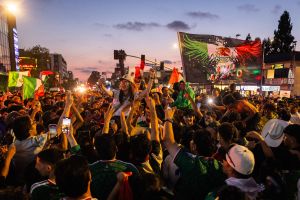
If the World Cup is Los Angeles’ dress rehearsal for the 2028 Olympics, the curtain is already up. As millions of visitors pour in and out of Southern California, the soccer tournament is offering the city’s first real test of whether it can deliver on a decade of promises about transportation, tourism and infrastructure.
Apprehension rightfully permeated the air in advance of Los Angeles’ mega-event era, which kicked off with eight World Cup games at the $5 billion SoFi Stadium. Between lackluster hotel bookings and worries about poor attendance due in part to larger travel and immigration issues, there was a sense that the beautiful game’s effect on host cities in the United States might not be so pretty.
“Hotel demand in host cities has evolved differently than many initially anticipated, driven in part by lower than expected international visitation,” said Rosanna Maietta, president and CEO of the American Hotel & Lobbying Association (AHLA), in a statement to Commercial Observer in late June.
But early indications suggest the events surrounding the World Cup games have been positive, if anything highlighting the need for better public spaces, plazas and places to gather. L.A.’s bars, streets and parks have seen a solid reaction to the World Cup. A packed to (over)capacity crowd at Seoul International Park in Koreatown for the match between South Korea and Mexico game underscored the frenzy for football, and the need for the city to channel more investment into parks and places for these kinds of public gatherings.

While the AHLA continues to collect final figures on the impact of the World Cup, Maietta said that members report demand picking up closer to the event, “consistent with a recent trend toward shorter booking windows for events of this caliber,” and that the industry expects additional acceleration of late bookings as the tournament draws to a close.
The city’s embrace of the World Cup also highlighted how this caliber of global events can have much larger economic consequences. L.A.’s era of rolling mega-events, from this summer’s World Cup to the Super Bowl in 2027 to the Olympics in 2028, has been a catalyst that commercial real estate has been looking for for years, said Colliers Vice Chair Sean Fulp.
It’s one the city could use: The office market is hoping to build momentum for the first time this decade, with stabilizing vacancy and just 2.3 million square feet of new space coming online this year. L.A.’s multifamily housing is stung by plateauing or fading demand due to immigration issues and from the seismic shifts in the entertainment industry, leading to paltry rent increases. And the hotel industry has been trying to overcome years of declining tourism and the financial impacts of new labor laws.
“The tourism dollars and infrastructure dollars and that capital that comes into the region is going to be helpful,” said Fulp. “But Los Angeles is also a very large market, so it’s not going to have the impact that it would have in another market.”
Many retail and entertainment venues across L.A. have noted positive preliminary results from World Cup crowds and tourists. High-end outdoor retail center Santa Monica Place saw an “insane amount of foot traffic,” said Caroline Mayhew, who helps manage marketing for Prism, which operates the mall. The kickoff celebration for the United States opener saw 12,400 people visit the property, a 54 percent jump from traffic on a typical day. Mayhew called this kind of activation — which included 30-foot LED screens and a Stella Artois chalice engraving station — a dry run for the Super Bowl and Olympics.
Hotel bookings data isn’t finalized, but the activity seems to have given a boost, especially given dire early predictions and the state of the hospitality industry. An April AHLA report found that hotel owners have been extremely pessimistic about labor laws passed by the L.A. City Council, especially the two ordinances that will guarantee a $30-per-hour wage for sector employees, which many owners argue is either limiting or unsustainable.
But a 2026 forecast by Marcus & Millichap painted a slightly more optimistic picture, with 1,400 new rooms opening across the region, a boost in occupancy to 71.8 percent, and a 3 percent increase in per-room revenue to a record $144.06, while hotel advisory company HVS believes that the sector, though pained, will see slow and steady growth over the next few years. The City Council even delayed the implementation of the wage increase, now set to hit $30 by 2030 instead of 2028, providing the sector, though not its workers, with some economic relief.
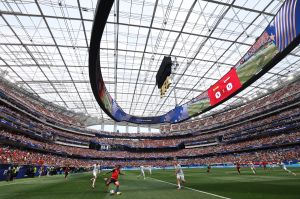
The 2028 Los Angeles Olympics, in a mirror of the 1984 Summer Games held in L.A., have been branded a non-build Olympics, one that will take advantage of existing infrastructure to make staging such an event more sustainable and less expensive. However, there are some big investments that promise substantial positive ripples for real estate, especially the city’s $2.7 billion convention center expansion that, while criticized as a financial folly, has found supporters in real estate and hospitality hoping that its completion brings more life and spending back to downtown.
“I think that the city’s confidence has translated into a much more active real estate market,” Edgar Khalatian, a board member of the downtown advocacy group Central City Association, told Commercial Observer in April.
In addition, hosting games at SoFi underscores the transition that has taken place in the adjacent city of Inglewood, which has seen a boom in building stadiums, entertainment venues and hotels, including Hollywood Park, the $5 billion, 300-acre Stan Kroenke/Rams mixed-use development that’s becoming a magnet for new investment. Inglewood Mayor James Butts said that the city estimates local businesses will see a $17 million economic boost from all the fan traffic from the World Cup matches at SoFi.
Fulp said the growth in entertainment venues before these mega-events — including SoFi, Intuit Dome, YouTube Theater and Cosm — has spread to hotels and is poised to be a catalyst for offices, with these large events bringing more attention to the growing submarket.
“Inglewood is becoming a market,” said Fulp. “It really wasn’t anything from a commercial standpoint, and didn’t have the infrastructure to grow into its own kind of stand-alone submarket. But that’s changing, and I think that everybody can see that.”
The hotel industry remains the most vibrant right now, with a 179-room Anthem hotel opening in February and the $300 million, 300-room Kali Hotel & Rooftop, part of the Marriott Autograph collection, near completion in Hollywood Park. Crescent Hotel Group gained approval in January for a 13-story tower near SoFi that will include condos, a hotel and ground-floor retail, and the city has also greenlighted a long-in-the-works Arya Hotel, planned to go up adjacent to the $2 billion Intuit Dome.
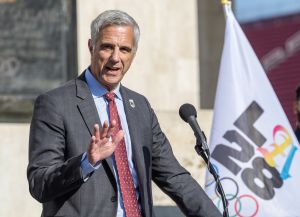
“What’s been created in Inglewood over the last five to 10 years has brought in healthy competition to the region, as far as entertainment and hospitality are concerned,” said Fulp.
For Fulp, that focus on Inglewood, and build-out of infrastructure for L.A. as a whole, underscores a larger shift in real estate’s lens to the south. The South Bay, including cities like Long Beach and El Segundo, have been magnets for investment as defense and space industry spending helped bolster startups and new leasing activity for warehouse and advanced manufacturing space. Fulp sees these kinds of mega-events bringing more attention, and ideally more private foreign investors, into Los Angeles to take advantage of what many consider the bottom of the market.
Fulp ultimately hopes that the continued success of some of these Southern California cities adjacent to Los Angeles will create healthy competition, spurring local leaders and developers to spend more effort and capital improving the business environment in Downtown Los Angeles and elsewhere.
“As we look at the impacts of the Olympics, it’s not the infrastructure, it’s not where the facilities or cranes are,” Fulp said. “It’s more that we as a population here in Los Angeles, in these business communities especially, hope and believe the city will find its footing and get on the right track.”


