Sunday Summary: The Legacy That David Simon Built
By The Editors April 12, 2026 9:00 am
reprints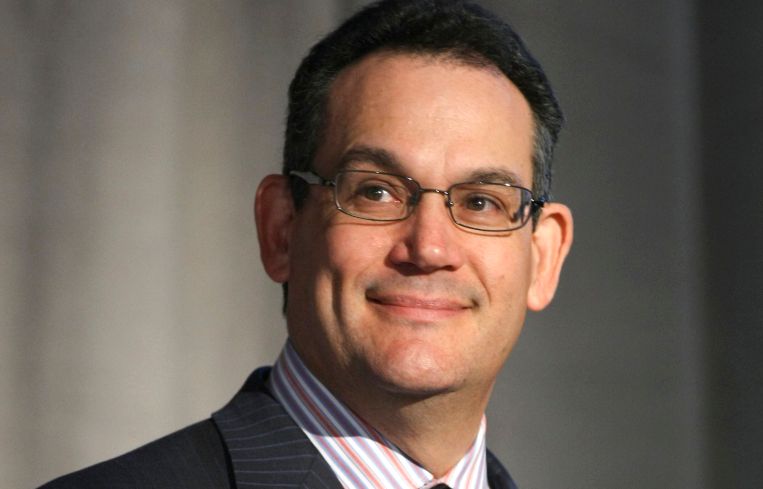
When a company’s leader dies suddenly, once the tears have dried and the wreaths have been laid, the big question that arises is: What now?
While David Simon’s death on March 22 wasn’t exactly a surprise (he had cancer), it was still shocking that someone who had left such large footprints on the real estate landscape was really gone at such a young age (he was 64).
But, unlike some who stepped away from business once they got their diagnosis, Simon was intimately involved in the fate of Simon Property Group until the very end — and it’s worth considering the legacy that he leaves his successor (his eldest son, Eli).
It’s profound: Ownership stakes in more than 250 malls and shopping centers spanning 17 million square feet around the world (and occupancy at 96.4 percent, to boot!); $4.8 billion in real estate funds from operations in 2025; the rescue and revival of some of the best brands in retail.
This was not all luck — it was a combination of intelligence and moxie. During the height of the pandemic, when everyone looked at the retail landscape and reached for the whiskey, Simon went the opposite way. He doubled down, acquiring Taubman Realty Group for $3.8 billion.
One can now see Simon’s shrewdness in the wider retail landscape. Just last week, Ares Management put up $1.7 billion to purchase the Houston-based Whitestone REIT, which has a large portfolio of shopping centers in Arizona and Texas. This was not at all the obvious direction the retail and mall sector was heading when Simon made his big bets. But, like a lot of great businesspeople, he saw something it took the rest of us a while to catch up to.
ESRT makes some interesting moves
Is it a buyer’s market, or a seller’s market? Empire State Realty Trust’s answer to that question is simple: It’s both!
On the buy side, ESRT purchased a new commercial condo in Williamsburg at 127 Kent Avenue for $46 million. (For the latecomers, the REIT has been quietly building a retail empire in Billyburg for a while.)
At the same time, ESRT pocketed about $280 million in its sale of 250 West 57th Street to Namdar Realty Group.
Others were making interesting deals, or gearing up for them: Metro Loft Management and Quantum Pacific Group are in contract to buy 1 Whitehall Street for $100 million from LoanCore Capital, presumably to convert into apartments. (Fun fact: 1 Whitehall Street is currently the global headquarters of Commercial Observer!)
And Prologis is teaming up with Canada’s top institutional fund manager La Caisse de Depot et Placement du Quebec for a planned $1.17 billion in industrial investment.
Finally, while it didn’t happen last week, CO decided to take a “What does it all mean?” look at Savills’ $1.1 billion purchase of Eastdil Secured in March.
New York, or nowhere
Aside from increases at the gas pump, the price of the war in the Persian Gulf is starting to percolate into the broader economy — and the news from Friday should be treated as a meaningful warning sign about inflation. (The rate of inflation rose to 3.3 percent in March, almost a full point higher than February and the highest increase in almost four years.)
Just don’t tell the tech and finance bros.
According to a report last week from the New York Economic Development Corporation, Gotham has some 385,400 jobs in finance and insurance — more than at any other time in history and a good 36,700 more than in 2020. (Downtown L.A. wishes it had it so good.)
Of course, this is not all sunny news; the city’s 10,600 new private sector jobs added in January represent a significant decline from the 19,900 jobs added in December.
And there still remains the biggest question in New York City real estate: housing.
That housing is insanely unaffordable is not really in dispute. There’s simply not enough of it. Of course, there’s a large stock of affordable and rent-regulated housing — which, historically, was a perfectly fine asset class to park capital in and accept its modest returns — but it’s become trickier to own.
“The Housing Rent and Tenant Protection Act of 2019 sharply constrained revenue growth and limited the reinvestment mechanisms in that category,” said Ariel Property Advisors’ Shimon Shkury. “Additionally, COVID-19 affected collections and it is still affecting collections today. And, lastly, interest rates [went up] in 2022, which affected every asset class in real estate, but specifically asset classes that are not growing from a net operating income perspective.”
Even more alarming, a number of the nonprofits that have worked at redeveloping or fixing up affordable housing have found it more risky (and onerous) than ever to do so.
“There’s a mandate [from the city] for 15,000 new supportive housing units by 2028 as well as a new push for housing for the formerly incarcerated,” said Stephen Powers, co-founder of brokerage Open Impact Real Estate. “You need a nonprofit partner to meet these goals because for-profit developers don’t do supportive housing services. They almost always partner with a nonprofit.” And these partners are finding problems with working on these projects.
But a report issued by the Association for Neighborhood & Housing Development titled “The Crisis Facing New York City’s Affordable Housing” found that “more than 63,700 homes [are] already in financial distress and facing increasing strain.”
All that being said, the desire for more housing is palpable — Vaya Development filed plans last week to build a 285-unit, 290,561-square-foot apartment building in Jamaica, Queens. And Clipper Equity landed a $170 million refinancing for a 354-unit apartment project in Flatbush, Brooklyn, at an old Sears site. (Clipper’s lender, MF1 Capital, had a busy week; it also issued an $81.4 million bridge loan to Metropolitan Properties for two apartments in Baltimore.)
Lastly, those who are interested in housing will no doubt want to read our interview with TruAmerica Multifamily’s Bob Hart.
Hart detailed his childhood in a tenement in Chelsea, Mass.; how he put himself through school driving an ice cream truck; working initially as an engineer; going to work for Disney; and then — finally — becoming a real estate mogul who recently closed a $708 million workforce housing fund. Anyone who cares about this asset class should read this interview.
See you next week!