Benefit Street Partners’ Michael Comparato and Allison Davi Talk Debt Strategies
The pair just raised $10 billion for the firm’s new opportunistic fund. What are they going to do with all that money?
By Cathy Cunningham March 3, 2026 7:00 am
reprints
There’s surely no bigger testament to the attractiveness of real estate debt than raising a fund that closes with a cool $10 billion of investable capital centered around it.
That’s exactly what Benefit Street Partners (BSP) completed in January with its BSP Real Estate Opportunistic Debt Fund II, which was roughly six times the size of its predecessor fund — and oversubscribed, to boot.
Michael Comparato, BSP’s head of real estate, and Allison Davi, its co-chief operating officer, put the fundraise’s success down to a few factors, including BSP’s long-established track record as a lender, its successful deployment of its first fund, and investors’ long-overdue level of comfort with real estate debt strategies. Of the $3 billion in equity raised, roughly 40 percent was from Asia-Pacific, 40 percent from the U.S., and 10 percent from Europe and the Middle East.
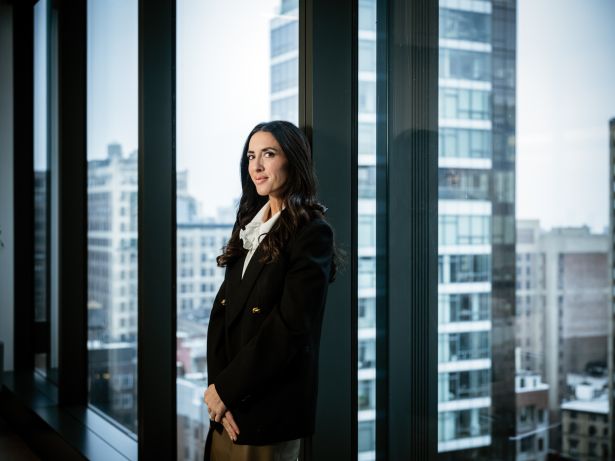
It’s been a busy few years for BSP. While multifamily loans are its bread and butter, the firm has plenty of arrows in its quiver when one area of financing becomes overcrowded and spreads become too tight for its liking — like now.
This interview has been edited for length and clarity.
Commercial Observer: BSP just closed its largest fundraise in the platform’s history for its U.S. real estate debt strategy. Talk me through this fundraise and how it differs from previous raises.
Allison Davi: We were in the market on our first institutional drawdown harvest fund five or six years ago, and it was challenging to get people to even meet with for a few different reasons — and none of them had to do with Mike or the performance of the business. It was that real estate debt was a fairly unknown asset class five, six, seven years ago, and it was unclear to people where it should sit in their portfolio. So, much like private debt as an asset class or private credit as an asset class, it took some time to find its own place. I would say real estate debt has had the same path.
When we were trying to raise our first fund in the U.S. [in 2022], we got a ton of pushback. Real estate assets investors didn’t want to underwrite a debt fund. Their view was that the returns wouldn’t be high enough for them to justify putting it in their portfolios. The private credit investor bucket — now a stand-alone bucket at most of these limited partnerships (LPs) — had never underwritten real assets, and so they were of the mindset of, “Oh, It’s very similar to private credit with similar return characteristics. It’s got a really good cash yield, but I don’t think I’m allowed to put that in my portfolio.”
So we had a really tough time raising capital for it in the U.S., and we actually raised a bunch of the money out of Australia instead. I remember Mike saying to me, “I don’t understand. We’ve got double-digit returns. Why are people not interested in this?” And I didn’t have a good answer for him then, to be honest — it just wasn’t the right time.
When we started raising our second locked-up fund, having a first fund that had good returns that had done what we said it would do helped us get comfortable that we’d have investors who would re-up into Fund II. But the big difference was that when we started raising ODF II in 2023 the market had shifted to what we’re calling “Phase 3” of private credit, where people had core private credit allocations that they’d made to U.S. direct lending, and private credit underwriters were branching out into adjacent strategies. Investors were putting real estate debt in their private debt bucket.
It was a big shift, and it took time to get there, not shockingly. So that market dynamic, where people are trying to diversify their private credit portfolios, coupled with the performance that we had in the first fund created this perfect storm for us to be successful.
Then, the reality is, there are more real estate debt funds popping up today, and most of them are coming out of firms that have historically done real estate equity and don’t have a track record. As Mike will tell you, he’s a debt guy, and that’s all we really do. We have a very large team focused on a very specific segment of the market. So I think all of those things resonated, and we ended up raising a little over $3 billion in terms of equity, and that was about six times the size of our last fund. We ended up being very oversubscribed in the end.
What’s your take, Mike?
Michael Comparato: Commercial real estate has been an institutional asset class for 50-plus years, but, for almost anyone that you spoke with in the CRE arena, their exposure was in equity, because, frankly, that worked for the past 40 years. If you boil it down very simplistically and look at a chart of the U.S. 10-Year Treasury from the late 1970s to five years ago, it went in one direction — down — so everybody had an exceptional experience.
When we started marketing this fund, people said, “Why do I want credit when my equity investments have worked for literally four decades?” and I kept saying to people, “I can make you the same returns, but with the cushion of credit versus equity.”
But let’s call a spade a spade: A lot of institutional investors don’t like getting something new approved. They don’t want to go into their investment committee and trailblaze. So people avoided it. But in 2023 it became very obvious that there was a meaningful correction underway, and they became more willing to at least take our call. The sales process for the fund was longer for Fund II because it was still a new asset class to some people. So first we had to convince them that they wanted to be in commercial real estate credit, and, once you got them there, they had to figure out where it should be allocated. The momentum was very heavily back-end loaded in the end — but if we didn’t have a hard cap, and we had another six months, we would have raised another billion or two.
Why was it so back-end loaded, do you think?
MC: The reason that it was so back-end loaded, in my opinion, was people finally got there on the “We want real estate credit” investment thesis.
We also convinced people it was a good asset class for them to allocate to and that we were very different than almost anybody else. We made some very good macro decisions in 2021 that put us in a position to play offense in 2023 and 2024 and 2025. So, while we were out marketing the fund, we already had $2.5 billion of funded loans. So we were able to show people a portfolio of funded loans that was making, at the time, a high double-digit internal rate of return. The pitch in the last quarter or two of fundraising was, “Hey guys, we’re offering you the ability to get in a time machine and go back two years and buy into all of these loans. This is an incredible opportunity.”
I think the fact that we had a multibillion-dollar portfolio already built for the fund is what made people really pile into it.
Will the target investments you’re pursuing include transitional loans or distressed opportunities?
MC: Actually, no. We called it Opportunistic Debt Fund II, and a lot of people have since told us, “OK, you’ve gotta change that.” [laughs] But the “opportunity” here is really more of a market dislocation opportunity, at the investment level. We were showing people a 17 or 18 percent underwritten rate of return on our investments, and they’d look at that number and say, “Oh my God, you’ve got to be taking outlandish risks to get those kinds of returns!” They just didn’t believe it. So we had to spend a lot of time hand-holding and saying, “Look at what we’re doing,” because the market has changed in terms of the loans we’re closing, and we’ve also changed.
If you rewind pre-COVID, the vast majority of our book would be light transitional bridge lending. What we’re doing today is largely new product, and a lot of it is brand-new construction where a borrower got a construction loan from a bank, the bank is calling them every day saying “Pay us off,” but they need another 18 to 24 months to stabilize it and sell it, and so they’re coming to us. There’s no hammer swinging, there’s no business plan, there’s no renovation. Most of the bridge loans that I wrote in `23, `24 and `25 were bridges of time rather than an asset-level business plan.
I think you would be amazed at the improvement in the collateral quality of our loan book today. If you look at the quality of our loan book in 2019 and compare it to 2025, it’s like a Coach bag compared to a Hermes bag.
What changed?
MC: There was no competition for a while, and it was the greatest thing in the world. In 2023, 2024 and for most of 2025, it felt like we were one of five lenders in the entire industry. There was just no one actively lending in the market, and we took full advantage of it.
How the tables have turned.
MC: Yes. What has happened in the last six months in the private credit markets is insane. In the second and third quarter of 2025, we were writing loans every single day that we were levering to a mid-teens-type return. We’re lucky to get to 10 or 11 percent now, so it’s beyond frothy. It’s the tightest I’ve seen spreads since probably pre-Global Financial Crisis.
We’re hearing about the frothiness and too much capital chasing too few deals, and also established lenders passing on deals that don’t make sense to them and newbies happily picking those same deals up.
MC: I say this in the nicest way that I can possibly say it, but equity guys that get into the credit business go to their investment committee, and their investment thesis is: “I would own this at that basis,” because they’re equity guys. That’s just the wrong way to be a lender.
Everything that you said is true. There’s been a lot of capital raised in the space. I think it has been largely focused on the multifamily sector and on existing assets, and so that is a really crowded trade. I don’t want to say that it’s frothy in terms of people making bad credit decisions — I think the credits are still probably really solid — but, so far, we’re seeing competition on returns. I don’t see a lot of people doing stuff that I look at and say, “Oh, my God, that’s just dumb.” That said, the pricing has gotten to a level where it’s pretty tough.
If this frothiness continues, what do the debt markets look like going forward?
MC: I think people make mistakes in markets like these. Historically, we make the most money when everybody’s on the sidelines, and people make the most mistakes when everybody’s competing over each other to win. I don’t want to predict that people are making mistakes or these are going to lead to losses, but it’s clearly a tougher environment today than it was six months ago. And, when things are this frothy, it tends to be when people make mistakes. There’s just so much money sloshing around the system that people feel like they’re forced investors — but we will never be a forced investor. We will take our time.
I do think where we’re very different is our product offering. A lot of the new debt funds that have launched are just writing multifamily loans for existing product. We do everything: construction loans, bridge loans, mezz loans, and we have a CMBS business and an agency business. I tell our team, “We can’t stop fishing in that [multifamily loan] pond, but we have the ability to go fishing in other ponds that other people don’t.”
So we’re focusing some of our originations into some of those more esoteric things that we know how to do that other people don’t. That’s how we’re navigating this environment.
What does your book look like today versus a year ago?
MC: A lot of the book today looks like the book last year and the book in 2024 and 2023. We’ve got a formula that we really, really like, and so we’re of the mindset that “If it ain’t broke, don’t fix it.” We tweak it here and there as we see fit, but largely what we do every day is under the same investment thesis.
We really like the construction lending space. It dribbles out money over an 18- or 24-month construction period, so they’re an inefficient asset for us, but they’re by far the best risk-return in the market today.
Right now, unfortunately, we’re holding our breath and doing what we always do at slightly lower returns than where we were writing a few years ago, with the hope that some of this frothiness will go away, and investors will push back at some point, saying, “I signed up with XYZ lender for a 14 percent return, and they’re delivering me a 9.” I would think that matters at some point, but it remains to be seen.
You mentioned your CMBS business. How is it, and the collateralized loan obligation (CLO) side, going?
MC: It’s very active, and ridiculously liquid. We launched a $1.1 billion CRE CLO yesterday, and, in 24 hours, we were 1x subscribed on the top of the stack. There’s so much interest it’s kind of silly, but we’ll take advantage of that. We want to be net sellers of bonds right now, not buyers, so we’re going to issue as much as we can, but, believe it or not, there’s still a lot of room to tighten. Our market still trades very wide of corporates. Four or five years ago, triple A’s on CRE CLOs were sub-100 and our triple A’s are probably going to price at [the secured overnight financing rate] plus 140 on the deal that we’re in the market with now.
So, even though we say things are frothy, we’ve seen tighter, and I think the frothiness today is really in the credit curve.
BSP and European credit manager Alcentra just merged under the BSP brand. Can you walk us through the decision to acquire Alcentra in 2022, and why the merging of the businesses made sense?
AD: BSP was a U.S.-centric asset manager with all of our strategies invested in U.S. assets. We had a non-U.S. investor base, but it was 88 percent U.S.
Franklin Templeton bought BSP [in 2018] to eventually become a global private credit asset manager and compete with other global private credit asset managers, but we needed a European component. Alcentra had a very large and successful European CLO business, European loan product and a global structured credit business, which is something that we had been trying to start ourselves. Those were the catalysts for us behind that transaction — to give us a presence in Europe and expand our investor base.
We waited to make any changes to the brand name itself, because we wanted to assure investors that nothing was changing. You’re seeing this right now with BlackRock and HPS [Investment Partners] where a bunch of LPs are saying, “Wait a second, I already have a lot of BlackRock exposure. I thought HPS was different, but now they’re getting combined together.”
Franklin Templeton has always done a very good job of keeping the brands separate and independent, and we wanted to make sure investors were comfortable with us bringing them together, so we made a lot of the changes behind the scenes first. Then it was a question of, “Do we keep the BSP brand or the Alcentra brand or do we do something completely different?” It was a whole process. But, for us, it was very confusing when we went to the market with global offerings as we had Franklin Templeton, Alcentra, BSP logos. It made more sense to present ourselves as one united front.
Tell us more about your activities in Europe.
AC: For real estate debt, we only have a U.S. business, but we will continue to be acquisitive if we find businesses that we think are attractive and synergistic with the offerings that we have. We are going to figure out a way to pursue those.
Just recently, we bought Apera Asset Management [a European private credit firm with €5 billion in assets under management]. They just raised a €3 billion fund and we think it’s a really interesting place, both in terms of the supply dynamic, and then also in terms of the demand dynamic.
I will also say it’s the first time, since 2015, where I’ve seen U.S. and Asian investors really interested in Europe. Most regions have tended to have a home bias. We have Asian investors who are telling us that 80 percent of their allocations this year will be to Europe versus U.S. — and that’s a huge shift. Some of it’s geopolitically related, some of it’s just, again, sticking with this theme of, “We have a lot of U.S. exposure and we want to diversify.” But it’s still a new trend.
Mike, I understand that your grandfather started a development company in the `40s and you were touring construction sites from the age of 3. Was a career in real estate always your destiny?
MC: One hundred percent. Anything else wasn’t really an option. Every aunt, uncle, brother, cousin — the entire family is literally in the family business, and it still exists today. It’s one of the larger family-owned commercial real estate companies on the East Coast. We built every asset class — from multifamily to hotels to condos to shopping centers. So it was a very unique and special upbringing.
How I got into the finance side of things came about, strangely enough, through the family’s biggest hit. We started a bank in the 1980s, and it was not because we wanted to start a bank. We built an office building in Boca Raton in 1985 and couldn’t get an anchor tenant in the building, and so my grandfather said, “Why don’t we start a bank?” Not because he wanted the bank. He just wanted the tenant for his building. And, strangely enough, that bank ended up being a billion-dollar bank, which in the 1980s was a very big bank. Wachovia bought it in 1997, but he was the chairman of the bank and the largest shareholder of the bank. It was a publicly traded bank, but my dad was on the finance committee.
Back then there was no email, so he would come home with these huge binders of the loans that were going to the investment committee at the bank, and, at 13 years old, I would sit at the kitchen table with my dad and just flip through them. It’s the nerdiest 13-year-old story of all time, but that, coupled with my kind of real estate background, was how I ended up doing what I’m doing today.
So, you were a 13-year-old underwriter?
MC: Close. I was underwriting loans at 18 years old for the bank and the family business, and I worked for the family for probably 15 years. I never interviewed for a job once in my life, until I decided to go to Wall Street after the GFC [at Ladder Capital].
My first business that I ran by myself was when I was 24 years old. We partnered with the second-biggest financial institution at the time in the state of Florida, Bank Atlantic, and we would sell all of our CMBS loans to UBS and Credit Suisse. The real estate group at Dillon, Read [which UBS eventually acquired] was run by Brian Harris, who ended up starting Ladder Capital in 2008, and I loved working for Brian. I think he’s probably one of the three smartest guys I’ve ever met in my life.
But it was strange because it was the first job of my life at 35 where I didn’t work for my family or for myself, and there was definitely a learning curve on how to work for somebody else.
And Allison, you worked at Lehman Brothers back in the day?
AD: It really was such a great firm, at least at the time I was there, which was 2005 to 2008, and I’m still very close to a lot of people I worked with there. I left before it went bankrupt. I was there during some of it, but it was interesting being there for a boom period, then seeing the decline.
I joined a private equity firm in 2008, but the credit markets were entirely closed, which was also not the best as we couldn’t do any deals, but at least I had a job and I’m happy that I graduated from college then and not later. I came to Benefit Street Partners when we were at around $3 billion in assets, and we’ve had this great growth profile since. Mike and the real estate debt team really reflects the part of the business that we are the most optimistic about from a growth perspective. So, over the last couple of years, Mike and I have spent an increasing amount of time together, which has been fun.
Cathy Cunningham can be reached at ccunningham@commercialobserver.com.