SoHo Retail Rents Hit Decade-Long High, Lead Manhattan: Report
Shopping stretches of Madison and Fifth avenues also saw gains toward the end of 2025
By Mark Hallum February 5, 2026 12:57 pm
reprints
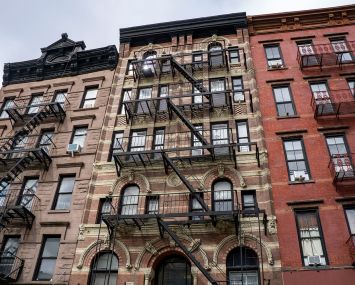
SoHo continues to exemplify the best that Manhattan’s retail market has to offer, with the growing scarcity in vacant space driving rents to the highest level in a decade, according to a new report from the Real Estate Board of New York (REBNY).
The picturesque Lower Manhattan enclave’s Broadway corridor saw a 24 percent increase in average asking rent in the second half of 2025 compared to the first half of the year. Average asking rent in SoHo’s Broadway corridor was $726 per square foot, only 12 percent below where it was in the first half of 2016, when rents reached an all-time peak, REBNY said in its report.
Retail districts on Madison Avenue, in the Flatiron District, on Fifth Avenue and in the West Village were hot on the heels of SoHo, with vacancies on Madison Avenue falling from 35 available storefronts two years ago to only 13 at the end of 2025.
“Despite challenges in the broader economy, Manhattan’s retail market continues to demonstrate a broad-based appeal,” Keith DeCoster, vice president of market data and policy at REBNY, said in a statement. “Whether it is international direct-to-consumer brands entering the U.S. for the first time or local mainstays expanding their footprint, many are taking a focused, deliberate approach to choosing locations but then going all-in designing their stores.”
Luxury brands, both labels new to the New York City scene and more native companies, continue to drive trends in these retail corridors, with the majority serving food and beverage, fitness and wellness, and fashion clientele, according to REBNY.
The progress toward pre-pandemic levels of success across the broader market — not just the five highlighted retail districts — also continues to buck trends happening in the economy overall, signaling New York City’s retail market as a safe bet for entrepreneurs.
In its report, REBNY cited data from the U.S. Bureau of Labor Statistics, which showed that only 113,000 jobs were added to the nation’s economy in the second half of 2025, representing the weakest period since 2020.
But that opening is also an opportunity for policymakers and the business community to continue bolstering retail across Manhattan.
“While the national economy cools, brands are making outsized bets on our corridors, investing heavily in design and hospitality because they see Manhattan as the proving ground for retail’s future,” Jessica Walker, president CEO of the Manhattan Chamber of Commerce, said in a statement. “The opportunity now is to ensure this momentum reaches every corridor. When retailers succeed across Manhattan, not just in the tightest markets, the entire borough benefits.”
Some surprisingly weaker retail corridors in the second half of 2025 included the upper end of Fifth Avenue in Midtown, the Financial District, Herald Square and Times Square, which the report described as seeing higher vacancies and “sporadic” leasing.
Those corridors accounted for 60 percent of the available storefronts in the areas studied, as Times Square relies heavily on tourism and lacks diversity from dry goods and apparel tenants, according to REBNY.
Herald Square saw a decline in average asking retail rents from $447 to $383 per square foot from the first half to the second half of 2025, according to REBNY, and Times Square saw its average fall from $1,936 to $1,850 per square foot over the same period.
The upper section of Fifth Avenue in Midtown, meanwhile, has a concentration of unique spaces that require more move-in work from tenants who are finding better options elsewhere despite strong foot traffic.
Some of the biggest retail leases signed in Manhattan during the second half of 2025 include venue operator Convene Hospitality Group’s deal for 50,000 square feet at Terminal Warehouse at 261 11th Avenue and Chelsea Piers Management’s 48,833-square-foot lease for a new health club at 200 Varick Street.
Mark Hallum can be reached at mhallum@commercialobserver.com.