You Better Hope Suri Kasirer Takes Your Call
How a rabbi’s daughter from central Queens sort of fell into advocacy work, and ended up building New York City’s No. 1 lobbying firm, with a slew of real estate projects in its wake
By Larry Getlen October 14, 2026 6:00 am
reprints
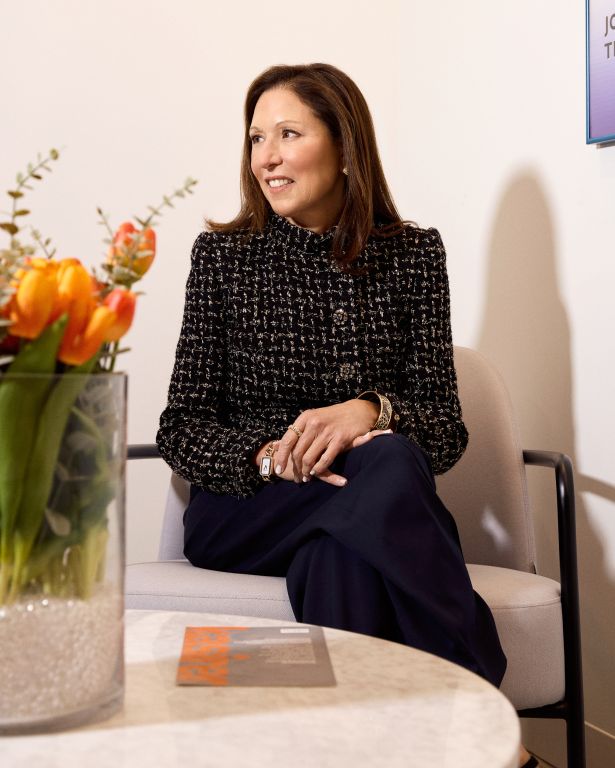
According to the City of New York, Kasirer, the government relations firm Suri Kasirer founded in 1997, has been the highest-grossing lobbying firm in New York City for each of the past nine years, and for 17 of the past 20.
Kasirer has played critical roles in the development of projects that collectively sound like a fascinating and varied path through New York City real estate and political history: the rezoning that allowed One Vanderbilt to proceed, the 5 Times Square office-to-residential conversion, the OneLIC Neighborhood Plan rezoning, the New York Blood Center rebuild, bringing ranked choice voting to New York City, the expansion of Lenox Hill Hospital, and the approval process for the renovation of Central Park’s Delacorte Theater.
These are just a few of the many projects that exist as they do thanks to Kasirer’s strategic expertise, vast experience, and a list of close contacts that reads like a who’s who of folks who can make major projects happen in New York City.
But nearer and dearer to Suri Kasirer’s heart are the close to 50 nonprofits she and her 45-person firm work with at any one time, delving into causes that lack the grandeur of a multi-
billion-dollar development project, but make life easier and better for a wide range of New Yorkers.
Hearing her story, one learns that Kasirer comes by her philanthropic spirit via deep wells of sincerity, history and care. Substantial corporate and real estate successes were, in a sense, the happy accident that came later, when her abilities in these areas became too strong to deny.
From Queens to the world
Kasirer is a native of Glendale, Queens, who grew up with her parents and brother in Mitchell-Lama housing on Union Turnpike. Her father, Moses Kasirer, was, according to Suri, the only member of his large Romanian family to survive the Holocaust.
Romania allied with the Nazis from 1940 into 1944, and around 220,000 Romanian Jews were murdered during this time, according to the United States Holocaust Memorial Museum.
At 14, after spending time in a displaced person’s camp toward the end of World War II, Moses Kasirer wound up in Queens, where he attended yeshiva. He later became a rabbi and a teacher at the Rabbinical Seminary of America (also known as Yeshivas Chofetz Chaim) in Queens, where he taught ninth grade for over 50 years. He died in 2016.
Kasirer noted that while her father was devoted to education, the yeshiva he taught at was poorly funded and rarely paid him on time, leaving the family’s finances chronically uncertain.
This had a huge impact on Kasirer’s later approach to working with nonprofits, including her recent successful efforts to pass Local Laws 1247-B and 1392-A, which enshrined faster payments from city contracts to nonprofits into law.
“This is why timely payments for nonprofits was such a huge issue for me. Because, growing up, my father never knew when the next paycheck would come,” Kasirer, 67, said. “My mom didn’t work, so we lived in a two-bedroom Mitchell-Lama co-op. My brother slept in the living room, and I had the bedroom.”
Kasirer was also deeply affected, and later influenced in her work, by the knowledge of all her father had lost, and everything the family had gone through.
“His family didn’t choose to leave,” Kasirer said. “There were people who went to Israel or other countries that had seen the writing on the wall, and I always was troubled by that, wondering why his family didn’t.” Trying to make sense of all this created a need in Suri to understand the particulars of how the world works, while also eventually providing some clarity on why her father’s family remained.
“I wanted to understand politics and how leadership works to be able to save my own family should I ever be in that situation,” said Kasirer. “Though today, with antisemitism being what it is, I see how it’s not that easy to pick yourself up and just leave. Where do you go? Where is it better?”
Her father’s experiences and his dedication to teaching deeply impacted the family. Kasirer said that not only did her brother and his eight children all become teachers, and all at one point affiliated with her father’s yeshiva, but also that she herself, while earning bachelor’s degrees in Jewish history and sociology and then a master’s in medieval Jewish history from Yeshiva University, worked as a Hebrew school teacher and a principal at the Lincoln Square Synagogue on the Upper West Side.
Stuart Kaplan is the CEO of Selfhelp, a nonprofit organization that provides home care, housing and other services to older adults, with a special focus on assisting Holocaust survivors.
Kaplan said that in facilitating approvals and funding from various city agencies for both real estate and social service projects for Selfhelp, Suri’s passion for the cause was apparent.
“When Suri and I first spoke, she shared her family’s experience with me,” said Kaplan. “When you have that type of conversation, there’s no more vetting that has to go on. I understood that it was important to her and her legacy that she would want to be involved with an organization that provides such important services to Holocaust survivors. That alone brought us together.”
The need to do more
After around five years, Kasirer felt a need to participate in more hands-on advocacy than the classroom could offer.
Around the early 1980s, Kasirer became active in the Soviet Jewry movement, which sought greater freedoms, including the right to emigrate, for oppressed Soviet Jews.
With support from organizations like the Student Struggle for Soviet Jewry and the Greater New York Conference on Soviet Jewry, as well as her own fundraising efforts, she and some college friends flew to the Soviet Union to meet with refuseniks. They then shared the stories they heard upon returning to the U.S.
“My college friends and I did all these speaking engagements. We were very involved in advocacy for the movement, but particularly for these 15 or so people we met with,” said Kasirer. “We went to college campuses. We had a slideshow. We told their stories, and asked people to write letters and advocate for them.” (Everyone she spoke with in the U.S.S.R. was eventually released, according to Kasirer.)
Discovering a fire within for adventure and activism, Kasirer built on these experiences.
“My family is Syrian,” said Kasirer about her family on her mother’s side. “I thought, ‘Here you are working for these Jews in the Soviet Union, but there are around 4,000 Jews in Syria, and you’re a Syrian Jew. What are you doing about that?’ ”
Kasirer approached leaders in the Syrian Jewish community in Brooklyn whom she knew from her yeshiva days, and they agreed to fund similar efforts if Kasirer led the charge.
“I was becoming interested in the power of advocacy, and I’d seen what we could do for the Soviet Jews,” said Kasirer. “I was taken by how you could impact people’s thinking.”
She soon became the founding executive director for the Council for the Rescue of Syrian Jews, and worked for several years on efforts that eventually helped around 3,500 Jews leave Syria.
“We had a lot of funders, and we brought in experts who understood geopolitics and who [Syrian President Hafez] al-Assad would care about,” said Kasirer. “There were a lot of Jews in Mexico, and we worked with the Mexican Jewish community to advocate to Assad. We worked with members of our Congress and Senate. There were a lot of Syrian Jews in Texas. We worked multiple angles.”
The effort was an education for Kasirer in diplomacy and in the “tremendous power of advocacy.”
“It was a realization that you could accomplish something that big,” said Kasirer. “Then it became, there has to be more to this. Like, how do we impact the world in a positive way to do good things? I recognized that I needed to understand politics and government.”
Marc Holliday, chairman and CEO of owner and developer SL Green, recalled how well she did just that when the company had to withdraw its initial City Council proposal for the Vanderbilt Corridor, the rezoning that facilitated the One Vanderbilt project, due to opposition in the transition between the Bloomberg and de Blasio mayoral administrations.
“Suri took the lead on re-emerging that zoning with the incoming administration,” said Holliday. “It looked dead for about three months. But, working with Suri, we figured out an approach to not only propose the zoning, but also the project itself, that put both through a land use review simultaneously so that people could see the tangible nature of the benefits they would receive under the zoning. When we actually put the project in for dual approval, everybody got very excited, because they loved the design and all the benefits to the public realm. That shift in strategy allowed us to go at it a second time with the council and get it approved. That was everything.”
Politics and romance (and politics again)
After a two-year tenure as the executive director for the American Sephardi Federation, Kasirer became a liaison to the Jewish community for Bill Clinton’s first presidential run. She then worked for New York Gov. Mario Cuomo around the time in 1993 when he released the Crown Heights report, an overview and analysis of riots that occurred in 1991 emanating from clashes between the area’s Black and Jewish communities in that Brooklyn neighborhood.
“The governor was very worried that he was going to impact David Dinkins’s election, so we did a lot of work on relations between New York’s Black and Jewish communities,” said Kasirer.
The effort did not end up helping Dinkins, who was New York’s mayor from 1990 to 1993. He lost his 1993 re-election run to Rudy Giuliani, with the aftermath of the Crown Heights riots playing a role in the loss.
While working on the Dinkins campaign, Kasirer met Bruce J. Teitelbaum, who worked for Giuliani, and would later serve as his chief of staff after Giuliani became mayor.
“We were in the trenches on opposite sides, and we started dating after that campaign was over,” said Kasirer, who married Teitelbaum in April 1997. “Bruce was instrumental in getting Rudy to support Mario Cuomo, so we worked together on that campaign, which was a lot of fun.”
Kasirer and Teitelbaum — who today is a real estate developer who brought the three-building One45 project to Harlem — live on the Upper West Side, and have twin sons and one daughter, all currently in college.
Kasirer’s deep entrenchment in New York politics gave her a sharper understanding of the nuances of diplomacy and messaging, and how to convert the passion behind advocacy into results.
“I learned a lot about how things got done in government,” said Kasirer. “Two people would come in with very similar asks. One person would get it done and the other person wouldn’t, and it wasn’t so obvious to me what the differences were. I came to recognize that there was a lot around an ask that made it more compelling. Was there a constituency behind it? Was it clear that this was something lots of people wanted? Was there a letter writing campaign? Was there a clear sense of messaging?”
Kasirer learned the importance of defining this sort of ask precisely, including anticipating and combatting objections before they arose.
“There’s a clear sense of, here’s who’s going to be impacted positively, but, also, how to mitigate concerns the opposition might have,” said Kasirer. “When there was a thoughtful campaign with clear messaging and stakeholder engagement and a clear understanding of impact, it was more likely to actually happen.”
Kaplan noted that this expertise came across equally in every aspect of Kasirer’s work, while always seeming driven by the basic principles that led her here.
“The areas of our work that don’t necessarily touch Holocaust survivors still fulfill the Jewish edict of ‘Tikkun olam,’ which says that as Jews, we should repair the world,” said Kaplan. “I believe Suri sees that sincerely, and I believe she puts that into all of her work, not just into Selfhelp.”
Accidental success
When Cuomo lost his bid for a fourth term to George Pataki in 1994, Kasirer initially sought a job in health care or education, wanting to advocate for a cause from the inside.
With bills to pay and a wedding on the way, though, she took on a few clients, including the Alliance for Downtown New York, and informed them all she would be available only short-term. But new projects — a blend of political and nonprofit fundraising, media relations and advocacy — came fast and furious, and she worked on them all from her Upper West Side studio apartment.
By the time she had nine clients on her roster, it started to become apparent that she had accidentally built a business.
“The Jewish newspaper Jewish Week, which had hired me to help increase their circulation within Jewish organizations, wanted me nearby,” said Kasirer. “They had space next door to their office and offered to build out an office for me for very cheap rent.”
In time, Kasirer accepted that having her own company made more sense than continuing to seek employment. By the mid-1990s, she began to hire people to run the administrative side of her business.
Kasirer continued addressing causes she believed in. The firm works with around 50 nonprofit clients, many of them on a long-term basis, including Citymeals on Wheels, the Mount Sinai Health System, the Special Olympics New York, Rethink Food, the Public Theater, and the Worker’s Justice Project.
Watching these clients deal with payment delays on city contracts, sometimes for years, recalled her father’s payment struggles, and led to her advocacy for faster payment.
“A number of not-for-profits we work with have been owed significant amounts of money, sometimes for five or six years, from government contracts for services they’ve already rendered,” said Kasirer. “Many of them are paying interest on loans in order to survive and pay salaries and rent. We worked really hard with the Adams administration to highlight those issues.”
Local Law 1247-B, which was sponsored by City Council Speaker Adrienne Adams and which passed in November 2025 in the last weeks of Eric Adams’s administration, requires immediate advance payment of 50 percent of the value of a nonprofit’s contract with the city upon registration by the city’s comptroller, with certain exceptions.
Local Law 1392-A, also sponsored by then-Speaker Adams and enacted in January 2026, requires the City to make quarterly advance payments of at least 25 percent of annual contract values for nonprofit providers servicing the Department of Homeless Services and the Mayor’s Office of Criminal Justice.
Blood, sweat and wins
As it happens, it was Kasirer’s dedication to nonprofit work that wound up steering her toward real estate.
“We moved into the real estate sector from the not-for-profit space because a lot of our not-for-profits needed space,” said Kasirer. “One of our big projects was the Museum of Arts and Design, which used to be the American Craft Museum. They didn’t have permanent exhibit space. They were in a basement. So we went for a [request for proposals] at 2 Columbus Circle.”
Kasirer went through a “painful process” with preservationists and community boards to obtain the city-owned property for the museum, and quickly demonstrated her value in being able to navigate complex real estate projects.
“At literally the stroke of midnight before he stepped down, Mayor Giuliani granted that RFP to the Trump Organization,” said Kasirer. “When the [Mayor] Bloomberg people came in, we convinced them to rebid it, and they did. We were up against lots of people, Trump included, and we won the RFP.”
Part of this victory, though, included a complete renovation of the building, which had been unused for some time and had fallen into disrepair. Preservation groups objected due to the building having been designed by noted architect Edward Durell Stone in 1963.
Kasirer said this led to a “huge battle,” including a challenging land-use review process, and the museum being sued twice.
In the end, Kasirer secured the building for the museum, her firm’s first major victory on a real estate project. The challenges they faced and solved en route led her to pursue more projects in the field.
“We moved on to do real estate because we realized it was such an interesting thing to do in New York City, which is probably the most difficult place in the world to build anything,” said Kasirer. “The process is really complicated, and it’s very dependent on active local communities, with each one being very different. Working in real estate requires a lot of community relations, engagement, and storytelling and messaging in a positive way. It was everything we loved to do, so we got very involved in that space.”
As the firm delved deeper into real estate and corporate projects, Kasirer said she has always maintained her initial ethos.
“I never take on a project I don’t believe in or that doesn’t have some redeeming benefit to the city,” said Kasirer.
Kasirer began working with more corporate clients as well as taking on more in real estate and the media. That has included representing the Motion Picture Association of America, working on Disney’s headquarters at 7 Hudson Square, and bringing MSNBC’s headquarters to New York from Connecticut.
The firm also took on more political advocacy, including championing a state tax provision called the “single sales factor.”
“The single sales factor was a recognition that if you had your headquarters here, you could have benefits as a company here,” said Kasirer. “We were one of six locations in the country that didn’t have that kind of headquarters benefit, and so many companies took their headquarters to Connecticut and New Jersey because there was a different tax model. Companies had no incentive to bring their headquarters here. We were able to change the city’s tax code and enabled a significant number of companies to get the benefits of having a headquarters here.”
As the firm’s corporate and real estate work intensified, Kasirer’s ethos of working on projects with real benefits for New Yorkers held, as epitomized by its work on developer and owner SL Green’s One Vanderbilt, the 77-story, 1.6 million-square-foot tower adjacent to Grand Central Terminal that opened in September 2020.
The Vanderbilt Corridor rezoning Kasirer helped get passed in 2015 allowed SL Green additional air rights and a larger floor-to-area ratio in exchange for investments in transit improvements that provided substantial benefits to commuters and New Yorkers alike.
SL Green invested $220 million toward improvements that included new subway entrances for better and faster access to Grand Central, additional trains during rush hour, and a new pedestrian plaza adjacent to the tower.
Kasirer, which worked on the project for a decade, dealt with myriad complex land use, landmark and transit issues in addition to the Vanderbilt Corridor rezoning.
“It was contiguous to Grand Central, which is a landmark, so we had to deal with Landmarks Preservation and the not-for-profits that relate to landmarks conservancy,” said Kasirer. “We were also instrumental in creating, together with land use attorneys and the SL Green leadership, the Vanderbilt Corridor rezoning, which was complicated because there were so many concerns on the part of elected officials and the community.”
Kasirer also played a significant role in establishing the transit improvements that would eventually allow the project to proceed with across-the-board community approval.
“There were going to be a lot more people in Grand Central, which is already so crowded, including on the platforms,” said Kasirer. “So we figured out a system where, because of the transit improvements we were contributing, it would shorten ride times and allow people to move through Grand Central much faster.”
SL Green’s Holliday credits Kasirer with helping navigate the complex diplomatic route toward getting the project past every challenge.
“One of the biggest components for launching a development like this is to get community and political buy-in, and in a place like New York City, getting that buy-in is very difficult to achieve, even for the best of projects,” said Holliday. “Suri and her firm — but Suri in particular — are extremely adept at navigating those community, political and advocacy waters in order to build consensus for a project and the benefits it brings, and in listening to feedback and adjusting the project from what it was day one to what ultimately gets built so that people feel like they’re part of the process and that their voices are being heard. She’s excellent at navigating those waters.”
Part of this included Kasirer’s work securing buy-in from groups not usually associated with, much less known for endorsing, massive development projects. That included the Straphangers Campaign, which approved of the rezoning and the transit improvements.
“As a transit rider group, the Straphangers Campaign believes the proposed deal between SL Green, the city and the [Metropolitan Transportation Authority] holds much promise for improving the lives of millions of riders who use Grand Central Terminal,” Gene Russianoff, the now-retired former staff attorney for the Straphangers Campaign, said of the plan for the project in 2014, according to the Second Avenue Sagas website.
Another project Kasirer worked on with stark benefits for the public was the expansion of the New York Blood Center on the Upper East Side.
The center, which provides around 80 percent of the blood for all of New York City’s hospitals, sought to expand from three stories to 16, with the center retaining the bottom five floors and the rest being leased to life sciences companies.
Kasirer ushered the project through a complex and trying land-use review process facing “tremendous community opposition.”
“The community was fearful about what was going to happen with the building,” said Kasirer, who noted that medical and research institutions often face difficulties in residential neighborhoods.
Mary Ann Tighe, CEO of the New York tri-state region for CBRE, has worked with Suri on many projects over the past 25 years or so, including the Blood Center project, which Tighe referred to as “a situation of profound irrationality.”
“It was a long-standing building that had been built as a school for auto mechanics, and was acquired by the city in the 1950s and gifted to the Blood Center. It was beyond its useful life, but the functions within it were essential to the operation of the city’s hospitals,” said Tighe. “The entire Upper East Side political [establishment] took on this irrational position that they did not want to give the people who supplied most of the blood for New York City’s hospitals a special permit to expand their building.”
The project faced enormous community and political opposition, with The New York Times writing in November 2021 that even by New York City real estate standards, “rarely has there been a battle as vicious” as the fight between those who approved of the project and those in opposition.
Part of that opposition, it turned out, was driven by fears of the project casting shadows on neighboring properties.
According to the Times, the facility overlapped slightly with a luxury condominium building. Thanks to an “obscure city provision” likely used only twice since 1943, the building’s majority owners were able to file a protest against the center that changed the City Council vote requirement for approval of the project from a simple majority to three-quarters.
The Times also noted that 156 of the building’s 202 residential units were owned by Mark Epstein, brother of alleged sex trafficker Jeffrey Epstein.
Kasirer said that Mark Epstein was “a very significant obstacle” to the center’s expansion, since he “activated all of his tenants, and also paid for a lot of the legal fees for the opposition.”
Complicating matters even further, the forces in opposition included local City Councilman Ben Kallos, who described the project to the Times as “glorified office space for wealthy people.”
For projects that require council approval, the preferences of the council representative for that area are usually given deference.
All of this made the project that much more complicated for Kasirer.
“Going afoul of a council member is not the way I want to do business,” said Kasirer. “We worked very hard to try to get the council member on board.”
Having failed in that attempt, Kasirer worked to determine who could best assist in furthering the cause. As it happened, the work of some of the proposed lab space would include research into sickle cell anemia, a disease known to heavily affect the Black community.
The council’s Black and Latino members, according to the Times, “intimated that a ‘no’ vote would hurt the city’s residents of color, taking away job opportunities at companies that would be attracted to the new development.”
This gave Kasirer a clear path toward fighting the opposition.
“We worked to activate people that cared about that issue,” said Kasirer. “We talked to sickle cell anemia organizations and the Black, Latino and Asian Caucus, among others. It became a case of important research that would save lives versus a shadow for an hour over a couple of buildings.”
Tighe said Kasirer’s work to win the battle went further than that.
“Suri and Kasirer’s president, Julie Greenberg, worked closely with the City Council, but also found voices in the community,” said Tighe. “They found sickle cell anemia patients whose treatments were prepared at the Blood Center. They connected with people who had relatives, friends and constituents who suffered from the disease.”
The City Council vote, which went 43-5 in favor of the Center’s expansion, was “the first time since it was instituted that member deference was overridden in the council,” according to Tighe.
“We watched city councilmen vote in favor and say, ‘I am dedicating it to,’ and they would name loved ones who suffered from sickle cell anemia and were treated by the Blood Center,” Tighe said. “That strategy won the day for us.”
Now, roughly 30 years into running a firm that has facilitated innumerable changes to the city’s landscape, laws and safety nets via her work with nonprofits, with almost 20 of those years at the top of the advocacy food chain, Kasirer’s passion for enacting positive change remains unabated, fed by the knowledge that every shift in the city’s political winds and personnel brings with it new challenges.
“We’ve worked with five different mayors, seven different City Council speakers, and five different governors. Politics and city and state leadership are ever-changing, and it never gets boring,” said Kasirer. “Every project that comes in is a new campaign where we have to create positive momentum, and activate stakeholders that believe in the cause.”
Larry Getlen can be reached at lgetlen@commercialobserver.com.