

In Los Angeles-Area Retail, a Widening Divide
Investment is surging in prime corridors, while other spots confront lower foot traffic and an immigration crackdown amid mounting financial challenges
By Patrick Sisson September 14, 2026 6:00 am
reprints
Los Angeles remains a locale that runs on ambition and the pursuit of opportunity.
But a significant bifurcation is taking place. Increasingly, the marketplace for retail real estate has significantly split between those benefiting from buoyant dynamics and tenants whose small business dreams are starting to evaporate.
At a time when a long-term retail development shortage has driven up demand for high street, high-income store locations, Los Angeles and surrounding communities have at the same time been beset by changes in federal policy around immigration enforcement and small business loans. That has damaged foot traffic and sapped the pulse of many immigrant communities and commercial districts.
One in three workers in the state is an immigrant, according to the U.S. Census Bureau, and a recent report from UCLA, titled The Cost of Fear, discovered the impact of new federal actions on the region’s sizable Latino business sector was significant. Los Angeles County boasts 4.76 million Latinos, half the county’s total population, who collectively own 374,000 businesses across different industries, or a quarter of all firms.
The June 2025 immigration enforcement surge that became a national news story caused an estimated $3.16 million in losses across nine main enforcement areas, with nearly 60 percent of businesses reporting that sales dropped by half (that’s excluding informal businesses like street vendors). UCLA researchers estimate that Latino businesses countywide lost $52 million in revenue within two weeks of the surge.
Many businesses haven’t fully recovered. “A year later,” the report reads, “the crisis is not over. Many of these businesses remain in debt, barely breaking even, and struggling to stay open.”
That’s in sharp contrast to other corners of L.A.’s real estate world. One striking statistic underscoring the split impacting Los Angeles retail is investment sales volume, which shot up 40 percent in the second quarter of the year, according to the most recent sector analysis from real estate services firm Matthews. That marks a massive yearly jump.
Analysts found a significant portion of that capital was focused on grocery-anchored centers and high-quality assets on the outskirts of the metro region. In Torrance, a modest grocery-anchored center sold in December for $108 million, setting a record for such sales in L.A. County’s South Bay. JLL found that occupancy in L.A. grocery-anchored centers hit 95 percent in the spring.
Part of that growth comes from a shift in the broader investment market, according to Sandy Sigal, chairman and CEO at owner NewMark Merrill Companies. As office opportunities remain sidelined, investors targeted retail, which emerged from the pandemic with a proven track record and a lack of excess inventory.
As Sigal puts it, the thesis has changed.
Part of that flood of new investment has been aimed at a perennial winner: grocery-anchored retail. In addition, there’s a small pipeline of new product overall — just 600,000 square feet of retail space is in the works in the city of Los Angeles, or 0.1 percent of existing retail space — while at the same time the region is seeing strong demand from value-focused retailers. T.J. Maxx and others are riding high, capturing more budget-minded shoppers amid persistent inflation and sour consumer sentiment. Overall retail vacancy might have inched up this quarter, per Matthews data, but citywide it’s still sitting at just 5.83 percent.
Grocery-anchored retail remains a sure bet amid significant investment, but the growth in recent years doesn’t compare to high-end shopping districts. Brands have been battling over premier locations like Rodeo Drive in Beverly Hills, where there’s fewer and fewer chances to lease the types of sought-after space that attracts affluent shoppers, said Newmark Executive Vice Chairman Jay Luchs. Rents on Rodeo Drive have soared 50 percent since 2019, per CBRE, with one property commanding nearly $1,400 a square foot.
It’s pushing elite brands to buy and renovate their own stores in a still-growing portion of Rodeo Drive and Beverly Hills’ Golden Triangle.
“We’re kind of entering a new phase where almost everything’s fully leased, and, if there’s a vacancy, it’s going to get leased,” said Luchs. “I joke that we have leased ourselves out of a job in L.A. It is a very tight market.”
There’s also rising demand for key commercial corridors, such as San Vicente, South Beverly Drive, Larchmont, Riviera Village in Redondo Beach, and Manhattan Beach Boulevard, said Michael Pakravan, senior vice president and director of retail leasing at Matthews. The boom in the South Bay — with aerospace, defense and advanced manufacturing startups creating a critical mass of young, high-paid engineers and other employees — is also fueling retail demand. Pakravan calls it the Hermosa Beach Big Bang Theory.
Pakravan recently helped sign a retail lease for Chamberlain Coffee, a nearly $25 per square foot per month deal for prime space on Abbot Kinney, a Venice Beach shopping mecca filled with startup brands and high-end fashion. While there’s significant turnover on that street, brands see the activity — consumers snapping selfies and downing $21 Erewhon smoothies — and branding opportunities keep coming and driving up rents, which average $2.76 per square foot per month.
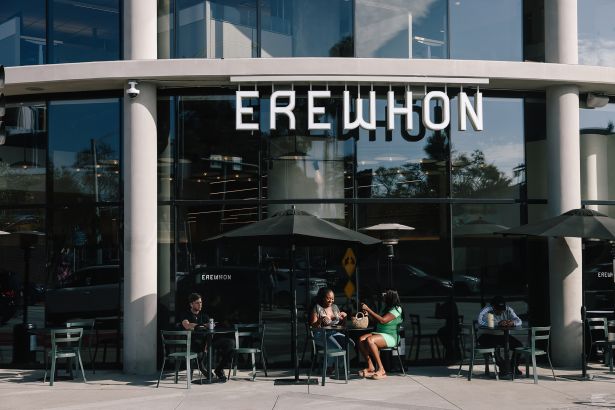
There’s a night-and-day difference between these corridors in different cities and neighborhoods versus Downtown L.A. and strip mall sites. CBRE research found that neighborhood and strip retail had the highest vacancy figures, 7.6 percent, of any retail type in Los Angeles last quarter, and recorded 83,000 square feet of negative absorption, bucking the larger market trend.
“We have fully built-out restaurants in Downtown L.A. that are turnkey, ready to go, with owners who would even do incentive deals, and it’s very difficult to lease,” Pakravan said. “Compare that with San Vicente, where you’re seeing $10-a-foot-a-month rents on side streets.”
The real divide, however, is big business and chains versus the entrepreneur. A recent report from Maher Commercial Realty spells it out: Traditional merchandise tenants in average locations with outdated build-outs and no foot traffic are the ones having trouble.
Small owners are getting clobbered by rising costs and rent, Sigal said, expenses that only the big guys can absorb. He predicts more tenants gravitating toward successful neighborhood centers, bringing their foot traffic with them, and creating a haves-versus-have-nots situation where more activity and revenue gets concentrated in successful shopping plazas, and small strip centers lose out.
“If you’re a small chain that wants to expand, if you’re a small restaurant chain, you’re not expanding to California,” said Sigal.
Raids from U.S. Immigration and Customs Enforcement (ICE) and other heightened anti-immigrant measures only exacerbated this already challenging situation, said German Cash, California state director of the Hispanic Federation, a nonprofit supporting Latino causes. The group helped organize a June 2026 hearing during which Californians gave testimony — some anonymously — about how the ICE raids, which appear to have peaked last June, impacted their lives and businesses.
Cash said the impacts vary. Entrepreneurs or workers may not be able to come back to work, customers fearing deportations mean less business and foot traffic, and breadwinners being separated from their families have reduced many households’ ability to spend on goods, groceries and services. Revenue declines were particularly significant for businesses in areas like Downtown Los Angeles, Little Tokyo and MacArthur Park.
“Folks aren’t able to market their businesses the way they normally do,” he said. “Many worry that putting up a Spanish-language sign will draw extra attention.”
Even before increased ICE activity, these immigrant entrepreneurs were also bogged down by both the cost of improvements — electrical, air conditioning, restrooms — as well as bureaucracy, claimed Pakravan. He argued that increased costs and inspection times have also put a damper on small business formation in these strip center spots. The average time to get, say, a nail salon approved and open has gone from six months to a year. A large chain may have the wherewithal and staff to help navigate these challenges, but most mom-and-pop small businesses simply do not.
Factor in mounting costs for these business owners, such as additional security measures, and it becomes that much harder to pull yourself up by your bootstraps and start a restaurant or store. In addition, new policies, like the new March 2026 restriction on granting federal Small Business Administration loans to permanent U.S. residents, will mean fewer immigrant entrepreneurs take or get a chance.
These burdens have impacted the fabric of Los Angeles, especially Downtown. As Cash pointed out, many small and immigrant-owned businesses had opened Downtown and helped fight to keep the neighborhood alive. Policymakers have talked about prioritizing Downtown. But, when these entrepreneurs aren’t able to flourish, those kinds of efforts take a big hit.
“We’re an immigrant-run city in many different ways,” said Cash. “But we’re especially reliant on immigrant labor and immigrant business owners.”


