Fortress Investment’s Eli Edwards and David Hammerman Don’t Balk at Small Deals
It's how the real estate equity executives have helped grow the firm to $55 billion in assets under management
By Larry Getlen September 15, 2026 6:33 am
reprints
The key to successful investing is often the ability to differentiate between commonly regarded wisdom and reality.
Eli Edwards, head of U.S. real estate equity for Fortress Investment Group, recalled just such a personal dissonance guiding him around three years ago regarding the much-discussed collapse of San Francisco’s reputation as a safe place to park investment dollars.
“We have to figure out themes that have short-term headwinds but also long-term tailwinds. That’s the hardest part of investing,” said Edwards. “The whole world thought San Francisco was dying. People were calling it a doom loop, or the next Detroit. But I live here in the Bay Area, and I did not see that happening on the ground.”
For San Francisco multifamily, the divide between perception and reality — often a savvy investor’s best friend — struck Edwards as stark.
He recognized the opportunity it provided.
One could have easily gotten the impression from the national media that San Francisco’s streets were burning. Yet, Edwards, a Maryland native who is married with three children and lives in Menlo Park, saw that a few troubled submarkets had been inaccurately portrayed as representing the fate of the entire city, and that most of the neighborhoods where people actually lived bore no resemblance to the hellscape people saw on the news.
Data also reinforced for Edwards that San Francisco’s multifamily was thriving.
All of this led Fortress to invest in over 40 multifamily properties in the city just as the rest of the world seemed to turn its back.
“We were able to buy multifamily assets there at about 50 percent off what they were pre-COVID,” said Edwards, who was previously employed at the real estate investment banking division of Barclays and before that at Bank of America, working out defaulted commercial mortgage-backed securities loans. “And, we had rent growth already happening in the city’s better neighborhoods versus the rest of the country, where cap rates were lower but there wasn’t actually rent growth happening on the ground, like in Texas.”
This sort of discerning judgment has propelled Fortress Investment Group, which was founded in 1998, to $55 billion in current assets under management (AUM), with over $200 billion invested on behalf of more than 1,600 institutional investors as well as high-net-worth individuals throughout the company’s lifespan.
In the San Francisco market, for example, other firms had seen success in the purchase of distressed notes. Edwards’s market knowledge steered him and Fortress in a different direction.
“There were large note sales we could have purchased that some of our peers have done very well in,” said Edwards, who has a bachelor’s degree in economics from Duke University. “But we decided not to pursue those, because about a fourth of those assets were located in submarkets we did not want to be in.”
Instead, the firm noticed a lack of liquidity within some of the city’s better neighborhoods, including Pacific Heights, Russian Hill and the Marina District.
“Instead of buying those note sales, we said, ‘Let’s buy [what] no one was showing up for, and aggregate a portfolio of best in class in San Francisco to attack that thesis,’ ” said Edwards. “It’s a matter of, where is the most illiquidity so we can get the best basis? And, in this case, it wasn’t distress. It was buying the smaller deals and aggregating to get the best product.”
This is typical of the approach taken by Fortress’ real estate group, which has deployed nearly $9.5 billion across more than 400 equity transactions since 2009.
The Fortress real estate group is run by Tim Sloan, vice chairman and global head of real estate. In addition to Edwards, the firm’s real estate equity leadership includes Cyril Courbage, head of real estate equity for Europe; David Hammerman, chief operating officer for Fortress’ real estate equity business; and Akio Yamashita and Eric Golden, who are both co-heads of Asia and co-heads of Japan real estate.
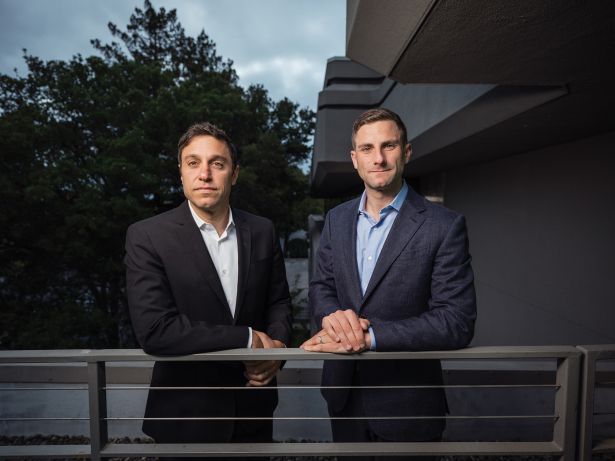
Speaking to Edwards and Hammerman, who have been at the firm for over 15 and eight years, respectively, reveals a team that seems to be in perfect sync.
Asked how closely they work together in evaluating investment opportunities, Hammerman joked, “Way too closely.” Edwards referred to Hammerman as “my partner in crime.”
Hammerman, navigating a sore throat obtained during a 136-mile charity bike ride the previous weekend, noted that a key competitive differentiator for the firm is its ability to regularly be as nimble and discriminating as it was in San Francisco.
And Fortress’ status as an institutional investor received a major boost earlier this year. In March 2026, the firm announced the formation of the Fortress Real Estate Exchange, a new 1031 platform that will offer access to institutional-quality real estate investments in student housing, senior housing and multifamily through Delaware statutory trusts (DSTs).
“Eli and I recognized that we had a deficiency in our core and core-plus offerings and strategy,” said Hammerman, who previously held vice president roles at Mack Real Estate Credit Strategies and Iconiq Capital, as well as handling West Coast debt tactics at Blackstone Real Estate Debt Strategies. “With a DST, you buy a real estate asset, drop it into a Delaware statutory trust, follow a set of rules, and then this qualifies as a 1031 exchange property.”
Fortress believes these will appeal to older people no longer interested in having to care for a property.
“A DST becomes a passive form of real estate that’s institutionally owned, generally trading up in terms of size and quality of the investment,” said Hammerman. “We think that’s going to be an option that people take more and more as they start getting older and face the decision to get out of active property management.”
But, while forging ahead on institutional types of investments, the firm doesn’t shy away from smaller investments that fit its overall thesis.
“We’re as institutional as anybody else out there,” said Hammerman, who has bachelor’s degrees in finance and international business from Georgetown University’s McDonough School of Business. “But we can get out of bed for the $500 million transaction or the $5 million transaction. For this specific case, we thought the best relative value was doing a lot of $5 million transactions.”
Hammerman notes that while these transactions are “not so fun” — a $5 million transaction and a $500 million deal often require about the same amount of work — Fortress will do what it takes to fulfill its investment themes.
“What we try to be known for is that we really are the most institutional group in the middle markets,” said Hammerman. “And sometimes that means having to work with smaller assets when you want to attack a theme.”
Isaac Sitt is the co-founder and co-CEO of CLS Living and private equity real estate investment firm Vesper Holdings, which invest in and manage student housing nationwide. Vesper is the ninth-largest student housing owner in the U.S., with over 30,000 beds and over $3 billion in AUM.
Sitt recalled how he first met with Edwards and others at Fortress in 2019 as he sought to transition from a “friends- and family-based equity resource” to a more institutional platform.
The firms have since collaborated on several student housing deals, with Sitt estimating they’ve acquired around 3,600 beds together with another 1,500 pending, in equity splits that find Fortress putting up anywhere from 75 to 97 percent of the equity and Sitt’s companies handling facility management and upgrades.
Together, Sitt said, they have had “a ton of success.”
As one example, he mentions a project they acquired together at the University of North Texas in Denton in February 2022 for $26.5 million. The asset was upgraded and then sold in December 2024 for $45 million.
Sitt said that Fortress gets “the lion’s share of control on major decisions,” and that the company’s judgment has been a significant factor in their joint success.
“These guys are sharp investors,” said Sitt. “They pushed me to sell that Denton deal when we did, and they were dead-on. It was the absolute best time to have sold.”
Similarly, Fortress has also focused on investments in senior housing. New construction in the sector basically shut down after COVID, and supply remains low, Edwards said.
But, with an aging population, demand has been rising.
“We’ve been focusing on senior housing for the last three or four years, and we continue to buy,” said Edwards. “We’re seeing very good fundamentals in this space, especially for well-
located, higher-end product.”
Edwards said that higher-end assets have been easier to acquire at a great basis due to “corporate distress,” and that the fundamentals at the asset level are driving net operating income (NOI).
“Because the fundamentals are so good, even with rates rising, we’re seeing cap rates actually come down in the space, which is leading to exits that are very good for our funds,” said Edwards.
In approaching both smaller and larger investments equally, Fortress often enjoys the advantages that accompany each.
With AUM over $50 billion, Fortress has access to the sort of information available to a shop of its size at a time when separating truth from fiction has never been more challenging.
“We have a ton of deals across the country. The best information you can have is your own, and that’s what we use,” said Edwards. “It might not all be from our equity book. We have a huge debt book and a corporate book, and that gives us a ton of information across sectors and geographies that we can [use to] figure out where we want to attack, as well as what is real and what is not.”
Hammerman added that the firm is tightly focused on methods of information-sharing that ensure a well-informed company across the board.
“We’ve spent a lot of time asking, ‘How do you break down internal silos and make sure people have access to all the information they need to make better investment decisions?’ ” said Hammerman. “Some of this is just getting the right people on the right calls and making sure they’re seeing everything. We also have very long and intense portfolio calls. We’re very intentional about inviting everybody across the group to join those, even if it’s not relevant for them, because you might hear something and get sparked to put one connection with another, or think, ‘Oh, I have a relationship here. Can I help with that?’ ”
Another example of the firm acting — or deciding not to act — on better information can be seen in its response to recent conjecture about the fate of New York City after the election of Mayor Zohran Mamdani.
The chatter about companies and wealthy individuals leaving New York would have been valuable information for investors to capitalize on had it only been true. Instead, much like San Francisco, news of the city’s demise had been greatly exaggerated, if not fabricated outright.
“I was excited for New York because I thought, with all that conjecture, we were going to get to buy some really quality real estate. But it never happened,” said Edwards. “If anything, the pricing has gone up since all the commotion happened. It’s a great example of where the noise was more than the reality.”
For Edwards, the chasm between the buzz and the reality regarding New York City was instructive.
“It’s been fascinating to watch, especially given the sources of some of the hysteria — people who should know better,” said Edwards, describing it as a case of, “Let’s all calm down and see where reality lands.”
“New York’s easy,” added Hammerman, a New York native who is married with one child and now lives in the Bay Area. “The Knicks win the championship, it’s a great city again.”
Of course, navigating the ever-shifting information landscape is just one challenge in today’s investment environment.
Given recent interest rate volatility, Fortress considers the real estate industry as having been in “its own recession” compared to the greater economy.
“I think this really separates who are great investors from folks that rode really low interest rates for a long time,” said Hammerman.
Hammerman noted that over the last three years, both the National Council of Real Estate Investment Fiduciaries Property Index and Green Street point to values having risen at around a 2.5 or 3 percent compound annual growth rate off a “very low bottom.”
“To outperform that, it really requires you to have good strategies and theses,” said Hammerman. “You can’t just index fund real estate and say you’re going to do well right now.”
He also noted that strategies involving the purchase of distressed debt at a cheap basis have become a “bounce along the bottom, with a handful of sectors and markets that have outperformed.”
“If you pick [the outperfomers], you could do very, very well,” said Hammerman. “You pick the wrong ones, you’re going to have a pretty middling performance.”
While determining investment theses and guiding them toward success always comes with challenges, Fortress has had one extremely difficult situation to deal with beyond financial norms. In September 2025, the company’s co-CEO and managing partner, Joshua Pack, died suddenly at age 51.
Hammerman called the loss an “immense personal tragedy.”
“For me, Eli and a lot of the team, that was really tough,” said Hammerman.
Hammerman and Edwards noted that while the personal sense of loss was deep, on the business side, the firm benefited from a vast pool of talent, especially since so many high-level positions there are led by co-heads.
After Pack’s passing, Jack Neumark joined Drew McKnight as co-CEO and managing partner.
“Jack is someone that Eli and I look up to tremendously,” said Hammerman. “With Drew, he’s done an amazing job of making sure that we have not missed a beat as a firm.”
Hammerman said that Fortress has developed “an immense amount of processes, DNA and culture” over the years that transcend any one person.
“Josh’s death was hugely impactful on a personal and professional basis,” said Hammerman. “But, at the same time, we didn’t really miss a beat as a group, because that DNA is embedded in all of us.”
That firm-wide DNA can be credited for much of Fortress’ success. While many factors enter into the company’s investment decisions, Edwards emphasizes the importance of fundamentals, especially in these often hard-to-decipher times.
“You have to be very careful, because as an index fund, when interest rates go up, real estate doesn’t perform fantastically. That’s pretty obvious,” said Edwards. “But, when you pick areas that have great fundamentals, not only do you get the NOI uplift from those fundamentals, but also cap rates come down no matter what happens to interest rates.”
In assessing the multifamily market nationwide, then, Edwards mentions that the sector is “on its head” from where it was five or six years ago, with the Midwest and some of the Northeast now “the darlings of the markets,” Chicago currently one of the top markets in the country, and the Southeast “at the bottom of everyone’s list.”
With that knowledge in mind, Fortress looks to the fundamentals to guide them in the right direction.
“We just don’t see fundamentals changing yet in the Southeast to the point where we can underwrite and get opportunistic returns,” said Edwards. “Eventually, fundamentals will return, so we’re looking pretty intently there, but we’re going to wait until we see real signs of recovery before diving in. But it’s a space that I think is going to be very interesting over the next three years.”
Larry Getlen can be reached at lgetlen@commercialobserver.com.