AI Is Rewiring the Office-Leasing Playbook
Here's where artificial intelligence firms are looking the most when it comes to workspace
By Ryan Masiello July 27, 2026 3:56 pm
reprints
Much of the conversation around artificial intelligence and commercial real estate leasing has focused on whether AI will bring people back to the office. I think that’s the wrong question. The more important one is where AI companies are choosing to invest, hire and build because those decisions tell us far more about the next office cycle than return-to-office policies.
After 20 years in commercial real estate, I’ve learned to be skeptical of bold predictions. I’ve watched plenty of cycles get oversold, but this one feels different, and the data tells us why.
Start with where demand is actually concentrating. One submarket in San Francisco — the non-core central business district, including South of Market and Mission Bay — is responsible for 25 percent of all active AI office demand across the markets we track. San Francisco’s South Financial District accounts for another 16 percent, San Jose another 14 percent, and New York City’s Midtown South and Midtown another 11 percent and 8 percent, respectively.

These five submarkets across three markets account for nearly three-quarters of current AI square footage. National AI office demand is up 85 percent year-over-year, but, across the industry’s largest AI hubs, demand is up 179 percent. The story isn’t simply growth — it’s concentrated growth.
Today’s market is fundamentally different from the last tech cycle. OpenAI raised $122 billion in February at an $840 billion valuation. Anthropic followed with $30 billion in a Series G at $380 billion. These aren’t 2022-era companies burning headcount against speculative valuations — both are scaling revenue far faster than headcount.
Not only are current fundamentals far more sound, but the market opportunity is massive. Nvidia CEO Jensen Huang recently stated that writing code is not the job of a software engineer. Instead, they are, and always have been, problem solvers.
Understanding this is critical to understanding the concentration of AI demand in the Bay Area and New York City. The firms expanding in these markets are not targeting junior coding talent available anywhere. Right now, the demand is for senior problem-definers, the people who decide what gets built and why.
AI doesn’t diminish the value of exceptional talent, it amplifies it. That kind of talent naturally clusters, and AI has made those clusters even more valuable because a single experienced problem-definer can now direct far more output than ever before.
That doesn’t mean the next generation of engineers will be left behind. AI hands a junior engineer, on day one, the leverage that once took a decade to earn, and those who learn to leverage it as true problem solvers will define the next generation of talent these markets fight over.
Recently, Blackstone and Brookfield together committed $2 billion to enterprise AI deployment platforms built around OpenAI and Anthropic. When firms of that size make structural commitments, it means they have already seen the productivity gains and believe the next phase is execution at scale.
That execution is not going to happen only in the Bay Area and New York. Blackstone and Brookfield’s portfolio companies span energy, finance, utilities, industrials and health care. Embedding AI into those businesses creates demand in the markets where those businesses already operate. Our demand data is already showing where that next wave is beginning to emerge.
Seattle is the most visible early signal, with AI demand up 390 percent year-over-year, driven by enterprises expanding into a deep engineering talent market at lower cost than the Bay Area. Austin is another, now at 1.2 million square feet of active AI demand, making it the fourth-largest AI market. Northern Virginia, Atlanta, and Chicago are the markets to watch for the next leg.
Each of these reflects a different driver of AI adoption, from defense and government technology to enterprise software and broader enterprise deployment, but together they point to where demand is moving next.
For CRE executives, the portfolio decisions that matter — where to allocate capital, how to position assets and which markets to prioritize — should be informed by forward-looking indicators rather than lagging market statistics. The demand growth in Seattle, Atlanta, Northern Virginia and Chicago is already telling a story that market statistics won’t confirm for another six to 12 months.
But the more important question for a CRE executive reading this is what AI means for their own organization, and whether they are building that capability on the right foundation. Blackstone and Brookfield made those commitments because AI is already reshaping how their own firms work. The firms best positioned for this cycle are the ones whose data is structured well enough for AI, and who built that foundation before they needed it. That is what turns AI adoption into a durable advantage.
The office market has always rewarded those who recognize structural shifts before they become obvious in market data, and AI is creating one of those moments now. Helping the industry build that foundation has been our work since the beginning, and we believe it will become even more important in the AI era.
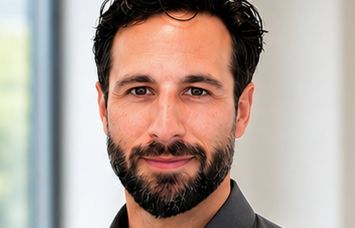
Ryan Masiello is co-founder and chief strategy officer at real estate software platform VTS.