Rise of the Data Center ‘Wildcatters’
A new generation of entrepreneurs is shaking up data center development
By Brian Pascus July 27, 2026 6:30 am
reprints
The hit television series “Landman” stars Billy Bob Thornton as a West Texas oil executive who mines distant plains and deep oceans for the petroleum that powers modern life. If showrunner Taylor Sheridan is looking for a sequel, he won’t have far to turn.
A new breed of businessmen termed “wildcatters” is shaking up the data center and electricity industries, earning fortunes and enemies at equal rates, as they attempt to corner the market for land zoned for the all-sacred power that hyperscalers and commercial real estate investment firms need to make good on the $7 trillion data center boom.
“We’ve seen some guys be successful, others hit a dead end, but I call them ‘wildcatters’ because, in the same way people would buy tracts of land, drill, and hope to find oil, they buy land with the optimism they can turn it into powered land with 100 megawatts of power,” said Morris Betesh, founder of Arrow Real Estate Advisors, a debt and equity brokerage.
And, while most wildcatters are investment entrepreneurs with some capital markets experience, the data center gold rush has seen businesspeople from all walks of life attempt to scoop up whatever land is still available to literally power the development of the asset class.
“Everyone is getting in on it, from farmers to institutional fund managers,” said Dom Espinosa, senior managing director for Newmark’s Texas industrial capital markets team. “It’s probably as wide a range of people chasing the same thing — from the technology to the energy sector — as we’ve been able to experience in commercial real estate.”
Courtney Hammond, partner in the real estate group at law firm Vinson & Elkins, noted that a wildcatter often secures an option for land that already has zoning approvals for a future data center, and either has access to transmission or a binding promise of future connectivity — and subsequently presents this lucrative package to the highest bidder.
“Just as the data center space has attracted people outside of traditional real estate developers, we’re seeing private equity firms looking for sites, and energy companies coming in to buy up entire parcels of land, flip a piece of it, and just provide the power,” Hammond explained.
“But then we see people who are really smart — the wildcatters — who see a transmission line and see the opportunity to do the assemblage of a property, to put the pieces together, which they can sell to a developer,” she added.
Seattle startup Cloverleaf Infrastructure, led by former Microsoft executive Brian Janous, has raised and spent $300 million to buy land, secure deals with utility companies, and purchase electrical equipment to outfit land for future data center use.
The New York Times reported in March that Janous and Cloverleaf sold a 1,900-acre site secured by 1.3 gigawatts of power to Vantage Data Centers for $200 million, where that same land will be used to develop a $15 billion data center complex for Oracle and OpenAI.
Another wildcatter, Pine Line, a regional property and equipment company, sold 400 acres in Archbald, Pa., to Archbald Ventures and an unnamed developer who plans to build a $2.1 billion data center campus that will span 17 million square feet.
“Nobody can ignore the demand that is going on in the space right now,” said Carrington Brown, global head of data centers at Affinius Capital. “Everyone is trying to figure out how they can play off that demand.”
Northern Virginia and the Washington, D.C., area were once the epicenter of data center development and growth, especially after the telecommunications boom of the 1990s and early 2000s. Now, however, the spread of data center investment is touching nearly every corner of the country.
“You’re seeing locations that are a little more rural, or where there’s less development, less regulation, and just cheaper land in general,” said Nicole Fenton, a partner at HSF Kramer. “I’m seeing people try to option the land while doing the entitlements that complete the development, and everyone is thinking they’re going to have powered land to sell.”
As these wildcatters put their stamp on the data center space, this stylish term — “powered land” — is suddenly on everyone’s lips.
“It takes a long time, and a lot of variables, to get the land to go from land to ‘powered land’ — powered land is essentially ready for vertical development,” explained Betesh. “Powered land is something that will get a look from Alphabet, Meta, AWS, all the big end users.”
“So there are tons of entrepreneurs trying to figure out how to take a piece of land that might cost $50 million to buy, but make you $300 million,” he added, referring to the price a hyperscaler might be willing to pay.
Empty rural land that might have sold for $2 per square foot three years ago is suddenly worth $25 per square foot once these wildcatters secure transmission lines to power future data centers, along with the water needed to cool them, according to Curt Holcomb, vice chairman with JLL’s global data center solutions practice.
“Smart people realized early on that they could add a lot of value to land,” said Holcomb. “It’s because someone put together the power capacity, along with fiber-optic cable connectivity and access to water, that you’ll ultimately have a successful data center development.”
Adding value to the land, however, is not an easy — or inexpensive — feat. It requires coordination and cooperation with local utility companies; it requires transmission lines getting built; it requires avoiding messy lawsuits over easements and rights-of-way; and it requires building power substations and water treatment facilities on site. Each of these variables can mandate that wildcatters make full use of any political connections and procure the necessary capital to finance every possible avenue.
“The amount of power required for these sites is so large that it requires a tremendous amount of investments both from developers and the utility companies,” said Betesh.
And that’s if everyone plays by the rules. Hammond noted that some wildcatters aren’t even buying properties or parcels but are merely securing options to eventually purchase land, and sometimes pay lesser monthly rates to keep that land off the market.
“They’re not putting all their money where their mouth is — they’re putting just enough money to keep the land off the market while they work out the other pieces of the puzzle,” she said.
But like the landmen of the classic West Texas oil economy, there’s tremendous risk amid so much reward, as the new age data center wildcatters have to contend with a real and lurking uncertainty that could turn the entire industry off one day: The U.S. simply doesn’t have the electricity to power present and future data center demand.
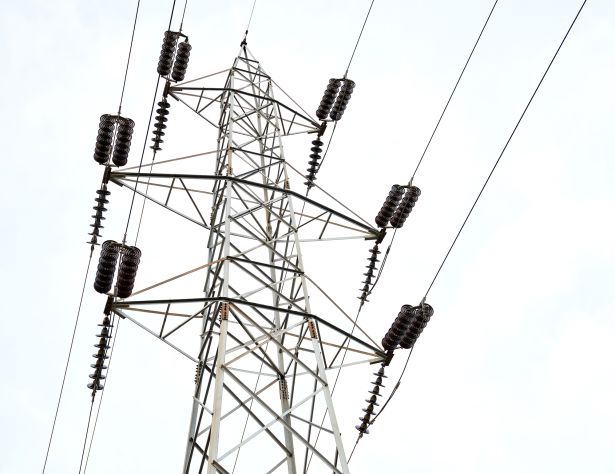
“Power is at a premium right now, and we’re quickly running out of it,” said Matt Frey, executive vice president and general manager of Skanska USA Building, a construction firm.
“I was recently interacting with a wildcatter, and the big issue he told me was, ‘I have land, I have water, but I can’t get power to the site,’” recalled Frey. “So the speculation, the risk that a wildcatter takes, is really starting to come to fruition, where they can see they can’t draw the power, so the hyperscaler isn’t interested. That’s the core risk.”
Power gamble
Perhaps the main reason power generation is becoming increasingly scarce across the U.S. is due to the enormous capital that has flowed into data center development since the AI revolution officially took off in late 2022 with the public release of ChatGPT.
Spending on U.S. data center construction is expected to reach more than $70 billion per quarter between 2025 to 2028, according to S&P Global.
Researchers at S&P Global found that AI hyperscalers are now seeking 85 gigawatts of new power generation for their pipeline of data centers by 2030, which is a fifth more than the U.S. power grid can currently supply, creating a situation where electricity is now as critical as oil to the global economy.
“There’s an arms race to access near-term power, because there’s a fear that if you don’t have power in this first tranche then you might be waiting awhile,” said Newmark’s Espinosa. “The demand is outstripping what they have currently. That’s what the race is, and anyone who can get hold of a powered land site believes they have a way to get it capitalized.”
And the desire for electric power is not just limited to the United States. Stepstone Group, a global investment analyst, found that by 2030 global electricity demand from data centers will increase by almost 128 percent from 2024 levels.
But the ravenous appetite of American industry is causing bottlenecks here at home, exponentially increasing the risk for any wildcatter, but also giving them the opportunity to acquire tremendous leverage if a land and power deal goes their way.
Goldman Sachs found that by 2030, the U.S. is expected to account for almost half of the anticipated global power demands for data centers, as in the third quarter of 2025 alone U.S. hyperscalers leased more power capacity than the rest of the world combined in 2024.
“All the [domestic] suppliers, manufacturers are asking for the same amount of power that doesn’t exist today in our traditional industrial base,” said Espinosa. “We’re heading into this powered industry that’s three to four years from being built out, and we haven’t figured out how to work this demand through the system.”
To this end, the utility companies are telling more wildcatters, and even some hyperscalers, to wait in line, at least until the next decade, as ad-hoc power generation buildouts attempt to meet the growing demand.
Frey said that anyone seeking a power permit for their newly acquired land from any American municipality is being told by the utility companies to wait until 2030, and more realistically 2033, depending on usage levels.
“The demand won’t go away. This is the future,” said Frey. “If we want our lives to continue and grow in the manner they are currently on, we will have to collectively solve this issue of a depleted power infrastructure.”
Texas has become ground zero in the data center power wars. Via ERCOT — Electric Reliability Council of Texas, the nonprofit corporation that manages the electrical grid for 27 million Texans — any corporation or limited liability company applying for new power connectivity must pay $50,000 per megawatt of power request just to find out if a particular powered land site will even be approved by the Texas Public Utility Commission.
“Texas is the greatest example of this phenomenon of any region in the country,” said JLL’s Holcomb, who noted that 50 percent of the large electric load requests in the state have come from wildcat entrepreneurs, and that the state has received demands for over 400 gigawatts of power capacity, even though the entire ERCOT grid is only 100 gigawatts.
“There’s no way that amount of capacity can be supplied. So from that standpoint many entrepreneurs have gummed up the system to the point that ERCOT and the utilities aren’t sure who to allocate the approvals to,” said Holcomb.
The deposit requests are only getting more expensive across the country as power commissions and local utility players aim to siphon out the legitimate powered land requests from the merely speculative applications that aim to monetize land before developing.
Affinius’ Brown said public utility companies have a duty to protect the average American ratepayer from covering the cost of infrastructure improvements needed to power data centers. So they are weeding out speculators and charging exorbitant deposit fees to approve binding power commitments for the true players.
“Six years ago, you could tie up land and get a letter of intent for a few hundred thousand dollars,” said Brown. “Today, to have a formal commitment for power you need real capital, and those numbers are in the hundreds of millions of dollars just to secure it.”
Grant Goldman, chief operating officer and executive vice president at Ambrose Property Group, a development firm, said that power companies are now inundated with incessant approval requests, which are often coming from farmers or wildcat developers who argue land that was once worth $20,000 per acre is now worth $400,000 per acre because it can be zoned for a future data center.
“The power companies got wise to it, but, candidly, they’re struggling to process the requests and vet what’s real and what’s not,” said Goldman, who recalled that his own firm issued an application for large-load supply on a parcel it acquired and was told that any application required the equivalent of investment-grade credit just to pass the detailed case study issued by the local utility.
“They are saying you can’t just be a developer, or even a big one. You have to be one of the hyperscalers or Blackstone or someone like that to even get serious consideration from the power companies,” recalled Goldman. “It’s the most extreme case, but it’s not uncommon.”
Complicated rewards
Aside from the growing costs, lack of guaranteed electricity, and competition for both land and power generation capacity, wildcatters now face the added complication of political opposition.
In July, New York Gov. Kathy Hochul issued the first statewide pause on data center development, issuing a one-year ban for hyperscalers as the state reviews how to implement better environmental and electrical grid regulations.
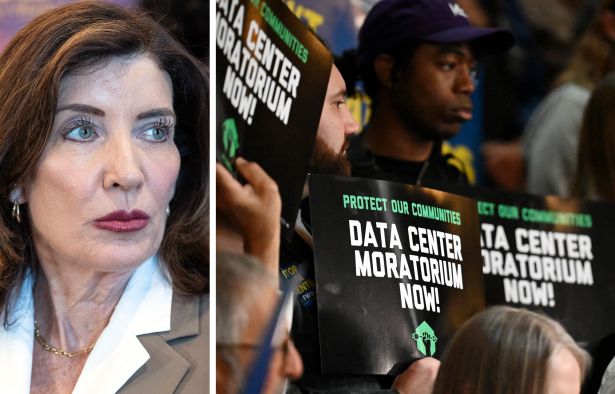
But New York may not be alone for long in its opposition. Lawmakers in at least 15 states — including heavy hitters such as Pennsylvania, Virginia, Michigan and Maryland — are considering banning new and ongoing data center development, according to the National Conference of State Legislatures.
All of this has only added to the uncertainty facing wildcat entrepreneurs, who in addition to the difficulties with utility companies now must confront the additional challenge of local approvals and NIMBYism.
“There’s a lot of risks that can take years,” said Arrow Real Estate’s Betesh. “There are dozens of entrepreneurial guys out there buying land, leasing land, optioning land, doing all sorts of deals, trying to take land through this process.”
Hammond said there is now increased pushback from communities toward granting data center approvals, as more citizens are showing up to local meetings to oppose developers being granted zoning exemptions or special use permits to develop new data centers on powered land.
“They’re worried about their increased power costs, they’re worried about water, they’re worried about these assets being close to their homes,” said Hammond. “But some of the wildcatters are going on site, they’re part of the community, they’re getting closer than larger developers would, and they’re finding ways to combat it.”
Aside from political pushback, the biggest players on the block are now taking the wildcatters head on. Knowing that they are the ones creating value on site, and putting the investment capital in to plug the land into power, an increasing number of hyperscalers are looking to bypass the expensive wildcat dance altogether.
“The hyperscalers don’t want the middleman to make a bunch of money. The middleman is frustrating to the hyperscaler, so the hyperscaler is trying to wildcat themselves,” said Goldman. “They have a bunch of in-house resources that can deal with utility companies directly, or an in-house or outside real estate brokerage to do the assemblage themselves.”
Even so, some wildcatters are profiting from the increased competition among hyperscale giants, according to Scott Rubinsky, a partner at Vinson & Elkins. Rubinsky said wildcatters who’ve already secured the land, water rights and electrical permitting are attractive candidates for investment when time is of the essence in so many data center deals.
“There’s way more demand for data centers than there is supply, so the folks who can move most quickly are the most desirable candidates for investment,” he said. “Folks who are putting pieces of the puzzle together make a site way more attractive to someone who has a bunch of capital to deploy.”
If this sounds dizzying, and, frankly, quite stressful to take part in, Affinius’ Brown emphasized that wildcatters can stand to option several sites at once, and sell off only one or two to the hyperscalers, because “the reality is the upside is so significant that every single deal you do doesn’t need to be a winner,” he said.
However, Brown and several others repeatedly emphasized that the land acquired doesn’t become “gold” until there’s a clear path to power and the entitlements are secured from the utility players.
“That’s what’s created this race for guys who go out there and can be quickest to power,” said Betesh. “And the multiples are so big that guys are thinking about this in a venture capital type of way, where it’s ‘I’ll place 10 bets, and if two hit, then I’m a rich man.’”
With this much capital at stake, the question, of course, is how long will the wildcat casino stay open?
“I think you’ll only be able to do so much on wildcatting going forward,” said Espinosa, “We might have already had that unique window to grab as much land as you can and get well-positioned sites. It’s just going to get more competitive and harder to do.”
The pessimism is shared by other experts in the data center world.
“The true entrepreneurial wildcatter days are probably over — the cat is out of the bag, so they say,” said JLL’s Holcomb, who noted virtually anyone who owns land is trying to get in on the action.
“I’ve had farmers call me from tractors in far West Texas asking if their land is worth more as a data center just because it has transmission lines running through it,” he said. “I told that farmer he had better stick to farming.”
Brian Pascus can be reached at bpascus@commercialobserver.com.