Design and Preconstruction Startup LightTable Raises $22M Series A
AI native platform says it can identify early risks in development plans as well — if not better — than the likes of Anthropic’s Claude
By Philip Russo June 2, 2026 8:45 am
reprints
LightTable, a design and preconstruction risk-reduction platform, announced that it has raised a $22 million Series A round.
Early-stage venture firm Innovation Endeavors led the round, with participation from Blackhorn Ventures, DivcoWest Ventures, and 9Yards Capital, as well as existing backers Primary Venture Partners, MetaProp and Banter Capital.
LightTable will use the latest funding to scale its artificial intelligence-native quality assurance and control product to hire more architecture, engineering and construction (AEC) support as it expands nationally.
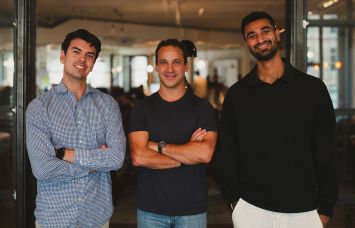
“LightTable identifies risk in construction projects,” said co-founder and CEO Paul Zeckser. “We start doing that during the drawing phase, typically 50 percent in design development. That risk manifests itself in errors and omissions in the drawings that today are left unaddressed and unfixed. So, when you move a project from drawing into construction, you’re going to have a lot of change orders, a lot of [requests for information] — and we’ve even worked with clients who have had massive lawsuits — all because of errors and omissions in the drawings that should have been caught and were not caught.”
The latest funding comes after a growth spurt over the last nine months that has given LightTable greater market traction, including working with some of the country’s most active developers and general contractors such as Suffolk, Mill Creek Residential and Swire, said Zeckser.
Since emerging from stealth in August 2025 with a $6 million seed round, LightTable has to date reviewed more than 20 million square feet of construction documents and $3.5 billion in total project costs.
“We believe we can now read drawings better than architects and engineers — that our AI can outperform people with decades of experience,” Zeckser said. “We think we’re the best at reading drawings of any company we’ve come across, so the product is incredible.
“We’re working now with some of the biggest companies in the world and building some of the largest construction projects in the world. We can now accelerate our hiring on sales, marketing, product development, customer support, and customer success.”
With 20 full-time employees, including seven AEC experts, LightTable compares its AI’s accuracy favorably to competitors like Anthropic’s Claude.
“I think one of the biggest questions we’re getting now is a build versus buy question,” said Zeckser. “Some people will internally say, ‘Well, we have a $50 a month or $20 a month subscription to Claude, so we could just do this ourselves.’
“I have a lot of great information about why I think that’s not even in the realm of possible. We routinely look at what Claude, Open AI and the rest can produce. Most recently, we uploaded a set of drawings to Claude. It found seven issues, five of them were good issues. LightTable found 700 that were critical, and 200 of them were high priority. The five issues that Claude flagged were in the top 200 that we flagged. And that’s because we’ve built something with AEC experts and AI experts. Of course, Anthropic has plenty of AI experts, but they don’t have AEC experts who are constantly improving Claude. So that’s become a thing that we’ve been selling against recently: ‘Maybe we’ll just build this ourselves.’ I’m like, ‘It’s gonna be a lot of work.’”
Demand is rapidly growing for its services. That is largely driven by the return on investment (ROI) for customers adopting AI-powered solutions, said Zeckser.
“I think the reason we’re seeing unprecedented adoption of these types of tools in construction is because the ROI is so good,” he said. “And when ROI is there, if you go all the way up to the COO or CEO or CFO, they’re going to say, ‘We need to be doing more.’ So when we work on a project with our customers, they’re pretty surprised at the quality of the results that they get and the speed that they get them. They immediately start into the schedule for the construction project, accelerating deadlines or things that are easy to miss, but they don’t slip anymore.
“We were told by one customer that when the subcontractors bid out all the drawings — drawings that have been reviewed by LightTable — several subcontractors said, ‘This is the cleanest, best set of drawings we’ve ever seen.’”
LightTable claims that it catches 70 percent of design errors that eliminate the need for a change order — compared to 30 percent when humans review the plans — and completes the process in three to five days, compared to three to six weeks for manual review.
De-risking the construction process from its earliest stage is one of the prime reasons LightTable’s investors are bullish on the company’s future.
“Preconstruction is where major projects are won or lost — a single missed conflict in a drawing set can cascade into months of delay and millions in change orders. Yet, the workflow still depends on labor-intensive review by a small number of highly specialized experts,” Scott Brady, founding partner at Innovation Endeavors, said in a statement. “LightTable pairs deep construction expertise with multimodal AI that genuinely understands drawings, specs, and the relationships between them. We’re excited to continue partnering with the team as they build the foundational AI infrastructure for the future of preconstruction.”
Philip Russo can be reached at prusso@commercialobserver.com.