NYC’s Multifamily Market Has Split. Here’s What Investors Need to Know.
By Lev Mavashev June 15, 2026 8:40 am
reprints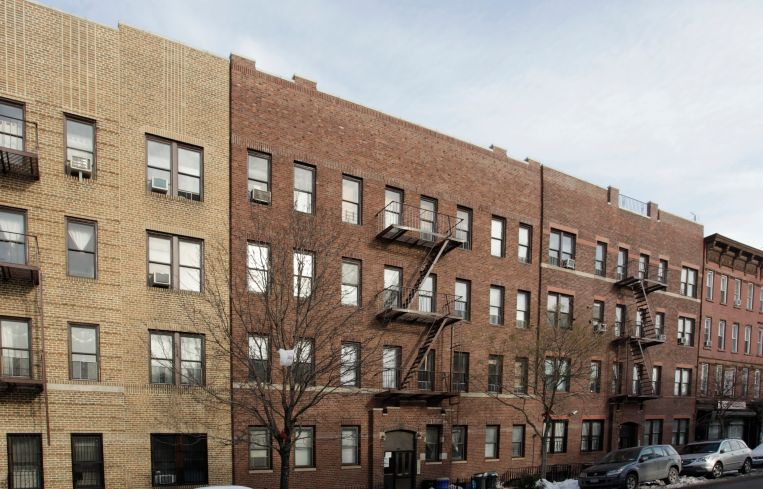
There’s a narrative floating around that the New York City multifamily market is “back.” That’s only half true. What’s actually happening is more nuanced — and more important for investors and owners to understand. The market isn’t just recovering. It’s diverging.
Today, we are seeing one of the widest gaps in buyer demand that we’ve seen in years. Not across boroughs. Not even across asset size. But across asset quality.
Put simply, the buyer pool for “A” product — well-located, free-market buildings in prime Manhattan and top-tier neighborhoods — is as deep as it’s been in a decade. Meanwhile, “B” and “C” product — particularly rent-stabilized assets in less central locations — are still struggling to attract consistent, competitive demand.

That divergence is defining this market cycle.
Let’s start with what’s working.
If you own a clean, free-market building in Manhattan or Brooklyn, especially in a core neighborhood, you are in a very different position than you were even 18 months ago. Buyers are back — and not just one type of buyer. We’re seeing private capital, family offices, institutional players, and, increasingly, foreign investors all competing for the same deals.
That breadth matters. It’s not just more buyers — it’s more types of buyers. That creates pricing tension, compresses cap rates, and shortens marketing timelines.
We’ve seen this play out in real time. Well-located, cash-flowing assets are generating multiple bids, often with aggressive terms, including low-leverage or all-cash offers. Foreign capital, in particular, has re-entered the market with conviction, targeting stable, income-producing properties that offer long-term rent growth and operational flexibility.
The fundamentals are supporting this demand. Rents in Manhattan continue to push upward, defying national trends, and supply remains constrained due to stalled development pipelines. The result is exactly what investors want: predictable income today with upside tomorrow.
And, when you combine that with improving clarity around interest rates and policy, you get something we haven’t had in a while: confidence.
Confidence brings buyers off the sidelines. And, right now, it’s doing exactly that. But here’s where the story changes.
That same level of demand does not exist across the board.
For “B” and “C” product — especially rent-stabilized buildings in the outer boroughs — the buyer pool is not only smaller, it’s more selective, more cautious, and, in many cases, fundamentally different.
These deals are not attracting institutional capital. They’re not drawing international buyers. Instead, they’re largely limited to local operators, family offices, and opportunistic investors who are underwriting to uncertainty.
And that uncertainty is real. The 2019 tenant-friendly rent laws didn’t just impact pricing. They changed the entire risk profile of these assets. Revenue growth is constrained, operating costs are rising, and the ability to create value through renovations or repositioning is significantly limited.
That’s why pricing in this segment has reset so dramatically — often down 40 to 50 percent from pre-2019 levels.
Yes, there are buyers. But they are underwriting to a different thesis: long-term holds, potential policy shifts, or basis plays — not immediate income growth.
And that’s a much narrower pool. This is where the divergence becomes impossible to ignore.
On one side of the market, you have competition, liquidity, and pricing strength. On the other, you have hesitation, limited capital, and a reliance on niche buyers willing to take on regulatory risk.
We’re even seeing it in the data. Transaction volume is rising, but average deal sizes are shrinking, signaling that buyers are gravitating toward more manageable, financeable and lower-risk assets. At the same time, large-scale and well-located assets continue to command the majority of capital, particularly from institutional and international investors.
That’s not a uniform recovery. That’s a bifurcation. So what does this mean for owners and investors?
First, owners of “A” product need to recognize the moment. The depth of the buyer pool today is not theoretical — it’s actionable. If you’re considering a sale, this is the kind of environment where competition can drive outcomes beyond expectations.
Second, owners of “B” and “C” product need to be realistic. This is not a pricing environment driven by emotion or momentum — it’s driven by math. Deals are getting done, but only when they’re aligned with today’s underwriting realities.
And, for investors, the takeaway is even more critical.
You’re no longer just picking a borough or a unit count. Instead, you’re picking a risk profile. The spread between core and regulated assets is not just a pricing gap — it’s a fundamentally different investment thesis.
One is about stability, liquidity and global demand. The other is about patience, conviction and navigating uncertainty.
Both can work. But they are not interchangeable.
What matters is that the New York City multifamily market isn’t moving in one direction — it’s splitting in two. The broader buyer pool is real, but it’s concentrated where fundamentals are strongest. If you understand where the demand is — and where it isn’t — you’ll be positioned to act while others are still trying to figure out what market we’re actually in.
Lev Mavashev is the founder and principal of Alpha Realty, a New York brokerage focusing on multifamily.