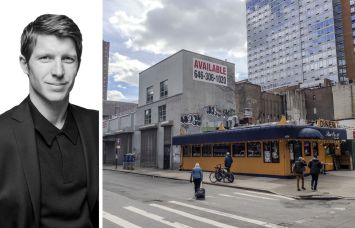
Forest Development’s Peter Baytarian: 5 Questions
His firm’s Lake Park, Fla., condo projects are fetching north of $1,500 a square foot
By Jeff Ostrowski May 15, 2026 1:35 pm
reprints
Before Peter Baytarian built Nautilus 220, the town of Lake Park in Florida’s Palm Beach County wasn’t known as a hot spot for luxury real estate.
Now that the two-tower project has been completed, 90 percent of the project’s 330 units have been sold at prices ranging from $620,000 to $4.3 million — levels Baytarian describes as three times as much as older condos nearby. Most of the units sold for more than $1 million, according to Palm Beach County property records.
Baytarian, founder and managing partner of Forest Development, is moving on to his next project: He owns a site just south of Nautilus 220 in Riviera Beach, Fla. He plans a luxury tower there to be known as Oculina.
The following conversation has been edited for length and clarity.
Commercial Observer: When I think of Lake Park, I don’t think of something like this. How did you envision luxury product in a market where this kind of product hadn’t existed?
Peter Baytarian: Part of it was by accident, I had been working in New York and living in Florida, wanting to find a way to spend more time here and be here full time. A person who was selling me a boat, who I became good friends with, told me he knew of a waterfront site that was available for sale, and that the municipality was going to be very much in favor of upzoning.
I came here, and I looked at it, and, from the street, I didn’t understand what the site was. I walked from the marina, saw that this site was going to be incredible, and found it hard to believe that something like this was still available.
I put forth a long-term contract to buy it, subject to the rezoning. And, while I had that under contract, I was able to find a couple other parcels that were abutting it, and I put those under contract, and the site went from a smaller site to 2.75 acres. It was a four- or five-year process in rezoning. The rezoning took much longer than I thought, but, in some ways, it worked in my favor. COVID happened, and whereas, initially, I thought it was sort of the end of the world, and real estate wasn’t to sell.
What was the biggest surprise for you about this project?
The biggest surprise was COVID and what that did to pricing, and how that accelerated sales, and also how we basically had to reposition and find materials that were going to be available, not knowing when we were going to be able to get stuff from overseas. Supply chain issues were a huge challenge during the pandemic. On the material side, prices have long stabilized.
On the labor side, they didn’t get back to the same numbers where they were before. We have a shortage here in Florida. There’s too many projects, not enough labor.
How are you dealing with the labor shortage?
Fortunately, right now our project is finished. We were a major, major project in the area, so when we were under construction, we had a contract with the concrete suppliers that they would deliver concrete between 2 and 4 in the morning. And, because our cores were so large, we got permission from the city to be able to pour at that time, so we wouldn’t block the roads. We were taking all the supply, but they were putting on an extra shift for us.
So our concrete trucks would come in and pour concrete all night. In the morning, the finishing crews wouldn’t arrive while it was being set. The concrete trucks would be gone. We were very lucky that way that the size of the project really helped us keep the attention of the subcontractors.
Now that we’re finished, we know what to do. We’re gonna do the same thing on the next one.
What has been your biggest challenge?
Initially, it was that this is not a proven market. The price point we were looking at was triple what the existing projects were in the surrounding areas. And what was going to differentiate us so that we could get that? So we promised that we were going to bring a building with resort-style amenities, restaurants and retail, and we did.
I think that was our challenge: getting the buyers to sort of accept that. Today, our biggest sales are just under $1,600 a square foot. So we’re getting the same money as they’re getting on Singer Island, on the beach, and we’re actually getting buyers from the beach, who bought in new buildings four or five years ago, who bought there as a seasonal sort of vacation thing.
And then they realized they want to be here full time, and they want to be more connected to the mainland. Yes, it’s great to have a beach property, but you don’t have a supermarket there. You’ve got to spend 10 minutes getting off the island.
What’s your next project?
The next project is called Oculina, and it is similar to Nautilus. Oculina will be just under 400 units, 300 feet high. We’ll have two restaurants that have public parking, great views, and it will help sort of further facilitate this area. Price points there will be from probably $1.4 million to just under $5 million — similar price per square foot to Nautilus.
Our pricing is very aggressive. These are not distant water views. These are strong water views. You get out the door, you have the marina downstairs, open for the public. You have tennis, you have pickleball courts. You have four restaurants in the area, a dog park.
At Oculina, I think we’re going to put summer kitchens on all the big balconies. We’re probably going to eliminate the bathtub in a lot of the smaller units. We hadn’t thought about parking for oversized trucks, but we’ll add some of that for the next one.
Jeff Ostrowski can be reached at jostrowski@commercialobserver.com.