Presented By: LRE Advisors
Big Shift In Retail Space As Institutional Capital Moves Into Laundromats
By LRE Advisors May 14, 2026 12:00 am
reprints
Why Institutional Capital Is Moving Into Laundromats – and What This Means for Retail Landlords
There are more than 35,000 laundromats in the United States, nearly all of them leasing space in strip malls, neighborhood shopping centers, and mixed-use retail corridors. The laundromat industry generates an estimated $6.8 billion in annual revenue. Laundromats have a simple, predictable business model with a resilient cash flow; during COVID-19, laundromats were classified as essential businesses and remained operational while much of the retail landscape went dark. Savvy operators routinely sign 10- to 15-year initial lease terms with multiple renewal options, making them among the more stable long-term tenants in inline retail.
By most measures, laundromats should be one of the more attractive tenant categories in retail real estate. And yet, for most landlords and leasing brokers, they barely register. Laundromats haven’t traditionally attracted the institutional attention or analytical rigor applied to other retail tenant categories. Not because the fundamentals are weak, but because the infrastructure to evaluate, place and support these tenants at a professional level hasn’t existed until now.
The laundromat industry is undergoing a paradigm shift with implications for investors, landlords and leasing brokers alike. That shift is creating new deal flow for landlords seeking stable, long-term retail tenants, and new entry points for investors looking to deploy capital into a recession-resistant asset class. The professionals who recognize it early will have a meaningful head start.
A familiar pattern, a new industry
If the laundromat opportunity sounds like something you’ve heard before, it should. The playbook is strikingly similar to what happened in adjacent asset classes over the past two decades.
Self-storage was once dominated by independent operators running single facilities with handwritten ledgers and chain-link fences. Then came institutional capital, national brands and REITs. Today, the top operators control roughly 20 to 25 percent of U.S. self-storage capacity, and this segment is still growing. The same consolidation pattern swept through car washes and gas stations: fragmented, locally operated businesses that attracted sophisticated capital once someone figured out how to standardize operations, underwrite individual locations against portfolio-level benchmarks, and systematically deploy capital at scale.
Laundromats haven’t made that transition yet. Roughly 80 percent of laundromat businesses, the vast majority, remain single-location operations. Most are run by individual owner-operators, many approaching retirement with limited succession plans. There are no established laundromat REITs, no national chains with meaningful market share. The industry’s data infrastructure is virtually nonexistent compared to other CRE-adjacent sectors.
But the conditions that preceded consolidation elsewhere are now present: a large, fragmented market with stable underlying demand, aging ownership base, and a widening sophistication gap between outperforming business owners and the majority of operators. For investors, the math is straightforward: operating margins are strong, and acquisition multiples for individual laundromats remain accessible relative to other service-based businesses. And unlike most retail concepts, demand is nondiscretionary: The need for clean clothes is not subject to consumer sentiment or economic cycles. The question is no longer whether this industry will professionalize, but who will be positioned to lead that transition.
Capital is already moving
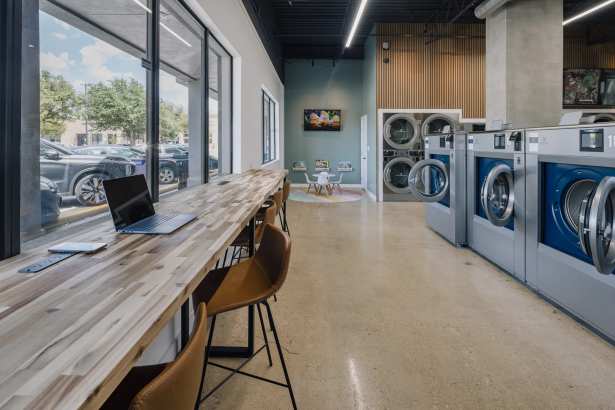
The signals are there if you know where to look. Dedicated investment vehicles focused specifically on laundromat operations have begun to emerge, backed by industry veterans and institutional partners seeking to deploy capital into the sector systematically rather than one store at a time. Groups like The Brooklyn Wash Collective and The Wash Laundry Company are building multi-location portfolios with institutional-level planning and operational infrastructure from day one. Internationally, ventures backed by private equity (PE) are already scaling in markets like Australia, where franchise models have attracted sophisticated investors drawn to the unit economics and automation potential.
In the U.S., the shift is visible in who’s entering the space. The investor profile has changed markedly in recent years. Where the typical new entrant was once a first-time small business owner looking for semi-passive income, today’s pipeline increasingly includes former C-suite executives, family offices, multi-unit retail operators diversifying their portfolios, and private equity groups that already manage portfolios of service-based businesses but are exploring laundromats for the first time. LRE Advisors, a laundromat-focused advisory and intelligence firm, has seen institutional inquiries increase fivefold in the 18 months from Q2 2024 to Q4 2025.
These investors approach laundromats with the same analytical rigor they’d bring to any investment venture. They want the latest, near real-time market intel and competitive analysis, robust financial modeling and, most importantly, institutional-grade due diligence. For private equity groups, driving around strip malls and counting cars in the parking lot is not part of the playbook. The investment thesis works only if the infrastructure exists to evaluate multiple markets simultaneously, compare opportunities against consistent benchmarks, and move from identification to executed lease within weeks, not months. Institutional capital needs a platform that supports systematic portfolio construction.
The problem is that most of the existing industry infrastructure wasn’t built for this.
The transaction gap
This is where the opportunity gets interesting. A well-positioned laundromat generates predictable free cash flow with a relatively short ramp to stabilization if the location, equipment, operations and marketing are right. But getting these elements right requires navigating a transaction that spans commercial real estate, specialized construction, equipment planning and procurement, local permitting, regulatory compliance, and third-party vendor engagements. No single entity in this space covers more than a small fraction of that process.
The challenge isn’t a lack of expertise in any one discipline. It’s that each discipline operates in isolation. A leasing broker brings expertise in market availability and deal structure, but laundromat site viability hinges on factors that fall outside traditional due diligence: utility capacity, drainage infrastructure, zoning nuances specific to laundry use, and equipment-driven space planning. Similarly, an equipment distributor understands machine specs but won’t have visibility into lease economics, market intelligence or co-tenancy dynamics. The result is a process where critical interdependencies between real estate, construction, equipment and operations go uncoordinated.
This fragmentation creates real friction. Well-capitalized investors may still spend months coordinating between separate brokers, equipment vendors, architects, general contractors and lenders, while simultaneously navigating municipal permitting and zoning requirements. A ground-up laundromat buildout runs $850,000 to over $1 million for a typical 3,500- to 4,000-square-foot store, before accounting for lease costs and working capital. When each vendor operates independently, risks multiply, delays compound and costs escalate.
Consider the experience of one LRE client, a retired tech executive who set out to open his first laundromat with significant capital and strong business fundamentals. After four months of working through the traditional process — with a tenant rep, architect and equipment vendor all operating on separate tracks — he had yet to identify a viable site. The missing piece wasn’t effort or expertise in any single area. It was the laundromat-specific market intelligence that none of those professionals could reasonably be expected to have. After engaging LRE Advisors for laundromat search and specialized advisory services, he had four fully analyzed site options within two weeks. Each evaluated across several dozen parameters. He signed a lease and opened his store six months later.
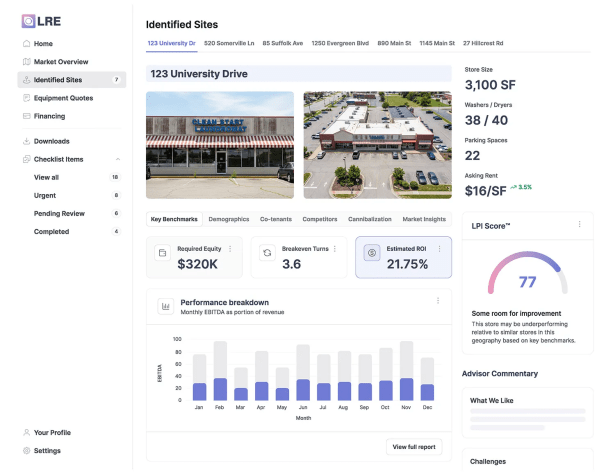
That timeline compression is real, and it’s a direct result of combining specialized real estate knowledge, operational expertise and proprietary market data within a single, vertically integrated advisory practice. LRE’s platform is backed by data from over 30,000 laundromats nationwide, providing the kind of analytical infrastructure that other asset classes take for granted, but that has simply never existed for laundromats.
The landlord side of the equation
Most of the conversation around laundromat investment focuses on the tenant, the investor searching for the right site. But this professionalization is reshaping the retail leasing landscape for landlords as well.
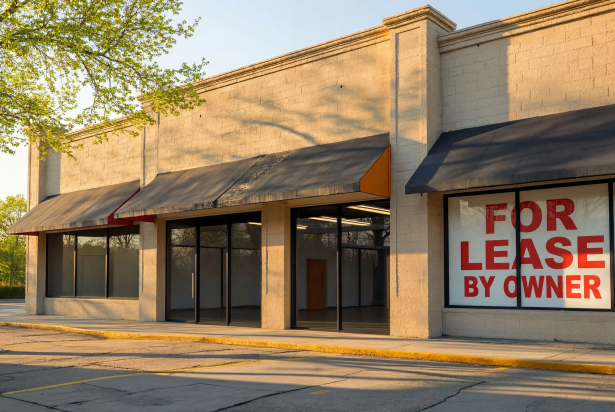
For a landlord or leasing broker trying to fill inline retail space, laundromats have always been a mixed proposition. The upside is real: necessity-based business, long-term lease commitment, and relatively modest tenant improvement requirement compared to food service or medical uses. But the downside has been equally real: informal operators with thin financials, limited business plans, no institutional backing and, in the case of first-time operators, no track record to underwrite against. The risk calculus changes considerably when the tenant coming through the door is a vetted, well-capitalized investor backed by an advisory firm that has already modeled the financial viability of that specific space.
This is where the dual-sided value of a specialized advisory firm becomes apparent. LRE maintains an active pipeline of qualified investors: individual operators, multi-store groups, and institutional clients actively seeking retail space for laundromat development across major U.S. markets. For leasing brokers, that pipeline represents a direct channel to qualified tenants they would rarely encounter through traditional listing platforms. These are tenants that have undergone a rigorous vetting process and whose business plans are backed by location-specific fundamentals and financial models. In many cases, their financing and equipment procurement are already in progress or in place, which translates to faster execution and fewer deal-killing surprises during lease negotiation.
When a PE-backed group or institutional investor is the tenant, the value to the landlord compounds further. A credit-grade tenant backed by professional capital, supported by an advisory firm with a vested interest in the store’s performance, and equipped with the operational infrastructure to execute a buildout and ramp to stabilization — that’s a materially different risk profile than an independent operator negotiating their first commercial lease. Compare that profile to the more familiar scenario: an unfamiliar applicant, new to the laundromat industry, presenting a lease application with no operating history and a business plan assembled from online templates. The difference isn’t just financial. It’s the difference between a tenant a landlord can confidently underwrite and one that requires a leap of faith.
What comes next
The laundromat industry’s consolidation won’t mirror self-storage or car washes precisely. The economics are different, the operational models are different, and the pace will depend in part on interest rates, capital availability and broader economic conditions. Still, this remains a sector where the vast majority of transactions happen between individuals, not institutions. The structural conditions are aligned, and the early movers are already building.
In most asset classes worth discussing, strong fundamentals attract institutional capital quickly, and the window of attractive entry points narrows just as fast. Laundromats are an outlier. The demand is nondiscretionary, the operating margins are proven, and yet institutional competition remains virtually nonexistent. Every industry that has gone through this kind of transition has rewarded those who recognized the pattern before it became consensus. In laundromats, that window is open right now.