

Commercial Real Estate Rebrands Its DEI Initiatives Under Trump
As some companies pause their efforts, others are still all in on prioritizing diversity, and they have help from different organizations — just don’t call it diversity
By Isabelle Durso April 29, 2026 9:15 am
reprints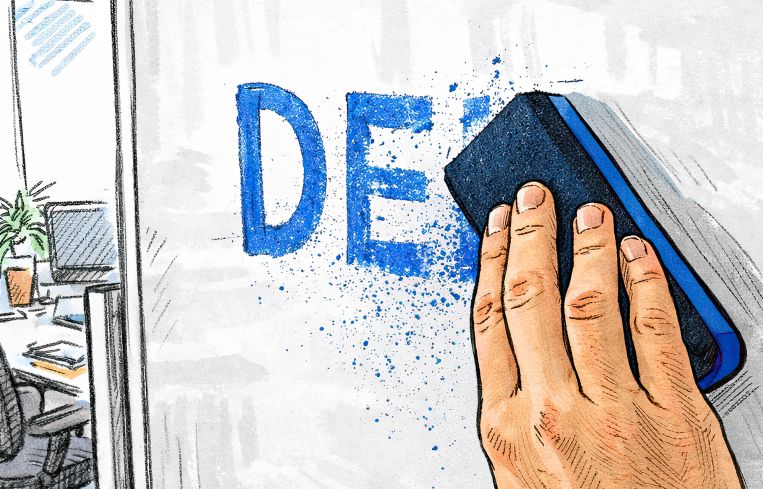
It’s time for a rebrand.
The U.S. is well into the second year of President Donald Trump’s second term, and, while he’s reversed course on some policies (like tariffs), he’s remained bullishly steadfast on the executive order he signed during his first week in office to dismantle diversity, equity and inclusion (DEI) programs across the country.
In January 2025, Trump overturned a President Lyndon B. Johnson mandate that every federal contractor must ensure equal employment opportunity and take affirmative action into account to prevent discrimination based on race, color, religion, sex or national origin — otherwise known as Executive Order 11246, or the “Equal Employment Opportunity” law. Trump’s revocation aimed to eliminate those requirements, which he deemed as “illegal” and “divisive” because they “pit Americans against each other based on immutable characteristics.”
By December 2025, the administration had already fired “thousands of workers” across agencies with DEI-related jobs, canceled grants for DEI training, and closed DEI offices at government agencies such as the U.S. Foreign Service. The federal government has also gone so far as to launch investigations into the use of diversity initiatives in hiring and promotion at major private companies in the country.
DEI-related initiatives in commercial real estate have included ongoing fellowships aimed at increasing diversity, such as those from the Commercial Real Estate Development Association (better known as NAIOP) and industrial giant Prologis, which have invested in nonprofit partners focused on expanding access to careers.
The New York Project Real Estate Associate Program, which has an open access initiative aimed at increasing diverse representation in community development finance, said it “identifies high-potential professionals the industry has historically overlooked” and “connects them with firms that need that talent.”
The Real Estate Board of New York (REBNY) also currently offers a six-month fellowship program aimed at training real estate leaders from diverse backgrounds. It reflects “the industry’s commitment to cultivating leadership and expanding pathways for talent across the sector,” according to Yvonne Riley-Tepie, REBNY’s senior vice president for social impact.
CRE Analyst’s Spark Executive Fellowship is designed to aid careers for individuals from diverse backgrounds. Project Destined, a nonprofit real estate educational platform led by Cedric Bobo, also partners with JLL, CBRE, BGO and Walker & Dunlop — among several other companies — to train diverse students for careers in CRE.
These types of DEI programs are vulnerable, as the current administration is forcing a lot of companies, including many in CRE, to re-evaluate their DEI initiatives, whether it’s through a “rebranding” of language related to diversity efforts or through a complete shutdown of their DEI agendas.
“As it relates to the broader industry, [DEI] is seeing a rapid reversal of policies,” Sarah Schwarzschild, chief operating officer at commercial real estate investment firm Mavik Capital Management, told Commercial Observer.
“If I think back before the current administration, DEI was a focus,” Schwarzschild added. “All of these different firms said that DEI was critical, not just for fairness and equality, but that it was essential for generating strong returns, because more diverse teams make better decisions. And it feels like overnight these policies were just abandoned.”
If they weren’t abandoned, they were rebranded. Words like “diversity” and “equity” — which are all but taboo in today’s lexicon — have been removed from countless companies’ annual reports and been replaced by words like “community” and “talent.”
“There’s definitely a rebranding,” said Zev Grumet-Morris, a senior associate specializing in employment law at Duane Morris. “A rebranding to keep yourself out of the crosshairs of not only the federal government, but also [away from] these private, conservative-backed organizations that might otherwise take up the torch of filing reverse discrimination lawsuits in the wake of various executive orders that the president was signing.”
Since Trump’s return to office, the federal government has launched investigations and lawsuits against the use of diversity initiatives at major private companies in the U.S. using the False Claims Act, a federal law meant to punish businesses that cheat the government, the Wall Street Journal reported in December.
In the past, the law has been used to resolve matters such as contractors billing the government for work they never completed. Now, it is being used to investigate both federal contractors and private companies that, in the government’s eyes, are committing fraud by holding federal contracts while still considering diversity when hiring.
The Department of Justice has used the False Claims Act to target major companies regarding their DEI initiatives, including Google and Verizon, Reuters reported in December. Other companies under scrutiny include those in sectors like pharmaceuticals, defense and utilities, according to the outlet. Most recently, IBM agreed in April to pay approximately $17 million to the U.S. Department of Justice to settle claims that its DEI programs were discriminatory and violated federal contracting regulations.
Some companies have vowed to keep their DEI programs alive despite the Trump administration’s moves, including maintaining efforts such as bias training, inclusive management training, anti-racism training, talent development programs, supplier diversity programs and employee resource groups. But that move comes with major risk, Grumet-Morris said.
“[The federal government is] not hiding their cards, or keeping their cards close to their chest,” he said. “They have made no secret that they want to get rid of DEI, certainly within the federal government, but also within the federal industry and federal contractors, and within the private sector as well. … The companies that decide to proceed with those programs, whatever they may look like, they do so with risk.”
While some companies are chugging forward brazenly with DEI policies — including Delta Airlines and Costco — most companies have decided to instead pursue a rebranding.
“I think a lot of people are trying to rebrand their programs to make it clear that they’re not engaged in anything illegal,” said Jennifer Cluverius, leader of Maynard Nexsen’s labor and employment practice group. “[DEI] has become associated with what the administration refers to as illegal DEI initiatives. So I think in order to stave off potential unwanted attention, a lot of people have rebranded those programs … to help at least with their outward appearance.”
Both Grumet-Morris and Cluverius said that immediately following Trump’s revocation of Executive Order 11246 in January 2025, they reviewed websites and programs with almost all of their clients (which span a variety of business sectors). At the very least, most of their clients “revised language to remove trigger words” that might “raise red flags,” Grumet-Morris said.
“When these executive orders came down, there was just a large amount of confusion and sort of looking around like, ‘Well, what do we do?’” he said. “What exactly is an illegal DEI program? What is allowed and what is not allowed?
“For the most part, companies have adjusted, but the scale of that adjustment has varied,” Grumet-Morris added. “Some of them got rid of programs. Some of them kept their programs. Some of them rebranded. Some of them scaled certain things back. Some of them shifted policies to have a little more neutral language. And then there were ones that decided that it was better for their client base to continue down the path [with DEI].”
The current initiative to eliminate DEI language and rebrand diversity efforts comes after a lot of private firms — especially in the CRE world — had spent the early 2020s going to great lengths to do the exact opposite.
BlackRock, one of the world’s largest global asset managers, pledged in 2020 to increase its number of Black and Latino employees by 30 percent by 2024. By early 2025, BlackRock had officially dropped its pledge and said it would no longer require hiring managers to interview a diverse slate of job candidates. The company’s executives said at the time that the firm took action because of “significant changes to the U.S. legal and policy environment related to DEI,” Fortune reported.
While most spectators harped over BlackRock’s quick reversal of its diversity pledge, Cluverius pointed out a larger problem with the company’s quota goal: It was illegal.
“Making employment decisions on the basis of a protected category, including race, has always been illegal,” she said. “Whether it was under the Biden administration, the Trump administration, the Obama administration, that is illegal, because you cannot ever make a hiring decision on the basis of a protected category.
“I think companies had good intentions in trying to increase diversity in all respects within their company … but I think people got a little too zealous in certain circumstances with their DEI initiatives, where they went beyond what the law permits,” Cluverius added. “Maybe thinking they were doing something really good and noble and helpful, but unknowingly stumbled into a world where they were engaged in illegal discrimination.”
BlackRock certainly followed a rocky path to its current diversity policies, which have been rebranded to a group of staff called “talent and culture.” But it’s not the only company in the commercial real estate realm to promise increases in diversity and then reverse its agenda.
After once making “aspirational” targets for diversity hiring, Bank of America in February 2025 dropped the word “diversity” in an annual report and replaced it with “talent” and “opportunity,” Bloomberg reported at the time.
BXP, the country’s biggest Class A office owner, said in its 2020 annual report that it had created a Diversity & Inclusion Committee and had taken “concrete steps” to “elevate [its] focus on diversity and equity within [the] company.” Things changed in the real estate investment trust’s 2025 report. That report did not include the words “diversity” or “equity” when it comes to the company’s employee hiring or retention.
Similarly, Vornado Realty Trust, a major office and retail owner, added a diversity and inclusion section to its 2022 annual report. That section, along with employee demographic data, disappeared from the report in 2025.
Empire State Realty Trust, another owner, as well as major lenders J.P. Morgan Chase, Morgan Stanley and Citigroup, all reviewed their language around DEI following Trump’s second inauguration. Goldman Sachs even said in February 2025 it would drop a requirement that a company it takes public have at least two diverse members on its board of directors, one of whom had to be a woman, according to Axios.
In addition, brokerages JLL, Cushman & Wakefield, CBRE and Newmark eliminated DEI sections from their annual reports in 2025.
As seen in outreach for this story, the topic of DEI is a touchy one for corporate executives. Spokespeople for Bank of America, BlackRock, ESRT, J.P. Morgan Chase, Morgan Stanley, Citigroup, BXP, Vornado, JLL, C&W, CBRE and Newmark either declined or did not respond to requests for comment. One of Commercial Observer’s requests for an interview about DEI in commercial real estate even led to a brokerage sending a blanket email to employees asking them not to speak to CO.
In general, 20 percent of U.S. companies scrapped their DEI programs between January and July 2025, with another 16 percent saying at the time that they would cut their programs by the end of 2025, according to a report from Resume.org, which surveyed 965 U.S. companies that had DEI programs before Trump was elected again in November 2024.
In addition, 57 percent of the companies that eliminated DEI reported decreases in hiring of one or more under-represented groups, and half of those companies also said morale was down, the report shows.
Among those companies in the Resume.org report that ditched DEI programs, 57 percent already reported hiring fewer under-represented workers. That included 37 percent who said the hiring of women of color has declined, 33 percent who reported fewer LGBTQ+ hires, 33 percent who said fewer men of color have been hired, and 26 percent who claimed the hiring of people with disabilities has decreased. Meanwhile, only 12 percent reported a drop in the hiring of white men.
The sheer number of companies to quickly ditch or disguise their DEI programs following Trump’s second inauguration seems to reveal a certain “hypocrisy” in the commercial real estate industry, Mavik’s Schwarzschild said.
“It seems to me to be pretty clear that the companies who abandoned their policies didn’t care about them in the first place,” she said. “If you do believe that you need diversity to drive returns, then as a fiduciary you could never abandon it overnight. And I think it shines a light on the hypocrisy of it all in our industry.”
While many frown upon companies’ hiding or eliminating DEI policies, the recent shift in DEI practices doesn’t mean diversity hiring isn’t actually taking place or expanding within the commercial real estate world. It’s just not being reported.
The Commercial Real Estate Women (CREW) network completed a benchmark study last year that shone a light on gender equity in the commercial real estate industry in particular. The results show an industry that is continuing to diversify, come what may out of Washington.
The study, which was conducted between Jan. 20 and April 30 of 2025 and surveyed a total of 2,450 professionals in the industry, found that 79 percent of men agree that gender equity in their companies has increased in terms of equal opportunities, advancement, support, culture and compensation for women since 2020. Sixty-two percent of women agreed with that finding.
Six percent of women in commercial real estate experienced sexual harassment in the workplace last year, and 32 percent experienced offensive, sexist behavior, according to CREW’s report. Those numbers represent decreases from the 7 percent and 45 percent reported, respectively, in 2020.
In addition, 23 percent of respondents reported that at least a quarter of their co-workers were racial or ethnic minorities, which is an increase from 16 percent in 2020. And 46 percent of companies offered career advancement or support programs for women at the time of the study, while 39 percent offered similar programs for racial or ethnic minority groups. (The latter questions were added to the study in 2025, so there are no comparable numbers.)
Schwarzschild herself said she has worked with an “extremely supportive” group of people throughout the years, and it’s up to those people to keep pushing for equality.
“Over the course of my career, I have been incredibly lucky to work with people, both men and women, who were extremely supportive of me and of diversity in general, whether it’s across gender, race or thought,” she said. “I’m a very strong believer that diversity of thought is really important for decision-makers. Groupthink is the biggest enemy of any investment committee, and the more different perspectives that you can have in those groups, then the better your outcomes are going to be.”
Bobo, a former Carlyle Group executive who co-founded Project Destined, was also optimistic that diverse hiring would continue in real estate, despite the anti-DEI push from D.C.
“Laws have changed, and I think companies are appropriately adjusting to the new reality,” Bobo said. “But real estate has always been a hyper-entrepreneurial sector, where they want as many smart people as possible trying to get into the sector so they can hire them. … I always compare it to sports, where they just want to find the best talent to put on the field. But, to get the best talent, you have to make sure people are playing baseball in both high-income ZIP codes and other ZIP codes.”
One brokerage firm that has been open about its stance on DEI and increasing diversity at its company is Okada & Company, a progressive New York City-based brokerage and investment and advisory firm founded in 2006 by CEO Christopher Okada.
Okada & Company, which represents 130 office buildings in Manhattan, is a minority business enterprise, being founded by a person of color and having a 57 percent makeup of minorities, including women, according to Okada. While the brokerage does not currently have any DEI programs in place, Okada said diversity is “ingrained” in the company’s Asian American background, and that the firm will look to instate specific DEI programs in the near future.
“I think it’s a wonderful time to stand out,” Okada said. “I do believe that DEI long term will continue to increase through larger and more global companies. … We do not have DEI, but that is ingrained in our Asian American [background] and the American Dream story.”
Okada couldn’t say the same about fellow brokerages in New York City’s commercial real estate world, which are largely rebranding away from diversity hiring.
“I think that there is little or no DEI push at all whatsoever with any of the larger commercial real estate firms that are brokerages and service companies,” Okada said. “I think there’s nothing, zero, no effort put in.”
As an aside, Okada said he does see DEI being pushed by larger financial institutions when it comes to large-scale developments using large tax abatements in New York City, where he claims DEI has “evolved a bit” and has “become stronger” since Mayor Zohran Mamdani took office in January 2026.
“Companies sort of sway depending on their stance and their client base and their values based on politics, both local and national,” Okada said.
While the rebranding of DEI initiatives seems to be a direct result of a changing political landscape, it’s also a result of legal liability, especially as the federal government continues to investigate companies’ diversity programs. The two concepts go “hand in hand,” Grumet-Morris said, as “the reason why the legal exposure is higher is because of the changing political landscape.”
Cluverius agreed. “The administration has been very vocal about the fact that they will use the False Claims Act to enforce these provisions,” she said. “So in addition to potentially getting your federal contract withheld and being debarred for failure to comply, there are potential criminal penalties under the False Claims Act that the administration has said that it will use.”
Trump recently signed another executive order on March 26 to further his push against DEI programs. The order is aimed at “eliminating racially discriminatory ‘diversity, equity and inclusion’ practices by federal contractors and their subcontractors, ensuring merit-based and efficient contracting and employment,” according to the White House. A complaint filed in the U.S. District Court for the District of Maryland in April claimed the president’s latest anti-DEI order was in direct violation of the First Amendment, as it restricted free speech and association rights of federal contractors, Bloomberg reported.
While the exact parameters of Trump’s ongoing crackdown on DEI are unclear, Cluverius said the new executive order seems to mean the president is looking to instate “additional regulations that are going to frame how this will be implemented.”
As U.S. companies continue to navigate a complex political environment regarding DEI, Okada said one thing is clear: It’s a “pure example of democracy.”
“I think as a society as a whole, there is a constant going back and forth of what’s right and what’s wrong,” he said. “And that is a pure example of democracy. So, in my opinion, even though there’s a tightening of DEI, that’s democracy.”
Isabelle Durso can be reached at idurso@commercialobserver.com.


