Oceanwide Plaza Bidder Has History as Colorful as the Towers He Wants to Rescue
KPC’s track record includes an international healthcare empire and multiple megaprojects
By Patrick Sisson March 31, 2026 7:55 pm
reprints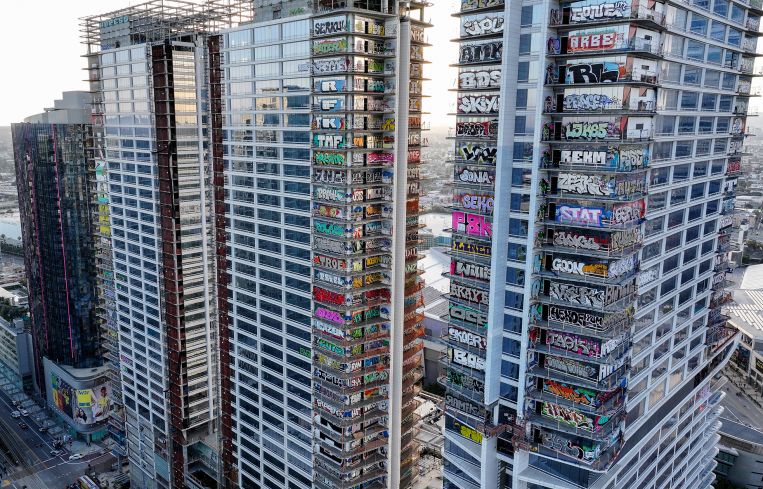
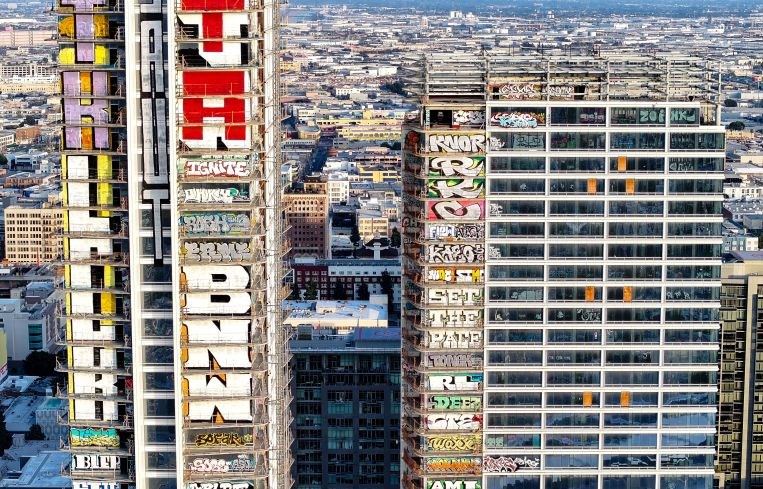
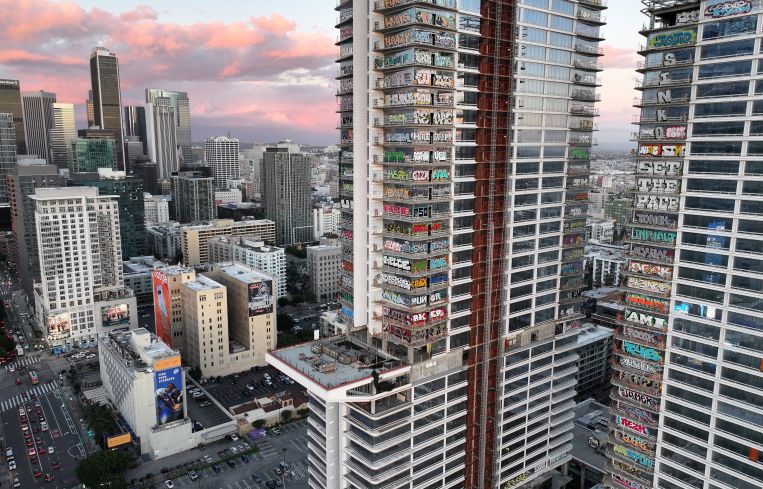
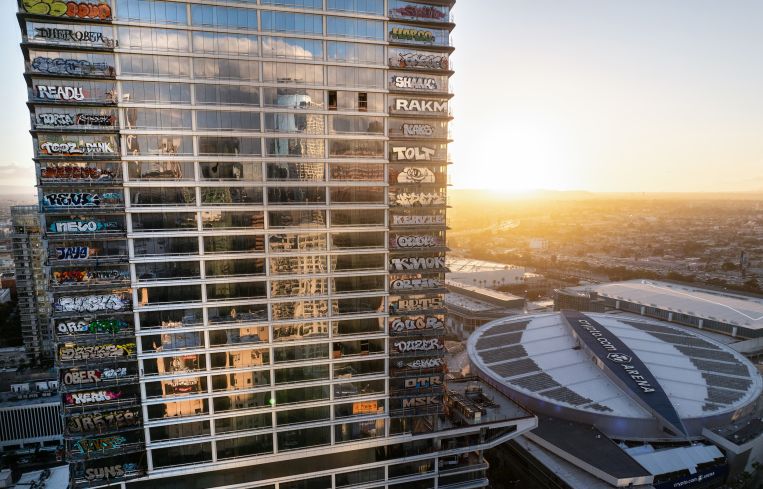
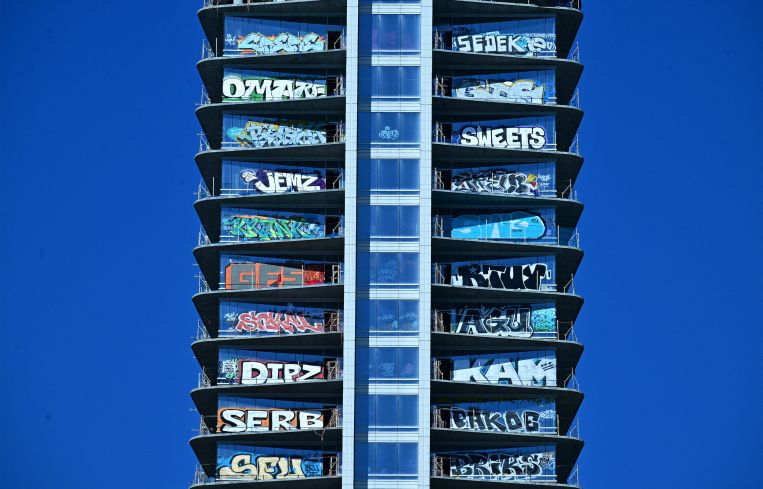
When news broke in late February that there may be potential buyers for Downtown Los Angeles’ infamous Graffiti Towers, it seemed like the saga of the delayed, abandoned and spray-painted megaproject was finally entering a new chapter.
The $470 million bid from a partnership led by Kali P. Chaudhuri and Lendlease, the original general contractor — utilizing $70 million in cash and a $400 million credit bid — will commence if a higher, qualified offer isn’t received by May 19. KPC bought out the debt of L.A. Downtown Investment, and entered into an initial purchase agreement with Lendlease.
Chaudhuri, head of KPC Development Company, which will hire a new general contractor, told the New York Times he anticipated spending $850 million to complete the project, which would take three years, and still resemble the original $1 billion plan that stalled seven years ago. This includes finishing the massive LED screen that was going to be a centerpiece of the 2 million-square-foot luxury downtown project.
KPC and Lendlease face mounting resistance, with L.A. and federal officials reportedly raising concerns over financing, deal terms and unpaid taxes. A key bankruptcy hearing has been pushed to May as doubts grow over the buyer’s ability to close and complete the graffiti-covered megaproject, which could require another $1 billion to finish.

Thus, the saga of Oceanwide Plaza is still far from over.
In addition to another bid assembled by CityView, helmed by Sean Burton, and a so-far unnamed partner, which some have said may be worth more and ultimately challenge the KPC project, the history of Chaudhuri and KPC is about as colorful as the multihued, tagged towers.
The Chaudhuri partnership set to purchase the tower, KPC Square LLC, is one of more than 70 limited liability companies the entrepreneur is involved in, offering a sense of the scale and breadth of his extensive business empire.
KPC declined an opportunity to respond on the record to questions for this article, preferring to wait until after the Oceanwide deal closes, set in one week. A Cityview representative also passed up the chance to comment. Colliers brokers, who are in charge of the auction of Oceanwide, also declined to discuss the current state of the competing offers.
Lendlease, which was also general contractor on the original failed Oceanwide project, when asked about the partnership with KPC, said in a statement: “In assessing our recovery options in regard to the Oceanwide Plaza development, Lendlease has entered into a joint venture agreement with KPC who will lead the development. The joint venture … is expected to preserve the value of Lendlease’s current debt position through conversion into project equity.”
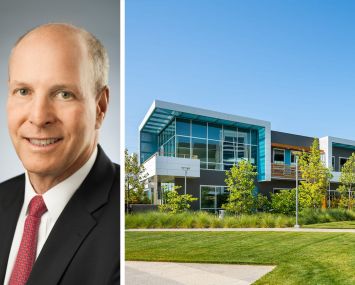
An orthopedic surgeon born in Bangladesh who said he came to the United States with $8 in his pocket, Chaudhuri has spent decades amassing a significant health care and real estate empire. Currently, KPC development is overseeing a trio of other high-profile projects across Southern California.
The 300-room Kali Hotel, situated next to SoFi Stadium in Hollywood Park, is set to open in late 2026, a $300 million Marriott that will be the only hotel in the 300-acre mixed-use district surrounding the stadium. KPC is also pursuing a 6,000-acre megadevelopment in Coachella, taking over a long-in-the-works project called La Entrada. KPC also plans to upgrade a winery in Temecula.
“Hollywood Park will stand among Los Angeles’ most iconic destinations,” Chaudhuri said in a statement about the Inglewood hotel. “This hotel represents our commitment to creating enduring landmarks that celebrate design, culture and community.”
And that doesn’t factor in Chaudhuri’s extensive health care investments and his overseas property empire. A particularly hagiographic profile of Chaudhuri notes that he owns 16 tea gardens, which is true (the part about owning a five-star Dubai hotel and a Ukrainian power plant, however, are not true). He also established a private medical school in Bengal, India, a 25-acre campus comprising KPC Medical College and Hospital and the Shova Rani Nursing College and Paramedical College.

Chaudhuri began his career in Hemet, Calif., in the Inland Empire. He entered the health care management world when the system he worked for, Valley Health Systems, struggled through years of financial insecurity in the late 2000s, including ballot measures, board recall threats, bankruptcy and lawsuits. Eventually in 2010, a group he led called Physicians for Healthy Hospitals purchased system assets for $162 million, installing him as chairman and CEO. As he noted in a recent letter to the editor, the purchase and investment in the hospital is a source of immense pride. Hemet Global Medical Center was recently named Best Hospital in the Inland Empire for the third consecutive year.
But Chaudhuri didn’t stop there. Over the course of the next 15 years, he’s purchased numerous hospitals and health care facilities across the region. This includes a $70 million purchase of Western Medical Center in Santa Ana, Western Medical Center in Anaheim, Chapman Medical Center and Coastal Communities Hospital in Orange County in 2010, and the later acquisition of Hemet Valley Medical Center and Menifee Valley Medical Center for $172 million. He currently oversees 7 hospitals in Southern California and one in Kolkata, India.
In a handful of cases, the purchase or operation of these facilities has generated criticism.
In 1999, Chaudhuri purchased the then-failing MedPartners Provider Network in California for $24 million in an attempt to save the failing system. The effort did not go as planned. The following year, KPC Medical Management, the venture formed to purchase the network, went bankrupt, which left thousands of patients without records or continuity of care and thousands of staff and doctors unpaid for months. A spokesperson said that years of mismanagement by previous owners had left the system beyond repair.
Orange County Global Medical Center, owned and operated by KPC, was “castigated” by state regulators in a February 2025 report, according to an Orange County Register story, which noted a “checkered corporate history”, as well as “substandard care and practices that led to at least one patient death and put hundreds of others at grave risk.” By April 2025, state investigators revisited and ruled it was in “substantial compliance” with Medicare and Medicaid rules. In the Register story, management disputes the claims and blames financial challenges and pressures.
Management at the medical center would later sue the county to regain the ability to take in stroke patients by ambulance after county officials revoked that status due to the reports of poor medical care.
In addition, a 2020 lawsuit claimed that Chaudhuri and KPC defrauded their employees by purchasing control of the employee stock ownership plan at an inflated price, in effect stripping it of value for his own personal gain. KPC vigorously disputed the allegations, said a spokesperson, and the matter settled for costs of defense with no findings of any liability by Dr. Chaudhuri or his affiliates. The ESOP trustee and the KPC parties maintain that the claims were not supported by the evidence.
If Chaudhuri and KPC win the bid for the graffiti towers, he’ll also need to raise significant capital, at a time when he’s involved in a slew of other significant projects. The Real Deal, citing an unnamed source, reported that Chaudhuri was shopping around for construction loans, so far to no avail.
He’s also said he’d rename the tower; leaving that kind of mark in the center of L.A. would be quite the legacy for someone who arrived with $8 in his pocket.