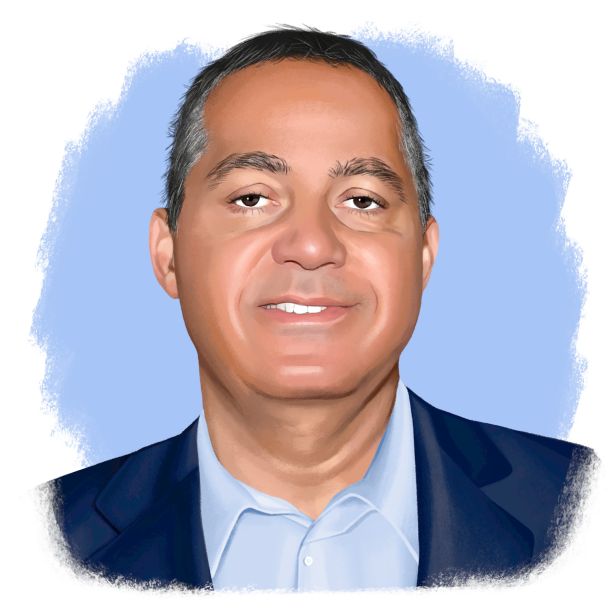
R. Donahue Peebles Jr.
Founder, chairman and CEO at the Peebles Corporation
Given your experiences in each, do you think it’s still possible to build large-scale projects in New York and L.A., or are the regulatory environments and costs too burdensome?
I believe Los Angeles is the worst market in the country in which to develop. It’s over-regulated. It has a weak, dysfunctional government, so the City Council members are neighborhood mayors and stall or kill development projects. Taxes are excessive. The cost of construction is excessive, and the cost of doing business is excessive. Overall, the office market is dead. The residential condominium market is extremely soft, and the luxury housing market has slowed significantly due to the mansion tax.
I believe that in New York we have greater promise for large-scale development projects, but it’s supply-constrained on the land side. In spite of the left-learning politics, I believe New York City is a pro-housing, pro-development market, but there is a significant imbalance between supply and demand. New York City needs an additional 500,000 units. That is a positive environment on the development side.
The Fed recently lowered interest rates for the first time in nine months. Do you think it will help spur development?
If not, what more is needed? I think the Fed took too long to make the first cut, and the cut was too small. I don’t see a meaningful impact on the real estate market until rates are down at least 100 basis points.
Resi-to-office conversions are notoriously expensive to achieve, but you’re raising a $1.5 billion fund for that. What’s key to making these projects work?
The majority of office buildings are not conducive to conversions into residential or hospitality uses. However, some buildings work exceptionally well. The benefits are a much shorter construction time and a significant discount compared to new construction. Our fund is not solely to convert offices to residential. Our fund strategy is conversions of office buildings into either residential rentals, residential condominiums or hospitality use. Some acquisitions will be office buildings that are being repositioned to enhance their competitiveness.
Which markets are you targeting?
We are focused on supply-constrained markets which are oversupplied with office buildings. Those markets are Boston, New York City, Washington, D.C., Charlotte, Dallas-Fort Worth, Austin and San Francisco.
Last year, you launched a private credit firm. Today, are there more opportunities in debt or equities?
The private credit space has become saturated with private equity, with both funds and regulated banks acting as buyers of these assets. As rates go down, the opportunities will not be as great, but private credit still dominates the development side of the market. I think the greatest opportunities are in equity.
Is there a particular local, state or federal policy that you think would benefit commercial real estate now?
I think the most transformational state law is Florida’s Live Local Act. It has stimulated significant development of mixed-use and mixed-income housing, including market-rate and workforce housing throughout the state.
Lighting Round:
Mamdani, Cuomo, Adams — Friend, mute, unfollow?
Mamdani — friend; Cuomo — friend; Adams — unfollow
Pick for Fed chair `26?
Howard Lutnick.
Borrowing costs by late `26?
9 percent overall for debt.
More excited about — rate cut or Taylor Swift’s engagement?
Rate cut.
Last vacation and where?
March in Aspen.
What is your kryptonite?
More regulation.
How are the tariffs going to affect your Thanksgiving shopping?
Minimal.
The Stories Behind the List