No, the Pfizer Near-Disaster Won’t Slow New York’s Conversion Wave
Too much money — and too great a need for housing — is at stake to pump the brakes now
By Emily Davis July 24, 2026 6:00 am
reprints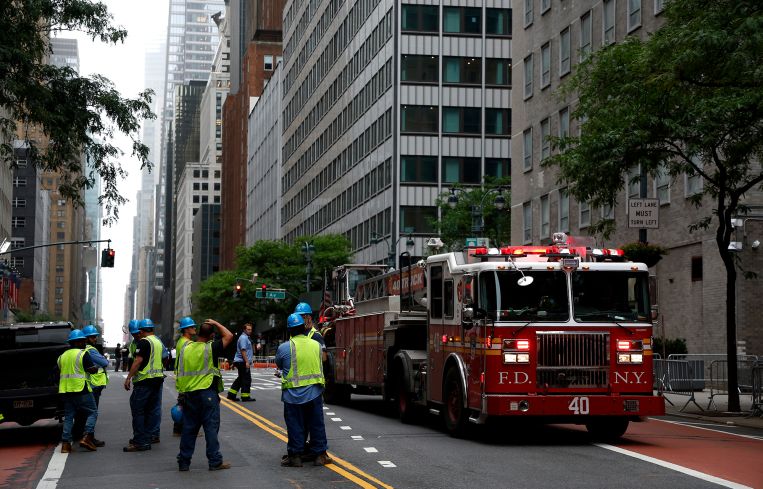
New York City is relying, in part, on more than 16,000 units planned via office-to-residential conversions to ease its enduring housing crisis. So, when the country’s largest conversion, sitting in the heart of Midtown, starts to buckle, it’s not taken lightly.
The startling structural emergency at MetroLoft and David Werner Real Estate Investment’s Pfizer building conversion in early July prompted a swift response from the city. Reports of two buckling columns prompted officials to cordon off 40th to 45th streets between First and Third avenues in the immediate aftermath. Several buildings were evacuated, including a school where roughly 400 children were relocated.
In the following weeks, after temporary supports secured the building, the New York City Department of Buildings (DOB) initiated citywide construction safety sweeps, including checks on projects linked to MetroLoft’s contractor, Barone Steel Fabricators, Gothamist reported. A full investigation of the emergency is ongoing, but the final verdict will likely come down to the two columns, and the heavy load above them.
The real estate industry is largely in agreement that the Pfizer emergency was a freak accident. Yet, when a conversion of such fame and magnitude — in which 19 stories and 1,600 apartments are being added to the existing structure — causes such disruption, anxiety is understandable. New regulations from the city, and accompanying cost overruns, may now be the industry’s real worry. Is it enough to spook the market?
Development, real estate and housing advocates sure hope not.
Conversion projects, like any major development, experience pressures to stay on time and on budget, intensified by an inflationary, volatile capital markets environment and heightened construction costs in the Big Apple. Insiders argue that the scare is unlikely to derail New York’s office conversion boom, given the investor appetite and political will behind multifamily housing.
New York City boasts the largest conversion market in the country by far. Conversion starts in the city totaled 5 million square feet last year, marking the highest annual total in 20 years, according to Cushman & Wakefield data. As of February of this year, 9.8 million square feet was planned for future conversions.
The capital involved is substantial. Significant trades for conversion sites in 2025 included a $158.5 million acquisition of 135 East 57th Street by TF Cornerstone, and Vanbarton Group’s acquisitions of 6 East 43rd Street for $135 million and 1011 First Avenue for $103 million.
Aaron Appel, senior managing director of capital markets at Walker & Dunlop, said that it’s unlikely the Pfizer building accident, however high-profile, is affecting capital market appetites, which have remained strong and steady over the past year.
“We’re working on a couple of commercial financings now, and we don’t see it having any sort of real bearing,” Appel said.
That doesn’t mean that lenders won’t be taking a harder look at conversion sites and development teams.
“I have to imagine there will be more scrutiny,” said Laura Rapaport, founder of C-PACE lender North Bridge and a former developer. “But I also believe that there will be very successful conversion projects in New York and other cities.”
Future changes in the industry’s pace would be due to renewed office strength as well as current interest rates and cap rates on multifamily assets, Appel said, rather than construction anxieties. In other words, the appetite for conversions hasn’t changed, and the deals aren’t getting any easier.
“They’re not easy assets to come by, and the office market’s extraordinarily strong again,” Appel said. “There are assets that could have been conversion opportunities that may not be any longer. So, appetite certainly hasn’t decreased for them, but they’re not easy deals to put together.”
The city’s response to the temporary crisis remains an open question. Deputy Mayor Leila Bozorg said at a press conference in the days following the emergency that safety is central to the Mamdani administration’s housing work, but that it was too soon to draw conclusions.
“The investigation has kicked off,” Bozorg said. “If we learn something new that requires us to re-evaluate some piece of either a policy or procedure, we absolutely will.”
In the meantime, Berman told Curbed he intends to take down the entire addition above the columns at 42nd Street.
James Whelan, president of the Real Estate Board of New York, said he is unaware of delays caused by the emergency or the DOB’s sweep on any other construction projects in the city.
Much of the work on conversions happens behind walls, and the progress is not inspected floor by floor every time. Based on the city’s investigation and the DOB’s response, that could change, and add to New York City’s already hefty construction costs.
“Everything is substantial in this environment,” said Jay Martin, executive vice president of the industry advocacy group New York Apartment Association.
“But it’s the nature of working in a major city,” Martin added. “When something like this crisis happens, you kind of hunker down, you figure out a way to pay for it, and you deal with it.”
Two unique structural cost pressures predate the Pfizer emergency.
The city’s scaffold law and the conversion tax abatement clock were already shaping how these projects get financed. New York is the only state that holds owners and contractors strictly liable for gravity-related construction injuries under the city’s so-called scaffold law, rather than apportioning fault between parties. REBNY’s Whelan said the result is construction insurance costs that are “exponentially higher” than in neighboring states.
The second pressure is a countdown. Under 467-m, the 2024 tax exemption behind much of the current conversion wave, developers get less the longer they wait. Projects that were commenced by June 30 of this year, meaning they received an alteration permit, locked in at 35 years of the tax exemption. That falls to 30 years after June 2028 and 25 years after that. Nothing qualifies after June 2031, and every project must be finished by the end of 2039.
Whelan doesn’t see the city’s investigation as a prelude to a crackdown. Advocates like Whelan and Martin emphasize that the recent emergency is an outlier amid a sea of successful, safe conversion projects, the lion’s share of which have been completed by Nathan Berman’s MetroLoft.
The best-case policy outcome for conversions, Martin argues, would consist of brushing up on guidelines and closing loopholes, without adding layers of costly oversight that slow the pipeline.
“It looks as if there were mistakes made, in that the system did not follow its current rules and regulations,” Martin said. “Those systems can be reinforced. as opposed to adding additional time-consuming laws and regulations.”
On the other side sit the city’s union leaders, who believe it’s time for a change in the inspection process that allows what they see as self-policing on the part of developers.
Gary Rosenberg, a real estate attorney and founding member of Rosenberg & Estis, expects a tangible regulatory response.
“Construction is extremely expensive in New York because every time something happens they add another requirement,” Rosenberg said. “I can’t criticize it, but it does add substantial costs.”
Conversions, in all their complexity, carry risk. Converting office buildings to residential is more complicated than ground-up development, with the different floor plates, electrical circuits and plumbing systems that residential buildings demand. Peter Lehrer, CEO of construction adviser PML, framed the Pfizer building’s floor additions as unique, but not beyond the realm of what the industry is capable of doing.
“There is a great deal of money looking for solid opportunities, and these projects are performant,” Lehrer said.
Pricing that risk is the job of smart investors, Appel said, and loans for office-to-residential conversions typically have terms that are in excess of what the realistic construction period should be.
“If there’s additional costs, then people are going to ultimately look to pay less for the real estate,” Appel said.
When it comes to the city’s reaction to the accident, cooler heads do seem to be prevailing. Mayor Zohran Mamdani has publicly stated that he continues to consider the conversion of office space into residential space as part of the answer to the housing crisis.
“This is not a necessary consequence of an office-to-residential conversion. This, however, is clearly a breakdown in that process,” Mamdani said in a press conference.
The absence of injuries due to the Pfizer accident, too, allows a more rational policy conversation instead of fever-pitched response. That being said, a wave of litigation between the building’s owners, contractors, design teams and affected nearby businesses is not out of the question. Spokespeople for MetroLoft did not respond to requests for comment.
“There’s a lot of correction that needs to take place. Who’s responsible for doing that? Who’s responsible for paying for it? And do you have to pay for the work that was done that wasn’t done properly? If that’s in fact what happened, that’s the type of litigation I would expect,” said Joshua Wurtzel, a partner at Schlam Stone & Dolan.
Construction is load-bearing for the often-opposing agendas of both the mayor and REBNY. At a time when so many ground-up developers are opting for 99-unit buildings to avoid wage requirements under the state’s 2-year-old 485-x development incentive, that rare consensus on large-scale housing looks increasingly critical.
Political consensus is only half of what’s holding the boom together, however. The other half is the capital that expects concrete to get poured and healthy returns be paid on the investment. The scare on 42nd Street tested whether that money would flinch. It hasn’t yet.
Emily Davis can be reached at edavis@commercialobserver.com.