Lower Manhattan Has Become a Model for Other Urban Centers — Including Midtown
The transformation of the area from a 9-to-5 hub dependent on one industry into a much more varied place started before the tragic events of 25 years ago
By Mark Hallum September 8, 2026 6:15 am
reprints
The transformation of Lower Manhattan was underway even before the Sept. 11 attacks 25 years ago.
Still, given the scale of the tragedy, the area’s commercial real estate and demographic shifts are often defined with 9/11 as the starting point. Not so. The Financial District in particular was already undergoing a huge transformation, and industry leaders would follow through with creating what would become a diversified local economy, rather than one that simply served the needs of global trade, regardless of the challenges.
Even as a question mark remained above Ground Zero, the broader commercial real estate industry and its public sector allies spent the past 25 years finding ways to roll with the punches and reinvent New York City’s Financial District into more than just a banking hub punctuated with residential space.
Their labor has yielded a place where people want to live, complete with retail experiences that also bring visitors to the area for more than just a 9-to-5 work shift.
Compared to 2001, the Financial District has far less office space than it used to, with 115 million square feet today compared to 139 million square feet around the time of the terrorist attacks, which killed nearly 3,000 people. Meanwhile, the number of rental apartments has risen from 19,000 to 30,000 in the last 25 years, according to CoStar data.
Currently, 3,900 rental units are under construction in the area, alongside 2 million square feet of office being developed, the CoStar data showed.
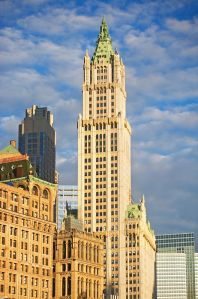
Aisling Gregory, the founder at Reverdie Group, who has spent years managing Cammeby’s International’s repositioning of the Woolworth Building after a 10-year stint at World Trade Center developer Silverstein Properties, sees the iconic Woolworth office tower as a microcosm for the greater maturation of the Financial District.
“I think downtown has had a really interesting evolution in that first we had to convince people to come downtown, and then we had to convince them to come into the office,” Gregory told Commercial Observer. “If you’re looking at Cammeby’s portfolio, they’ve kind of evolved in a fairly practical way.”
At the “Cathedral of Commerce,” as the Woolworth has been nicknamed, Cammeby’s has been helping small to midsize tenants execute rapid leases with easy terms and prebuilt spaces, while catering to the employee base of those companies with a retail component. That includes cafes, wine bars, a French culinary concept and a social club.
This strategy, while not unique to Cammeby’s, avoids the necessity of having to invest millions in operating amenities directly.
“We’ve been layering experiential programming, whether it’s through tenants or by inviting brands to come in and use spaces,” Gregory said. “We’re hosting a fashion show, for example, in our iconic lobby in September for Fashion Week. The brand happens to be one of our tenants. So it’ll be an interesting use of what’s considered an office building to be used as a runway for a brilliant brand.”
The doors of the Woolworth have also been open to historians who host architectural tours of the landmark building, which was the tallest skyscraper in New York City until the late 1920s.
But the building is anything but a self-sustaining ecosystem.
“I know that our building — both our residents who live upstairs and our office tenants who work in the lower portion of the building — can’t sustain a restaurant and a large gym on their own,” Gregory said. “But I do believe the vibrancy of the growing residential population can support those operations.”
At the time of 9/11, there were about 25,000 people living below Chambers Street. The most recent figures point to about 70,000 residents today.
“Lower Manhattan did not come back as the neighborhood that it was on Sept. 10, 2001 — it came back as a much more dynamic and diverse destination,” Gregory said.
The Woolworth isn’t the only building giving people reason to explore Lower Manhattan.
Lux Entertainment recently launched the Balloon Museum across 58,000 square feet of Seaport Entertainment Group’s Tin Building at 96 South Street in early August, and vacant retail space has been used by pop-up stores organized by the area’s business improvement district.
While Lower Manhattan office leasing is no longer center stage as a business barometer, it’s been gaining more traction than it has in years. CBRE figures show 1.14 million square feet of Lower Manhattan office space was leased in the second quarter of 2026, 36 percent higher than the five-year quarterly average.
The remaking of the Financial District really began prior to 9/11, when the Alliance For Downtown New York, under the leadership of Carl Weisbrod, pushed for the 1995 passage of the very first office-to-residential conversion tax incentive, 421-g.
That state incentive by itself helped create about 20 million square feet of housing in the Financial District over 11 years, according to the alliance’s current president, Jessica Lappin, a former City Council member. (The city comptroller’s office has pegged the number of apartments generated through 421-g at 12,900.)
“It was a radical idea at the time — that people would want to live in the Financial District,” Lappin said. “Other cities around the world, like London, were moving in the opposite direction. So it was a bold idea. Now we’re the largest-growing residential neighborhood in New York City. That incentive is no longer available. It expired in 2006, but it was key in terms of the housing that was built.”
While people across the country openly questioned if, how or whether the World Trade Center should be rebuilt after 9/11 following such an immense loss of life, the federal government and the private sector were putting $20 billion toward its redevelopment, making the prospect of downtown’s recovery almost a foregone conclusion.
“A lot of our efforts were focused around remaking perceptions of the neighborhood,” Lappin said. “With the rebirth of the World Trade Center, the Oculus, the Fulton Transit Center and Brookfield Place, there was a lot of government money and there was a lot of private money that physically transformed the neighborhood. Then there was a very deliberate push to reduce our reliance on financial services and insurance jobs as we came to an understanding that there was a growing tech ecosystem in New York City.”
With the availability rate for Lower Manhattan office currently topping 20 percent, according to the Alliance’s second-quarter report, competition among office-to-residential developers, office landlords and tenants could heat up further. (The area has long dominated office-to-residential conversion counts, a trend that also predated 9/11.)
The retail market, however, has had its ups and downs in recent years, with mall operator Unibail-Rodamco-Westfield (URW) pulling away from a 20-year commitment to operate the shopping component of the Fulton Street Station known as Fulton Center. In 2024, URW cited crime as a primary reason for wanting to terminate the master lease it signed in 2013, just before the renovated station opened the following year.
What ensued was a lawsuit between the Metropolitan Transportation Authority and URW, which is still ongoing, according to the MTA. The transit agency declined to comment on whether any kind of resolution had been reached, citing pending litigation.
But URW had for a time been trying to exit its North American operations altogether, not including the Westfield World Trade Center inside the Oculus transit hub. (The mall giant partially reversed its continental exit plans last year.)
“Over the past several years, Westfield’s U.S. portfolio has gone through a period of real focus, concentrating our resources and capital behind the flagship destinations that represent the very best of what we do, rather than spreading thinly across the market,” Aly Abouzeid, vice president of asset management and development for URW, said in a statement. “Today, our U.S. portfolio is anchored by 10 premier flagship assets, including Westfield World Trade Center. … As one of the most architecturally distinctive retail destinations in the world, and a true flagship property, Westfield World Trade Center has remained a consistent portfolio priority.”
BGRE, formerly Brookfield Properties, has been big on offering retail and office to Lower Manhattan since Brookfield Place’s development west of the Trade Center in the mid-1990s.
Lauren Young, a managing partner at Brookfield, says the company is seeing record rent growth and leasing in both the office and retail components of the development, which has been reimagined over the decades. In just the last two decades in which Young has been at the firm, there has been a constant effort to spread Brookfield’s eggs evenly throughout multiple baskets.
“There was a very focused effort on post-9/11 revitalization. Going back in time, Merrill Lynch leased half of our 9.5 million feet here, and so there was a very focused effort on how to create a more diversified tenant roster,” Young said of Brookfield Place. “I think there was a multifaceted effort where we have people who are experts in retail leasing, development, design, office and hospitality. We pulled all those threads together and came up with the 2014 iteration of Brookfield Place, which allowed us to bring in media, tech and investment management tenants.
“We definitely had a lot of space to fill in the vacuum of departing financial tenants,” Young added. “It does feel like that has passed and we’re in a phase of growth where we have a tenant touring the market. There’s way more traction.”
GFP Real Estate has been working to reshape the Financial District for several years now, redeveloping former office buildings such as 100 Gold Street, 25 Water Street and 222 Broadway into luxury housing.
The work for the family firm has been so specific that GFP Real Estate’s Jeff Gural this year spun off GFP Development as an entirely new entity led by his nephew Brian Steinwurtzel as CEO, while Gural continues to operate GFP’s “legacy portfolio” of office properties in Midtown down to SoHo.
“We want competition in the sense that if we have demand for all of these buildings, we know that we’re doing very well as a city, so that’s a good thing,” Steinwurtzel told CO. “There are buildings with owners that are well capitalized that have renovated, maintained and upgraded their buildings with time, and those landlords will continue to do well in leasing. Then there are others, potentially through no fault of their own, who aren’t able to capitalize the improvements that are required, and those will be excellent candidates for office-to-residential conversion, and we’ll continue to target those kinds of buildings.”
Steinwurtzel was one of the early settlers calling the Financial District home in the days when it would become a ghost town following the sound of the closing bell at the New York Stock Exchange. Now the neighborhood remains vibrant after the sun goes down, with young professionals the primary tenant base for GFP’s residential buildings in the area.
Shlomi Reuveni, the president and CEO of Reuveni Real Estate who handles sales at LCOR’s 25 Broad Street luxury conversion project, noted all the financial afflictions that have struck the U.S. — such as the savings and loan crisis, the dot-com bubble burst, 9/11, the Great Recession and the pandemic — as reasons for the Financial District’s distinct diversification.
All these disasters were major setbacks that hit the commercial real estate market in the Financial District particularly hard, given its tenant base, making a push for diversification a critical cause for the CRE industry as a whole.
It started in 2006, when Kent Swig was converting 25 Broad Street into condos. Swig was credited by Reuveni for coining the term “FiDi” at a time when dynamics started to shift in earnest.
“Then 2008 came along, the financial crisis, and everything went dark again,” Reuveni told CO. “Buildings went out of business, lenders took buildings back, buildings were sitting empty, and it just seemed again like in the Financial District, after really trying to come out of the 2001 crisis, things were quiet again.”
Reuveni said most people buying or renting homes in the Financial District make around $250,000 per year, and are young and single or with a growing family. The area has offered them a place to live that is more than just a glass box, but one with a built-in history and architecture unlike anything being built today.
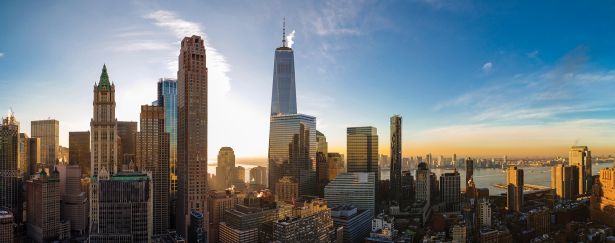
But, even the new residential developments, such as 5 World Trade Center where Silverstein Properties plans to build 1,200 units, symbolizes Lower Manhattan’s resiliency, Reuveni said.
“For 5 World Trade Center to become residential kind of closes a loop, a story since 2001 about a place that we thought would never be livable again,” Reuveni said. “Here we are today looking at buildings that are going to redefine the future in terms of housing, technology, architecture and design.”
(Silverstein Properties CEO Lisa Silverstein in an interview for a separate piece said that construction costs and other factors have for now delayed the development of 5 World Trade. See Page 20.)
Despite the Financial District’s hard-won transformation, New York City still can’t seem to shake the Doubting Thomas narrative that asks “Who would want to live there?”
Eric Engelhardt, senior vice president of commercial leasing at the Durst Organization, is observing the same pattern in Midtown, after the City of Yes for Housing Opportunity rezoning and the Midtown South Mixed-Use Plan were passed in the last couple of years. Both policy shifts encourage conversions to residential and a more balanced commercial-residential mix.
Durst owns One World Trade Center alongside the Port Authority of New York and New Jersey, as well as another residential property outside of the World Trade Center campus at 217 Front Street.
“I’m wondering when we’re going to rename the Financial District something else,” Engelhardt said. “Frankly, what I think you’re seeing is city officials learning from the success of Lower Manhattan and trying to implement that from a zoning perspective in Midtown Manhattan, which has been the core concentration of office with residential in tertiary neighborhoods. Now there’s a big push to integrate the two right next to each other.”
Mark Hallum can be reached at mhallum@commercialobserver.com.
CORRECTION: This article was updated to accurately reflect GFP Real Estate’s redevelopment work in Lower Manhattan.