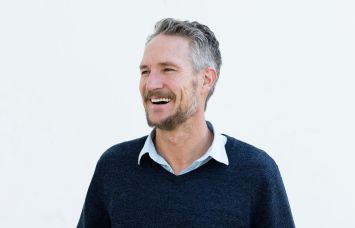
Aaron Amitin of Good Company: 5 Questions
By Isabelle Durso June 22, 2026 8:00 am
reprints
It’s been roughly a year and a half since The Domain Companies launched Good Company, what the developer describes as a “one-stop shop” for leasing, marketing and management services.
And while Good Company largely serves Domain’s own New York City housing portfolio — which comprises thousands of completed units and thousands underway — it has also dipped its toes into third-party projects as an independent brokerage.
So far, Good Company has completed the lease-up of 3,000 new development units in New York City, including several third-party properties, such as a 600-unit housing project with partner Goldman Sachs in Jamaica, Queens.
As for Domain itself, the development firm is still going strong in markets in Brooklyn and Queens, where it has placed most of its bets thus far. There’s already about 2,300 units in its pipeline in neighborhoods such as Gowanus and Greenpoint in Brooklyn, as well as Astoria and Long Island City in Queens.
Commercial Observer sat down with Aaron Amitin, chief operating officer at both Domain and Good Company, last week to discuss Good Company’s current work and how Domain is finding ways to build new housing around the city’s 485-x tax incentive.
This interview has been edited for length and clarity.
Commercial Observer: The Domain Companies launched Good Company in January 2025. How is that going? What sets it apart from other brokerages?
Aaron Amitin: Over the past year and a half, we completed the successful lease-up of over 2,000 units in New York City. That includes 500 in Long Island City, another 400 in Gowanus, and about 550 in the Mott Haven neighborhood. We’re outperforming all of our submarkets.
We’ve exceeded our expectations in terms of what we expected coming out of the gate, and, on top of that, we also have a pipeline of another 4,000 units that we are looking to take on as Good Company. They’re delivering anywhere from the next six months to the next 12 to 18 months, so I think the biggest takeaway is we’ve had a lot of initial success coming out of the gate and are continuing to build on top of that.
One of the benefits of Good Company that we talk to prospective third-party clients about is the synergy between the infrastructure that we bring to the table, because we have a fully integrated operation as Domain Companies.
We’re multidisciplinary in terms of what we can bring to the table for developers in a lease-up or going from lease-up to stabilization, and we bring an ownership mentality to it. We’re approaching it as an owner, and we have that mindset that we bring to the table.
The vertical integration of all our teams — be it marketing, leasing, property management, asset management, construction management, technology — all these disciplines that we have under one roof really serve to give us an advantage in the marketplace in terms of how we’re able to understand the objectives of an asset and ultimately accomplish those by leveraging the tools that we have in-house.
My role really is to oversee all of those verticals. We have unique insight into every element of a project, and we bring that experience to bear on projects that we’re taking on for others, which I think enables us to outperform what other groups might be able to take or do in segments. My role is just the oversight of all those vertically integrated functions.
We’re taking what we’re doing in our own portfolio and we’re applying those best practices to our third-party clients. That includes things like reporting data, data analysis, inventory management, dynamic pricing, use of technology, and the way we deliver hospitality from a sales experience standpoint and from an operational standpoint. We can bring all of those pieces of the puzzle to the table and execute on those very effectively as a result of how we’re structured.
Is the goal for Good Company to stick with Domain or to become an independent brokerage? What third-party projects has it worked on?
It’s both. Good Company is a natural fit for the Domain Companies, because its leadership team has essentially over 15,000 units of leasing and marketing experience combined. But it also currently is stand-alone, or could be a stand-alone business should we want to do that for third-party clients.
We have taken on a good bit of work with third-party clients that supplements Domain’s own portfolio, so the idea is really to run that in parallel and continue the work for Domain, but also to do work for third parties and continue to build that third-party business.
Here’s a good example of a third-party project. Goldman Sachs was our partner on the Estela project in the Bronx’s Mott Haven neighborhood. In the daily and weekly reporting and meetings we were having about that project, they were seeing a different level of performance than they were seeing from other projects in the area that they had invested in, and we’ve done several projects with them outside of Mott Haven. Based on that track record, they essentially said to us, “We have another project that we’d like you guys to take on for us, because we’d like the level of performance that we’re seeing at Estela applied to some of the other projects that we have, projects that we’d like to see doing a little bit better.”
One of the first projects we took on was a project called the Monarch, which is in Jamaica, Queens. It’s a 421-a deal, a similar makeup to the Estela. It’s about 600 units, a significant amount of market-rate housing in a supply-heavy market, where we employed a lot of the strategies we were using for Estela to great effect at that project. We enabled them to ramp up the velocity, the pricing, pull back on concessions, and achieve some of the objectives they were looking to accomplish with that project in a similar vein to how we had done with Estela.
So that relationship led to us taking on some third-party work for them and replicating that success that we had with them on our own project with one of their projects.
What other projects is Domain currently working on? Which neighborhoods are most attractive to build new housing in?
We’ve had a lot of success in the Brooklyn and Queens markets. In our pipeline, there’s about 2,300 units, including 300 in Gowanus, 400 in Astoria, 300 in Long Island City, and another 1,000 in on the Greenpoint waterfront.
These are all neighborhoods that we have developed other products in, where they’re up-and-coming neighborhoods, or they’ve recently become much more established. There’s a tremendous amount of demand for those neighborhoods, and so we’re building off the success that we’ve had in those markets to date and continuing to develop more product to serve the demand in those neighborhoods.
We’re launching our first one at the beginning of 2027 in Gowanus, and then they go all the way through 2028.
We’ve seen tremendous demand for Long Island City with Jasper — that’s our 500-unit project that we just finished in the Hunters Point neighborhood. We’re seeing a tremendous amount of people who are living and working in Manhattan who are getting priced out of Manhattan, and there’s a strong demand for a very high-end product that’s at a discount to Manhattan, but at a reasonably short commute to where people work.
Especially in that market in LIC, we see a lot of people that are going to the office four or five days a week, and so that ride on the 7 line. That’s five minutes from Hunters Point to Grand Central, where people can come out to the waterfront in Queens and get a lot of outdoor space, maybe at a little bit of a discount to what they’re paying for Manhattan product. It’s a no-brainer. So the proximity to the city with a very high-quality product and a short commute, we think, is a recipe for success for a particular type of renter.
In Gowanus, that is really up and coming because we have world-class amenities on the Gowanus Canal and proximity to Park Slope and Downtown Brooklyn and the Barclays Center and all the great things that are in a very creative neighborhood. It’s a very different vibe, and that renter maybe doesn’t need to go to the city as much to commute, but they’re looking for more space in maybe more of a neighborhood that’s built around creativity.
We’ve seen a lot of success with our 420 Carroll project in Gowanus, and that’s driving our desire to continue developing in Gowanus.
Similarly, in Greenpoint, we had a lot of success with Eleven33, which we developed about 10 years ago. We were really the first large-scale multifamily rental project in that Brooklyn neighborhood, and since then the entire waterfront has developed around us. It’s really a thriving neighborhood. We had the opportunity to partner with a few groups on probably the best development site in that neighborhood right now, to construct 1,000 units of top-of-the-market product that we think is going to be a home run in that neighborhood.
How is Domain working around the city’s 485-x tax incentive program?
There are some limitations around it. It does create some unique challenges, but a great strength of ours is we are able to structure creatively in a way to leverage those programs, but to build on a larger scale.
For example, the project in Astoria that I mentioned, we are using 485-x but we’ve separated the project into two buildings, so one of them is 99 units and the other one will be about 300 units. We’re leveraging 485-x to help facilitate the development of that project, but we’re also building on a much larger scale than just 99 units. So it does have some limitations, but we’ve figured out ways to work around that to build on a larger scale.
One of the things with 485-x is either you’re going to build fewer than 100 units, or you’re going to build 300 units or more. If you can find sites where you can combine those two, I think that’s a recipe for developing on a larger scale.
How is Domain using AI in its work?
We have a focus on delivering a combination of hospitality-quality service and using cutting-edge technology tools to optimize the residential experience. That’s kind of our approach. We use technology to supplement and enhance our people, and really to create a tailored experience, both for the resident and for our staff.
You hear a lot of talk about people talking about AI in the marketplace these days, and there’s a lot of talk about technology and replacing people, and so forth. We don’t see it that way. We really see using technology to supplement and enhance our people, not replace them, and we really believe in the importance of person-to-person interaction. At the same time, we know the importance of technology, and so we have a tech stack that’s underlying our human capital that really supports the operation and enables us to leverage data and information to serve our people and to deliver the highest-quality experience possible.
For market intelligence, the AI tools that we’re using really give us a real-time picture of market trends and conditions and demographic data. That’s really giving us an edge in terms of how we operate, from marketing, leasing, asset management, property management, every element of our business development. Like I said, it’s a complement to our people, it’s not a replacement for our people.
Isabelle Durso can be reached at idurso@commercialobserver.com.