Developers Are Tackling a Wave of Conversions of Mundane Buildings
Anyone can make a historic property shine (often through that history). What about the former bank branch on the corner?
By David M. Levitt May 19, 2026 11:22 am
reprints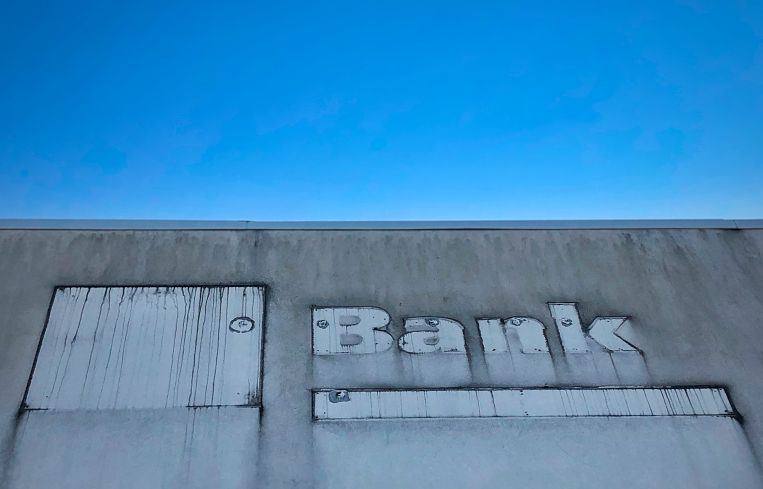
The words “Can you change this?” might have more than normal resonance in a bank these days.
In the last decade, somewhere between 22 million and 36 million square feet of bank branches closed nationwide, an amount of space potentially larger than the entire Cincinnati office market, according to Best Interest Financial, a West Bloomfield Township, Mich.-based mortgage company. And a bunch of that old bank space remains in limbo, awaiting another use and facing the possibility of being razed — not because the former branches are particularly flawed or aged structures, but because they failed to keep up with the times.
And that’s just the banks.
No figures are available that show how many square feet of obsolete drugstores there are, though Rite Aid, a nationwide chain, shut down last year, leaving behind 89 stores. In 1996, it had 4,000. It was widely reported that Walgreens announced last year that it would close 1,200 stores. Another Rite Aid rival, CVS, closed 270 stores in 2025, according to a spokeswoman for the company. Best Interest estimates that closing drugstore branches will add another 10 million to 15 million square feet to the purpose-built store overhang in the U.S.
Indeed, there are almost too many formerly industrial and retail edifices around the country that have quietly retreated into obsolescence to keep track of. Banks and drugstores might be the most obvious victims, but even cold storage and freight space that was once built with grandeur have fallen into disuse.
However, this once-utilitarian real estate has been inspiring a great deal of interesting redevelopment.
A typical viewer of West Chelsea’s Terminal Warehouse probably saw a building that was once a major component of its era, the late 19th and early 20th centuries, but is now woefully out of time. The building was formerly a prime storage facility, connected by rail to the nearby Manhattan docks that long ago were replaced by high-end office and apartment towers. And it was partially falling down.
It took some amount of vision to look at the building and see the future. But that’s what David Levinson did.
Levinson, one of the two L’s in L&L Holding (the other is Robert Lapidus), joined with Columbia Property Trust and Cannon Hill Capital Partners to make the warehouse work as offices for the 21st century and hopefully at least the early 22nd century. Their belief is that successful young people will want to locate their companies where their staff can connect with the past.
“We know that people are drawn to industrial sites and [old] buildings that have been reinvigorated,” said Darin Reynolds, a partner at CookFox Architects, which worked with the partnership on the design that readied the warehouse for its 2025 close-up. “We did that by carving out a large chunk of the building to bring daylight into the building. People need daylight, they need connection to nature.”
When architects began studying the building, they discovered it was supported by wood beams that were saplings back in 1512. (That’s right, the 16th century.) Most recently a location of Manhattan Mini-Storage, the site for about 15 years was the Tunnel, a legendary nightspot and locus of downtown counterculture. The go-go dancers’ cages have been preserved.
The actual rail tunnel (now abandoned) was one of the building’s main features, part of a street-level freight line once patrolled by “West Side cowboys” who rode on horseback in front of the engines to shoo away pedestrians. The rail line connected to nearby docks, and today recalls a time when Manhattan’s lower West Side was dominated by shipping.
“We let the history of everything that happened to that building remain,” Reynolds said. “[They wanted to] give a little glimpse of the history of the building.”
In 2021, the partnership took out a $1.25 billion construction loan for the redevelopment of the 1.2 million-square-foot asset. The lead lenders were Blackstone, Goldman Sachs and KKR, so the project had the endorsement of some of the most powerful institutions in the industry. Tenants recruited to the property include Convene, a provider of event space that also does some flex-office leasing, and Equinox, an operator of upscale gyms, as the building’s wellness provider.
Aside from Terminal Warehouse, in New Jersey there’s the Bell Labs building in Holmdel, designed by famed architect Eero Saarinen. Once the 2 million square-foot think tank for Bell Telephone back when it was a monopoly, it is now a multi-tenant “metroburb” which capitalizes on its airy space to appeal to multiple tech companies. Over in Queens, there’s Saarinen’s onetime TWA Terminal at Kennedy Airport, now reimagined as a hotel.
There are reasons beyond sentiment to find new uses for old buildings, said John Long from the San Francisco studio of global architecture and design firm Perkins&Will.
“The most sustainable thing you can do is start with an existing building and keep the bones of it,” said Long, whose firm designed such notable properties as San Francisco’s Building 12 at Pier 70 and the Bay Area Metro Center. “In this part of the world, they require a seismic upgrade, and they probably require all new systems — mechanical, electrical, plumbing and lighting. But for the most part, you got the structure that stays, the cladding, maybe there needs to be work done on the exterior envelope of the building.”
Still, investors and developers often get “cold feet” when they get confronted with the cost of renovation, Long said.
“Commercial purpose-built vacancies are not a cyclical phenomenon,” Cody Schuiteboer, president and CEO of Best Interest Financial, said in an email, “but rather the beginning of a reality check after years of rampant development driven by business models fundamentally altered by digital disruption. The bank branch category tells a staggering story of our current economic times.”
In other words, customers have radically altered the way they do their banking, and banks — which have spent the last 40 or so years consolidating — are only too happy to accommodate them. Mobile deposits and payments, plus the trusty old ATM used for cash withdrawals, have supplanted the services folks used to go down to the local bank branch to receive in person.
Per FDIC data, more than 9,000 bank branches closed in the last decade, more than 1,000 just in 2021, the first full year of the pandemic. Each typically had between 4,500 and 4,000 square feet, not to mention drive-through lanes and on-site vaults.
The overall vacancy was at least 580 million square feet across 13 building types, including obsolete office towers only a segment of which can be converted to housing, according to Charlotte-based Heathstead & Company, a capital markets advisory. That’s roughly the combined office inventory of Chicago, Houston and Washington, D.C.
Adding to the crisis is the financial “maturity wall” facing owners of commercial real estate, many of whom borrowed to make their purchases. With borrowers who made deals with lenders at 3 to 4 percent now facing refinancing at 6 percent or more, pressure is on owners to dispose of properties they might have otherwise refinanced and carried forward.
“This is not cyclical,” Ray wrote. “Each of these categories is being driven by its own secular force. Hybrid work, e-commerce, secularization, the EV transition — none of them are correlated with each other, and none of them reverse when rates drop.”
In Highland Park, N.J. , a suburb about 35 miles southwest of New York City, there is a former Wells Fargo Bank branch that has been converted into a child care center.
Teri Jover, Highland Park’s business administrator, called it “challenging” to refill the building. It did so by working through a private commercial real estate brokerage and the Middlesex County Department of Economic Development, which is also helping to refill an empty Rite Aid store across the street from the Wells Fargo in the center of town.
Ron DeLuca, CEO and principal of Old Bridge, N.J., retail brokerage RJ Brunelli, whose firm was the brokerage Highland Park worked with, said that getting a new use to slot into a building where locals may be used to seeing another use might be the “first impediment” to refilling a disused property. It can take at least three to six months just to get by a town’s zoning board, minus “serious” challenges, which can add another three to six months to the process, and stretch the overall process to well over a year.
“In this case, there was truly no real impediment, especially since the new tenant was already a business in town, and they were just relocating to a larger space,” DeLuca said. “Although there may be a question about going from a financial institution to what is today a children’s autism support group, the town did not object in any way to that. Some towns may have. Every situation is very different.”
An owner wants “to get it filled as soon as possible, to start collecting rent,” he said. “So I want to see me get a tenant. I’m not going to sit around for two years while this prospective tenant gets his approval. I will give them an initial window of opportunity to do their due diligence.”
That can take a while. After a point, as a representative of the owner, he might start asking a prospective tenant to pay the owner fees in lieu of taxes, DeLuca said.
“You have to figure out what you have, and what can be done with it, and then you go find people that need that and sell it to them,” said a California investment sales broker who has sold many such properties, who asked not to be named. “[That requires] a market analysis, a needs analysis. What does the community need? What can I do with this? What would someone pay? Is it zoned for that? Can I change the zoning? What would that cost? How long would it take?”
The Sun Belt experienced the most aggressive expansion of bank branches and pharmacy locations this century. Now, markets such as Phoenix, Dallas-Fort Worth, Atlanta and Charlotte are experiencing some of the worst of the closure trend, having expected demand that failed to materialize at the expected pace, said Best Interest’s Schuiteboer. The Upper Midwest, too, has it bad with an “immense void” in demand, he said, with properties in a “permanent commercial purgatory.”
“Lenders are extremely reluctant to underwrite adaptive reuse projects on purpose-built commercial properties,” Schuiteboer said. “That financing gap keeps properties on the edge — too expensive to reuse in a meaningful way, yet too operationally specific to attract conventional tenants.”
Strangely enough, abandoned bank branches are finding new life — as banks. That’s according to Brian Schuster, a Ripco Real Estate vice chairman. Ripco is a brokerage that specializes in retail property in the New York tri-state area and in Florida. Schuster called the back-to-bank trend “something we didn’t expect to see. We thought that was kind of going away.”
While technological advances such as computerized banking have taken away traditional teller-driven service, what banks have found is that when customers want to do a big transaction, such as a mortgage or a home equity line of credit, they still want to talk face-to-face with a bank executive, Schuster said. Those discussions typically take place in a bank branch. So the need continues.
It’s also notable that even when a landlord wants to raze a property, he or she can’t just do it at the snap of a finger. Entitlements and permits can take up to two years to obtain, Schuster said.
Properties without great location attributes “can sit for a very long time.”