Gowanus Becomes Brooklyn’s Biggest Development Story
A rezoning and the proximity of brownstone Brooklyn help developers cross the marketing rubicon of building along the area’s once-fetid canal
By Larry Getlen January 23, 2026 12:23 pm
reprints
The area of Brooklyn around the Gowanus Canal was long known as a visceral representation of all that was wrong with New York City: the muck, the filth and the danger of the time all perfectly represented in the murky sludge of the long-mistreated waterway. Author Jonathan Lethem, in his book Motherless Brooklyn, even referred to the canal as “the only body of water in the world that is 90 percent guns.”
The canal was so historically polluted and toxic that an acclaimed 2022 short film about its eventual cleanup, exhibited at the Brooklyn Museum in 2024, was titled “Black Mayonnaise,” named for the disgusting mix of sewage and industrial waste that permeated the contaminated creek.
One could be forgiven, then, for letting loose a cartoonish head-spinning double-take at the sight of the Gowanus area today, as luxury high-rises filled with haughty amenities seem to be rising on almost every block, including those immediately surrounding the canal, which is in the process of an extensive cleanup designed to convert this watery pit of despair into a much-desired amenity less than five years hence.
A 2013 plan from the Environmental Protection Agency to clean the canal as part of its Superfund program, combined with a rezoning of the area passed by the City Council in 2021, has led to a complete transformation of Gowanus, with the massive canal cleanup effort augmented by the development of approximately 8,500 new residential units — over 3,000 of them affordable — plus a park and enough new retail to turn the neighborhood into an enviable luxury living destination.
Numerous factors account for Gowanus’ current desirability. Christopher Peck, senior managing director and co-head of the New York office for JLL, which has capitalized many of the area’s new projects, put it best when he noted that Gowanus is the “hole in the doughnut” between Carroll Gardens, Park Slope, Downtown Brooklyn and Cobble Hill.
“Most city-sponsored rezonings are large swaths of space that don’t have noticeable adjacencies and don’t connect a pre-existing established neighborhood with another pre-existing established neighborhood,” said Peck, who notes that his firm’s first Gowanus deal came in 2011, when “land was trading for $40 a foot.” (That same land is likely to hover around $300 a square foot today, according to JLL.)
“If you look at the Court Square rezoning 10 years ago in Long Island City, that was an industrial wasteland where they were basically creating a neighborhood,” said Peck. “There wasn’t that connectivity like in Gowanus. That made it a lot easier to envision the imminent success of the placemaking element, because immediately adjacent to some of the projects we worked on were $7 million brownstones in Carroll Gardens.”
Charney Companies and Tavros Capital are two of the area’s more active developers.
The Gowanus Wharf project from Charney and Tavros will create an interconnected residential campus of sorts, featuring five separate luxury residential rental projects with a slew of amenities.
The largest of these will be the 27-story 175 Third Street, a 1.1 million-square-foot project with over 1,000 rental apartments, approximately 250 of them designated affordable. Bjarke Ingels Group designed the project, which will include a 28,000-square-foot public waterfront park designed in collaboration with the New York City Department of Parks and Recreation. The building, which will have frontage on both Third Avenue and along the Gowanus Canal, is expected to be completed by 2029 and begin leasing by 2030. Yes, the canal is now a marketing tool.
The health club chain/lifestyle brand Life Time has taken over 85,000 square feet in the building for what it calls an “athletic country club,” a perfect example of how much the area, and the perception of the area, has changed in such a short amount of time.
The other buildings in Gowanus Wharf will include Union Channel at 240 Third Avenue, Douglass Port at 251 Douglass Street, and Nevins Landing North and South at 310 and 340 Nevins Street, respectively. Union Channel includes 224 residential units and was completed in early 2025. Douglass Port will include 260 units and is scheduled for completion in the middle of this year. Nevins Landing North and South will offer 348 and 306 units, respectively, and should begin leasing in 2027. Both of the Nevins Landing buildings include 225 feet of frontage along the canal.
When all their Gowanus projects are complete, Charney and Tavros will have developed over 2.2 million square feet and over 2,200 residences in Gowanus, making them the area’s largest developers.
Justin Pelsinger, chief operating officer and a partner at Charney Companies, noted that proximity to other neighborhoods was just one aspect of Gowanus that made it ripe for development.
“Gowanus always had the bones of a residential area,” said Pelsinger. “It has really good transportation and walkability. It’s 25 minutes from Manhattan, has access to multiple subway lines, and there are restaurants, convenience stores, grocery stores and a lot of commercial buildings. The whole area was essentially one-story manufacturing buildings, which are businesses that could move to another location with less valuable real estate.”
Pelsinger notes that Tavros and Charney’s Union Channel was initially intended to be a stand-alone project for the companies. But, as development progressed, the benefits and opportunities presented by Gowanus became more apparent, inspiring the developers to transform one building into a mini-neighborhood all its own.
“We had a sense for what we thought the demand was, given the proximity to Park Slope and Carroll Gardens,” said Pelsinger. “So we really only started with one building. But, once we got into the area, the next property came up for sale. It’s very challenging, given where land prices are, to find pieces of land that actually pencil out in other areas of the city, especially as a rental building with affordable housing. So when another project came along of a similar size to our first — 260 units, 250,000 square feet — we thought, ‘Why not do the two of them together?’ They’re actually sister buildings.”
Over the course of roughly three years, this kismet of availability happened a few more times, until the company was dominating new development in the neighborhood. And, while proximity to other high-end areas made Gowanus desirable, so did certain limitations attached to those areas.
“Living in brownstone Brooklyn is a wonderful way to live, but there’s no density,” said Colin Rankowitz, a partner at Tavros. “It’s all landmarked in Park Slope and Cobble Hill. You can’t really build anything new, so very few buildings there have amenities, or doormen, or the gym that people have become accustomed to in luxury buildings. If people are looking for modern products, especially with views — because everything is so height-restricted in those areas — there really isn’t much supply.”
Chris Fogarty is a director at Fogarty Finger, the architect for all the Charney/Tavros projects in Gowanus except for 175 Third Street.
Fogarty notes that the area’s prospects have been assisted by the limitations of the surrounding areas.
“Under Mayor Bloomberg, Park Slope, Carroll Gardens and Cobble Hill all got down-zoned,” said Fogarty. “There was a lot of development done under Bloomberg in different areas, but he limited development in these low-rise neighborhoods. If you look at a map of Brooklyn, Gowanus is very much the odd one out nowadays when compared to the incredible neighborhoods around it. But [buildings in] those neighborhoods can’t go up.”
The proximity to much-desired neighborhoods, combined with the restrictions hemming in those areas, is bringing strong investment to the area.
Jay Greenberg is a principal for acquisitions at Z&G Property Group, a commercial real estate investment and property management firm. While Greenberg himself lives in Carroll Gardens and the firm has investments throughout Brooklyn — including in Williamsburg, Carroll Gardens, Fort Greene and Brooklyn Heights — Z&G began investing in Gowanus just last year.
Now, the company owns 130 Second Street, a multifamily rental property with 132 apartments that was completed in 2025, and 202 Eighth Street, a rental property with 51 apartments that was completed in 2012 and acquired by Z&G in April 2025.
“Gowanus really stands to benefit as a neighborhood by producing best-in-class multifamily buildings adjacent to the best neighborhoods in Brooklyn that are extremely supply constrained,” said Greenberg, explaining the area’s investment appeal. “Carroll Gardens, Cobble Hill, Boerum Hill and Park Slope are our favorite neighborhoods in Brooklyn, but they don’t have new product. They have older buildings where you wind up with the apartments being converted from railroads, with challenging layouts that aren’t really conducive for families. So, when you start thinking about the idea of new construction in or around a neighborhood, [Gowanus is] where people are going to want to be.”
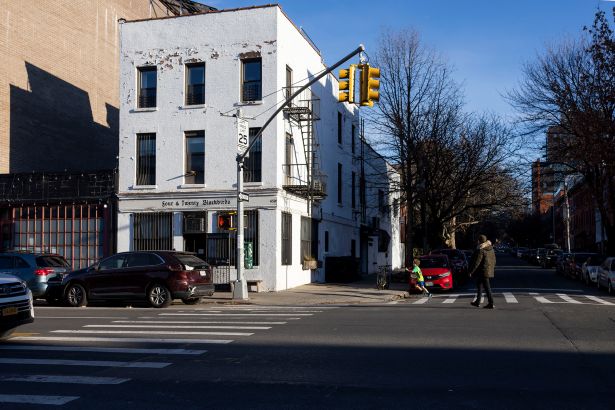
Like many previously industrial neighborhoods, Gowanus had a large artist presence in its various lofts and industrial buildings. One example was the Mecha Sonic Sessions, a two-day annual multi-sensory event that took place for several years at a metal shop off the Smith-Ninth Street subway station that combined musical instruments — some homemade — and science experiments that often found those instruments destroyed by the end of the evening.
While that event has since moved to East Williamsburg, the current development craze and the zoning that led to it took steps to ensure that the neighborhood’s artistic aura — the very reason many people want to move there in the first place — will remain.
The area rezoning, for instance, included a provision called the Gowanus Mixed Use Incentive, which provides developers with additional density for their projects in exchange for certain community benefit uses, such as providing affordable studio space to artists.
Arts Gowanus, a 30-year-old advocacy and arts programming organization for area artists, had lobbied with then-Councilman Brad Lander for artist benefits during the zoning’s land-use review, and wound up reaching community benefits agreements with 11 area developers.
“These are artist workspaces that are drastically below market rate. We got about 30,000 square feet in 11 different sites for affordable artist studios,” said Johnny Thornton, executive director of Arts Gowanus. “We got about 100 to 120 affordable artist studios that are perpetually affordable — they can only raise 2 percent a year after the second year, so it would take them a long time to get to market rate. So we’re pretty excited about the affordability that they offer artists in the community, and we also have a community center coming online, probably in 2027, as well.”
Given the area’s artistic history and the opportunity to preliminarily define the nature of the multifamily environment, some developers are combining the two to create creatively inspired living spaces.
Development firm Tankhouse, led by principals with primarily architectural backgrounds, won the 2025 Mies Crown Hall Americas Prize, a biennial award presented by the Illinois Institute of Technology that recognizes excellence in built works of architecture in the Americas, for the 18-unit condo 450 Warren Street in nearby Boerum Hill. The award centered on the property’s integration of indoor and outdoor space.
The company, along with Global Holdings and MacArthur Holdings, is currently working on Anagram Gowanus at 450 Union Street. The 20-story, 158-unit mixed-use tower will offer studios to three-bedrooms along with amenities such as fitness studios and rooftop terraces, and a 5,700-square-foot waterfront esplanade. (Anagram is a Global Holdings brand, with four properties to date in Manhattan.)
The project is expected to be completed by the second quarter of 2027.
Sam Zeif, a project manager at Tankhouse, notes that Gowanus was primed for a creative, community-oriented approach to multifamily housing.
“Tankhouse’s approach is pretty specific,” said Zeif. “We are committed to working in a small radius around where we live and work. All of us live in Brooklyn and we build in Brooklyn. We know and care about the area, and four out of the five of us are registered architects. So we come from a place of knowing that architecture and design can, when integrated in the right way, be really instrumental in defining what it is to live in the city.”
Given that Gowanus is still finding its way as a residential area, the company saw area housing as something of a blank canvas.
“We found ways to bring in a lot of the elemental qualities of a home which you’d often find outside the city,” said Zeif. “Things like exterior space, having a front stoop, having multiple exposures. All of our projects — every single home we’ve built — has at least two orientations, and sometimes three or four, plus the ability to open a couple of windows and ventilate your home, the ability to have a sequence of spaces from the street to your front door, and the ability to create community within a building through really intentionally created public spaces.”
But, even with all the exciting prospects for the growing neighborhood, the canal still leaves area developers and property managers with challenges beyond what they’d need to handle in other evolving areas.
“There are environmental responsibilities and testing that needs to be done on an ongoing basis that aren’t necessarily applicable to other neighborhoods due to the Gowanus Canal cleanup process,” said Z&G Property Group’s Greenberg. “Air quality monitoring, water quality monitoring, flood mitigation — those are all things we have to worry about by being around the canal. You have to take those precautions, because these properties have risks based on their geography.”
The risks of storm damage and flooding, in particular, must still be addressed for properties adjacent to the canal.
Whitney Boykin is an architect and senior associate with DeSimone Consulting Engineering who works on the engineering aspects of building facades. He has worked on several projects in Gowanus including at 420 Carroll Street, the Majestic at 545 Sackett Street, and Society Brooklyn at 500 DeGraw Street and 504 Sackett Street.
Boykin is charged with helping to mitigate the increased risk of storm and flood damage.
“We spend a lot of time looking at resiliency and waterproofing to a greater degree than we have to in areas less prone to storm damage,” said Boykin. “The canal is one place where the water levels can rise, and the buildings adjoining the canal could be at or below the design flood elevation. So this is an issue with the flood plain.”
For 420 Carroll, a 360-unit mixed-use building that the Domain Companies built along the banks of the canal, DeSimone had to ensure that the foundation was deeper than usual.
“The building structure had to be sensitive to potential hydrostatic loads from flood conditions or elevated water levels,” said Boykin. “We want to isolate the interior of the building from any potential unknowns that may exist given the legacy of the project by compartmentalizing the below-grade enclosure of the building, so that there’s no opportunity for gas or leaching of unknown pollutants into the building.”
Boykin needed to come up with worst-case scenarios for potential flooding, and defend against them.
“All of the low-grade conditions of the building are wrapped in a bathtub of waterproofing up to the design flood elevation,” said Boykin. “So, in concept, the water level can rise, but it can never get into the building.”
Given that the Gowanus rezoning passed in 2021, it’s somewhat remarkable that most of the new development seems on track to be completed around 2030, if not sooner.
Anita Laremont, a partner in the real estate division at Fried Frank and former chair of the New York City Planning Commission, notes that certain policy changes helped supercharge the timing of the Gowanus revamp.
“I don’t think you will find any other large-scale rezoning where you get development like this at this pace,” said Laremont, who credits the rapid pace, at least in part, to the elimination of the state’s 421a development tax benefit in 2022. “People were trying to vest for the old 421a, which is obviously much better than [its replacement] 485x. So there was a built-in incentive to get moving quickly.”
Laremont also mentions that given all the encouraging factors, development in Gowanus has presented as low-risk for developers.
“This is in a location in Brooklyn that people think is really marketable and valuable,” said Laremont. “Developers think, ‘If you build it, they will come.’”
Larry Getlen can be reached a lgetlen@commercialobserver.com.