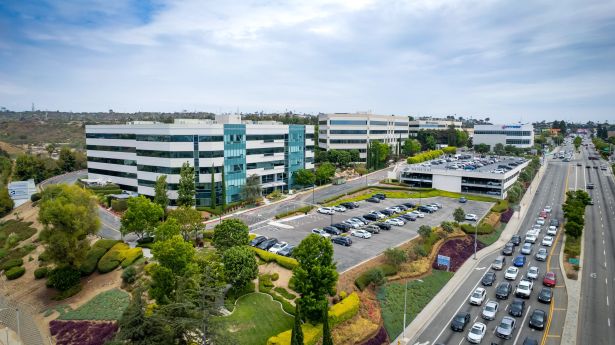
Rob Kane On Lincoln Property Company’s $6B Southern California Development Pipeline
The regional executive discusses where the asset demand is coming from and why operational expertise will be critical in a higher-rate environment
By Greg Cornfield November 23, 2026 6:05 am
reprints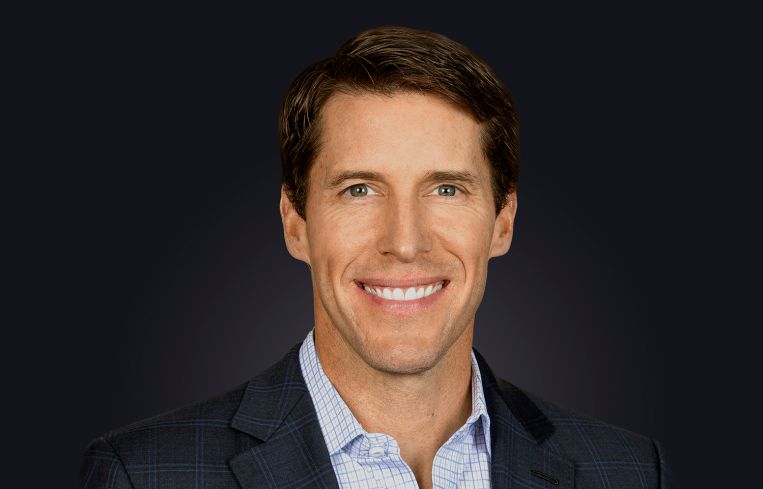
Lincoln Property Company has doubled its Southern California portfolio over the past five years, reaching approximately 78 million square feet, while assembling a $6 billion development pipeline.
Rob Kane, Lincoln’s senior executive vice president for Southern California, oversees the company’s operations across Los Angeles, Orange and San Diego counties, including acquisitions, development, redevelopment and property services. He also co-leads its national Corporate Advisory and Solutions platform.
Commercial Observer spoke with Kane about Lincoln’s expansion, its growing interest in aerospace and defense markets, the changing economics of multifamily development, and where the company sees opportunities to acquire distressed office properties.
This interview has been edited for length and clarity.
Commercial Observer: How much has Lincoln Property Company grown in Southern California?
Rob Kane: Today, we’re at about 78 million square feet under leasing and management. We’ve effectively doubled in size in Southern California over the last five years, from a portfolio standpoint. That’s largely through M&A.
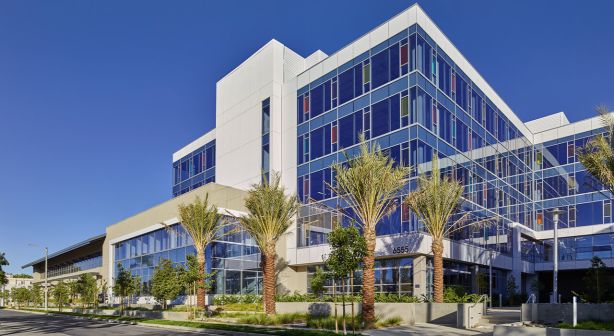
We’ve acquired two management companies, River Rock and Unire Real Estate Group, and that also includes acquisitions and developments we’ve completed.
How much of that expansion has come from acquisitions, development and M&A?
It’s really been a mix of all three. We’re very deeply embedded in the local markets, and we can use the whole platform to grow, whether that’s acquisition, land entitlements, development or operations. It really depends on where the opportunity is.
As we look forward, we have a development pipeline of almost $6 billion across Southern California. That includes multifamily, senior housing, for-sale townhomes, industrial build-to-suit and corporate campuses for some of our corporate clients.
What’s interesting about our platform is that we’re diverse in how we engage with the markets, and that allows us to grow quickly. Historically, where there’s volatility or dislocation in the market, that’s where we’ve grown the fastest because we can be nimble and take advantage of those opportunities.
When the market is rewarding development, we can do development, and when it’s rewarding opportunistic acquisitions, we can do that. We can ebb and flow with where the market is.
How has Lincoln’s business strategy evolved during your time with the company?
We’ve always focused heavily on being deeply embedded in our local markets. We’re a 63-year-old company. We’re in every major market across the country, and we have teams that have operated in each market for decades.
Having that local knowledge over decades gives us a real information advantage. In Southern California specifically, our teams live, work and grew up in L.A., Orange County, San Diego and the Inland Empire. That depth shows up in how we understand our markets, underwrite deals, work through entitlements with local cities, and operate. We have that local expertise with a big national brand behind us.
We’ve also developed long-standing relationships with our partners. We call it the efficiency of trust. These are relationships that go well beyond an individual deal, with partners we’ve done business with for 10 or 15 years. There’s a big foundation of trust and a readiness to act when opportunities present themselves.
Having a robust operating platform across property management, construction management, brokerage, asset management and corporate advisory gives us a stable operating base. That allows us to remain steady during volatility and be ready to pursue development or other higher-risk activities when the cycle rewards them.
How do you expect Lincoln’s strategy to change as the industry adjusts to higher interest rates?
In the last cycle, cap rate compression and very low interest rates did a lot of the work for people.
In the new cycle, which I think will be a higher-rate environment for the foreseeable future, operational expertise is going to win the day. Value is now going to be created by bringing operating value to an asset: running it more efficiently, leasing buildings faster, attracting higher-quality tenants and having a fundamental understanding of the market.
Our edge becomes our operational expertise, and that’s really what we’re built for. I think the next cycle will look very different from the last.
We’re also not dependent on a single product type. We’re diversified, which means our risk is hedged across different product types. We’re not in a singular location, either. We’re active across Southern California and nationally.
That allows us to focus on operational excellence and move quickly when there’s a dislocation in the market that we can take advantage of.
Which Southern California submarkets and industries are attracting the most attention from Lincoln today?
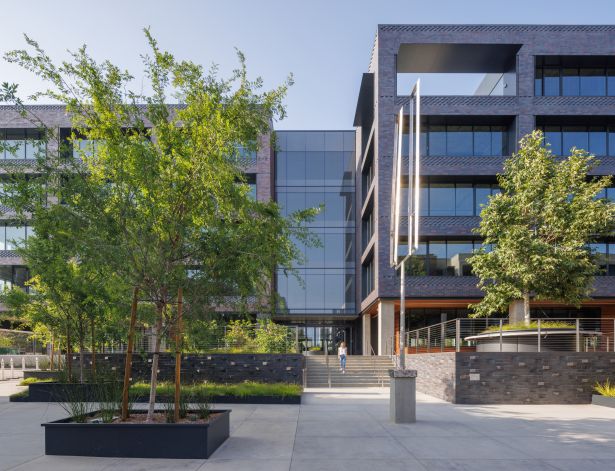
In the last cycle, we were most active in submarkets that attracted demand from media, technology, entertainment and life sciences. That meant places like Playa Vista, Culver City, Santa Monica and Hollywood. In San Diego, it was UTC, Sorrento Mesa and Rancho Bernardo.
We still believe heavily in those submarkets, and we’re still investing in them. But our geography has expanded into other parts of the region that we think will become much more active and be reshaped by aerospace, advanced manufacturing and defense technology.
The South Bay is a market we’re actively focused on in L.A. We’re also looking at Costa Mesa, where Anduril has its base of operations. We think that’s going to have a major say in the growth of Southern California and the West Coast in general.
We’re spending a lot of time understanding those industries and their real estate markets. What we’re seeing is demand from newer companies, but the right real estate product doesn’t really exist in those markets.
We’re trying to figure out how to deliver the right product that addresses where that demand is coming from.
How have higher interest rates, construction costs and development regulations changed your approach to multifamily projects?
Higher interest rates have probably had the most meaningful effect on our underwriting. Certain costs have gone up, while others have plateaued.
Multifamily development is probably where we’re most sensitive to those pressures today.
Our strategy is to deliver a very high-quality housing product. Typically, that means finding a great location and a site big enough to accommodate a high-quality wrap product because it’s more cost-effective — but you still get the same design and quality that a more expensive podium project would generate.
We’ve had to get really creative in how we design our multifamily product to address the higher-rate environment and make our projects financeable.
California’s entitlement process can be lengthy and expensive. Can those barriers to entry actually benefit developers with the right expertise?
The barriers to entry in California, and certainly Southern California, are very real. But anywhere there’s an easy development environment, that produces easy competition.
Entitlement in Southern California can take years. It takes deep local knowledge and trusted relationships with the cities and communities where you’re working. You can’t create that overnight.
We’ve spent decades building a track record, trust and a reputation for building very high-quality products in our communities. That high barrier to entry is actually an advantage for us.
We see long-term demand continuing to grow, especially for housing. The demand for housing is always going to be greater than the supply that can be generated.
That creates a real advantage for us and others who can navigate the entitlement process. It takes years to do that.
What’s an example of a Lincoln development that illustrates the challenges and timelines?
We acquired the Parsons Tower in Pasadena and worked to secure entitlements on the surface parking lot surrounding the tower.
It was one of the largest projects the City of Pasadena had ever reviewed. We spent years working with the city and the community to ultimately design and build a project that everybody could support. There was a lot of stakeholder input involved.
Ultimately, we were able to develop a really high-quality office and multifamily project. It took us about a decade from when we first started until we delivered the project.
You need great capital partners, a clear understanding of the time involved in the process, and trusted relationships with cities and communities.
You previously described office real estate as evolving rather than dying. What are tenants looking for today, and how is Lincoln responding?
There’s a lot of volatility in office, and certainly a lot of headwinds. Now, with AI and some of these other technological advances, I think the future of office is still evolving.
But the companies we’re working closely with are really focused on how their space gives employees a reason to be in the office.
Pre-COVID, the conversation was largely driven by cost per square foot and the efficiency of the layout. Today, the conversation is very different. What’s the amenity package? What’s the light and air of the space? How does the parking work? What’s the quality of the surrounding neighborhood?
What’s the environment I can create for my employees to get excited about coming to the office, and how is coming to the office better than working from home?
We’re seeing companies very focused on wanting their employees back in the office. A lot of times, that means rightsizing their footprint but doing it in a new, high-quality building.
We’re focused on either building or buying the highest-quality office buildings that will attract that demand and check all those important boxes.
With all the volatility in the capital markets, there are opportunities to buy office buildings that meet those criteria at a very low basis.
Certainly, there are buildings that will not recover over the long term, but there are also buildings that will very much outperform. Those are the buildings we’re focused on.
That fairway is narrow, but I could definitely see us continuing to buy distressed office in the right product types and locations.
Where do you see the best opportunities to acquire distressed office properties in Southern California?
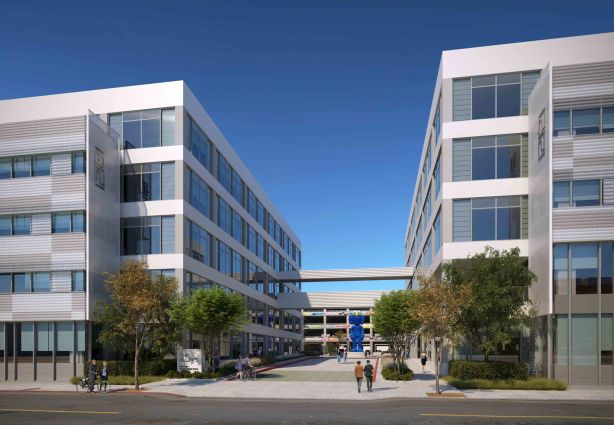
The Bluffs at Playa Vista is a great example. We think Playa Vista will be a very strong office environment over the long term.
Culver City is another market where we’ll definitely continue to invest in distressed office. Santa Monica and Beverly Hills have traditionally been strong office markets that we think will outperform.
The South Bay, including El Segundo and other parts of the region, has emerging markets that we think are really interesting.
Some of those are similar to the last cycle. There are other parts of L.A. that we think will probably perform worse over the long term, so we’re trying to stay away from those.
Beyond aerospace and defense demand in the South Bay, where else do you see industrial investment opportunities?
We operate a very large portfolio of industrial logistics properties, so we have great information about those markets.
There are parts of the Inland Empire that we think are poised for a very big rebound, so we’re certainly focused there.
Markets like Hawthorne and Torrance in the South Bay are very competitive, but we also think there are big opportunities for us to continue acquiring industrial properties in those markets.
What’s Lincoln’s outlook for retail?
Retail is a smaller part of what we do, but we’re still very interested in it and monitoring it closely.
Where we see it working is in necessity-based and grocery-anchored centers, and also large-format mall sites that are overparked and have big surface parking areas that could be reformatted into another use.
We’re looking for opportunities to redevelop some of those surface parking lots into more mixed-use or multifamily development.
That dovetails with a lot of cities looking to address their housing shortages. How do we better utilize those sites to build more housing?
Lincoln has also been expanding into sports- and entertainment-related real estate. How significant is that business becoming?
It’s one of the fastest-growing parts of our business nationally.
Most recently, we broke ground on building the new stadium and mixed-use development for the Cleveland Browns. We built the Star for the Dallas Cowboys in Texas, and we’re working closely with a number of other professional sports franchises.
The interesting part of where our business intersects with what professional sports franchises are doing is that they need new facilities. Ultimately, to make those stadiums work, they want to couple them with mixed-use development — retail, hotels and other uses that are synergistic with the stadiums.
That’s where we can come in with our expertise at a local level and help design and program the mixed-use element, then build the entire project.
What gives you confidence in Southern California’s long-term outlook?
Everybody is aware of the challenges Southern California, L.A. and other parts of the region have had. If you take a longer-term approach, we need to work through those challenges, but we see opportunities and are going to continue trying to grow.
When we look at developing more housing, growing demand for industrial, the opportunity to acquire distressed office at a very deep discount, and corporate users looking to reformat their real estate footprints or take control of their real estate, we see a lot of opportunities.
The market is going to continue changing. But we’re a 63-year-old company, we’re privately held, we’re active in every major product type, and we have great capital relationships. We’re structured to stay nimble.
We have an operational foundation that allows us to remain very steady in times of volatility. Real estate is historically a very cyclical business, and L.A. is historically very cyclical.
As we get past the most recent election, we’ll have new leadership in place. We’ll continue to have a very diverse economy, with world-class universities and talent. We have the Olympics coming in 2028, and I think there’s going to be renewed focus on keeping production in L.A.
Largely, the market underestimates how quickly L.A. can recover when these factors line up together.
We see a brighter future for L.A. and Southern California as the cycle continues to move in our direction, and that’s where we’re positioning ourselves.
Gregory Cornfield can be reached at gcornfield@commercialobserver.com.