Los Angeles’ Moribund Multifamily Market Shows Signs of Life
Do spikes in sales suggest bottoming out, or coming to terms with market challenges?
By Patrick Sisson July 21, 2026 2:35 pm
reprints
In a market where finding a development opportunity is akin to “finding a needle in a haystack,” and existing policy can “break the backs” of developers who want to build housing, it follows that a majority of the development community has “redlined” it to curtail future investment.
It’s no surprise to hear that multifamily development in Los Angeles has become costlier, more tedious, and more rare.
Developers face rising construction and labor costs, regulatory challenges and the city’s Measure ULA transfer tax, and persistent issues with financing. This year, only 8,500 units are expected to be added in the Los Angeles metro area, and rents will budge up just 1 percent, according to a recent Marcus & Millichap report — not exactly green flags for making big multifamily investments.
But, despite the apparent doldrums hamstringing the housing sector, there have been signs of life and significant increases in certain types of multifamily asset sales. While quarterly multifamily sales by dollar amount hit a recent peak in mid-2025, per CBRE — and then fell by 50 percent in the first quarter of 2026 compared to the final quarter of 2025 — sales volume and the number of units sold has recently jumped in certain key categories.
According to the Marcus & Millichap report, multifamily deal flow in the L.A. metro improved 25 percent in the year ending in March, with particular growth in Class C properties selling for $1 million to $5 million. Private investors are filling that gap, said John Chang, senior vice president and chief intelligence and analytics officer for Marcus & Millichap. Private investors closed 66 percent of the multifamily sales volume.
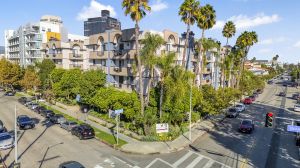
“There’s always going to be a lot of demand to live here, and the economics of buying an existing property and trying to build somewhere are very, very different,” said Joshua Baum, founding principal of Hilgard Economics. “Investors see an opportunity to make money buying lower-value multifamily.”
Another research brief by NAI Capital found that multifamily sales volume had spiked more than 25 percent in just the second quarter, with the number of units sold climbing 39 percent. In particular, said J.C. Casillas, NAI’s managing director of research, sales of properties above $10 million actually grew the fastest last quarter.
“There’s just a velocity in the market,” he said. In one example, Prime Residential’s acquisition of a 132-unit complex in L.A.’s Miracle Mile on the last day of June for $51.3 million, hit $388,000 per unit, a significant improvement over the current price-per-unit average of around $300,000, per CBRE.
“If you’re a good operator, you’re going to take advantage of the chance to get, say, 85 units to add to your portfolio,” said Casillas. “There is demand on the buyer side. Operating costs are huge, so you have to have the reserves.”
It’s a good time to acquire housing assets since interest rates are expected to remain steady for the foreseeable future, and the permitting and construction pipeline for Los Angeles look anemic going forward — just over 25,000 units are in the pipeline, a contraction from last year. Factor in the L.A. proper’s move to neuter full implementation of SB 79, the new statewide rule to upzone properties around transit, and there is “less of a threat of a large supply surplus coming onto the market,” said Samuel Maury-Holmes, founder of Zenith Economics.
“Cap rates are some of the highest we’ve seen in years,” said Chang. “I haven’t seen opportunities like this in 10 years. When the right assets become available, you have to jump on them. The last time there was an opportunity like this was the Great Financial Crisis.”
These figures come with serious caveats. The boom in relatively low-dollar asset sales can be connected directly to Measure ULA, the so-called “mansion tax” that went into effect in April 2023 and has had a detrimental effect on sales, according to recent research. The levies started at 4 percent for sales at $5 million but a built-in tie to inflation has since raised the threshold to $5.4 million — hence the jump in lower cost sales below the threshold.
These policy-mandated thresholds incentivize investors to look more at smaller buildings, said Maury-Holmes.
“You’re looking at a lot of deals for five to 15 units, maybe even a duplex, that are very safely under that threshold, and will be attracting a lot more capital,” said Maury-Holmes. He added that investors would be particularly interested in properties far enough below the $5.4 million threshold that buyers could make capital improvements and perhaps add ADUs without the threat of ULA.
“At the end of the day, it’s more expensive to finance a much bigger project, whatever the interest rate is,” said Baum.
The tax is clearly affecting the total dollar volume of transactions. Marcus & Millichap found sales above the higher ULA threshold in the year ending in March were down 50 percent from the multi-year average before the measure was passed.
What explains the bump in the number of sales and activity amid the mostly lackluster popular sentiment around the city’s apartment market? The job market remains steady and financing may be tighter, but sales are still seeing an uptick.
The population shift away from Los Angeles has tapered in recent years, said Chang. Part of the shift, said Casillas, comes from uncertainty and fatigue around Measure ULA. After a few high-profile attempts to reform the measure failed at the state and city level, the market may simply be accepting, reacting and transacting amid a new normal.
“You have the economics and the anxiety all of a sudden finally clearing in the marketplace, and people have decided to sell, and on the other side, buyers have decided to jump in,” said Casillas.
There’s also changing sales volume depending on the property value. Units sold for properties between $5.5 million and $10.6 million — the lowest rung on ULA’s sliding scale of taxation — jumped 41 percent last year, said Casillas, though the price remains low.
“The market has had a strong rebound,” said Casillas. “It’s just not uniform.”
A lot of the smaller assets sales are sales of necessity, Casillas believes, with landlords and operators feeling burnt out from the business, and transacting with owner users who believe they can capitalize on these smaller apartments.
But any bit of good news in selective sales niches comes amid troubling signs for the market. The same NAI report found that even with increased transaction volume, the average price per unit declined 12.9 percent last quarter to $285,504. (It’s fallen by a quarter since 2022.)
Developers continue to feel priced out. The number of units under construction dropped 23.6 percent compared to last year. While the shrinking pipeline may eventually tighten supply and support rent growth, it still underscores wider concerns and hurdles to making multifamily pencil in Los Angeles.
Plus, L.A. remains a city of immigrants — 4 million of whom lived in the region as of 2023 — and ramped-up immigration enforcement and policy shifts continue to impact this core renter population.
While there’s decidedly more action happening on the lower end of the market, Maury-Holmes said any shift in deal volume still doesn’t include institutional investors, who he said have largely turned, or are turning, away from the Los Angeles market.
Perhaps more damaging to the city’s affordability problems, the warping of the market by ULA can have further downstream impacts. Maury-Holmes noted the irony of ULA, formed to create a more stable supply of affordable housing for the city, creating investment thresholds and pushing capital towards smaller, lower-cost buildings — the type that tend to classically be considered the most naturally occurring affordable housing — and incentivizing capital investment in said properties that may make them less affordable. But he said there may be buyers out there simply seeking to assemble portfolios of smaller buildings, instead of picking up units in one fell swoop.
“There’s durability in Los Angeles,” said Chang. “And the differential between homeownership and rental is gigantic here, and I don’t see housing becoming more affordable anytime soon.”
Capital will always find a way in an in-demand market. But the numerous barriers to bigger investments only underscore the feeling that opportunities are being missed.