New York City’s Rent Freeze: Where It Stands
In October 2026, the city paused rent increases for its approximately 1 million rent-stabilized apartments
By Mark Hallum October 27, 2026 12:00 pm
reprints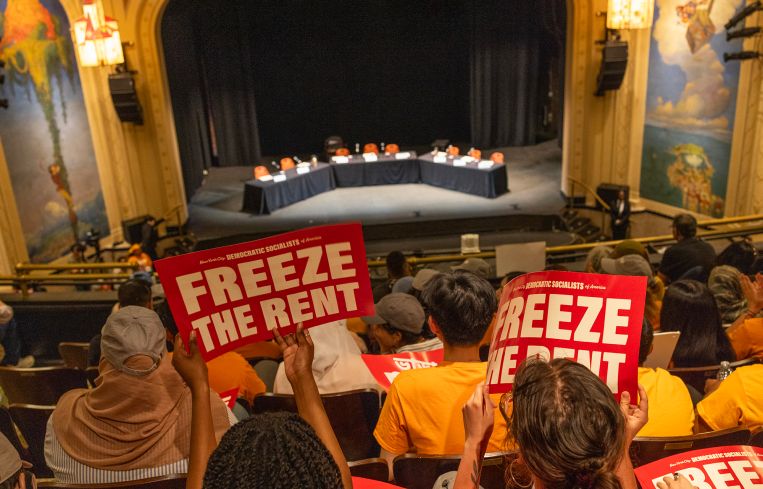
October is when the weather just starts to cool down, but Oct. 1 saw rent for about 1 million households in New York City already rendered frozen solid.
Mayor Zohran Mamdani’s rent freeze, promised on the campaign trail, has only recently taken effect, but it doesn’t mean that landlords aren’t already feeling the pain. And it certainly doesn’t mean that it won’t be defeated in a pitched and ongoing court battle.
Costs are increasing for property owners across the board at a time when they can’t ask more from their tenants, which begs an assortment of questions. So here’s a breakdown of what the rent freeze is, how it came about, why it’s controversial and more.
What is the rent freeze?
On June 26, the Rent Guidelines Board (RGB) voted 7-1 to halt increases for rent-stabilized tenants with one- to two-year leases, in favor of restricting landlords from imposing even modest rent increases.
The Mamdani campaign made big promises during the last mayoral election cycle to make the city more affordable for low-income renters, and that effort would start with a pause on authorizing these rent increases, which generally come about once a year.
The last increase was approved in 2025 and allowed a 3 percent increase for one-year leases and a 4.5 percent increase for two-year leases. These hikes also went into effect on Oct. 1, 2025, and if property owners were looking forward to a little relief going into 2027, they were dead wrong.
How does this impact owners of rent-stabilized buildings?
The RGB’s determination was made based on data that found overall expenses for landlords were up 5.3 percent in 2026, but it also determined that income for residential owners was up 6.2 percent over the same period.
But landlords may already be seeing higher increases on the cost side of operating their buildings, and it’s possible that the RGB underestimated just how much resources such as heating oil, natural gas, water or electricity would increase in the second half of 2026.
The New York Apartment Association (NYAA) crunched some numbers in late September showing that heating oil and natural gas alone were 28 percent higher than where the RGB estimated costs would be in 2027 compared to the same time in 2025, for example.
That’s before 30-year mortgage rates are factored in at 7.03 percent, compared to the 6.3 percent it was at in the same period in 2025.
“First and foremost, the RGB ignores at a minimum 130 different expenses that are imposed on these buildings from city and state regulations,” Kenny Burgos, CEO of the NYAA, told Commercial Observer. “But then beyond that, it gets even worse because the Department of Finance, through their assessments, have an expense cliff that they effectively smooth the data at the end. So the Department of Finance is basically saying it should only cost you about this much to run your apartment building, and when you have buildings that far exceed that cliff, they just ignore it.”
While providing data — and fodder for the argument against the rent freeze — the NYAA is more or less a spectator to the court battle.
“This is exactly why it is so difficult to see the financial distress from a bird’s-eye view,” Burgos said. “When you see banks have been pulling back, like Flagstar… There’s no denying that there’s been a capital flight in this housing stock, which is only further contributing to financial distress.”
Spokespeople for the RGB did not respond to a request for comment.
What is the city doing to ease the burden on rent-stabilized landlords?
In April, the city announced that it would launch its own program to link property owners with more affordable insurance programs. The administration was looking for an insurance partner to provide coverage for 20,000 homes by 2027 and 100,000 homes by 2030.
Cheaper insurance, however, is only one piece of the puzzle.
“I’m not sure insurance solves the issue when debt service makes up the majority of these landlords’ costs,” said Dan Kennedy, co-founder and president of RLTYco. “It could help the landlords defer some cost on insurance, but my guess is that insurance is not necessarily the most significant cost that the landlords are facing.”
A lot of landlords currently don’t have the income to cover debt service payments on their properties, according to Kennedy, who believes the administration will need to find alternatives to keep the rent down and prevent landlords from going belly up financially.
What’s the beef in court?
In the last week, Randy Mastro, former first deputy mayor under Eric Adams, has been slugging it out before a judge against New York City Corporation Counsel leader Steven Banks, who once served as commissioner for the Department of Homeless Services under Bill de Blasio.
The goal is to ultimately have the rent freeze nullified and force the RGB to take another vote that throws landlords a lifeline.
The discovery period for the trial took place in September, when the judge ordered City Hall to release communications with the RGB to ensure that it was not improperly influenced by the Mamdani administration.
The lawsuit, filed in July by a group of five small landlords owning rent-stabilized buildings in the city, alleges that the RGB “made a mockery of its statutory mandate, resorting to multiple manipulations of its own data to try to justify this irrational result. … This all comes amid unchecked inflation and rising costs that struggling landlords will have to bear to survive.”
The landlords, represented by Mastro, also claimed the Mamdani administration “went to extraordinary lengths to pack the board with loyalists and then spent millions in city funds to fill the board’s hearings with tenant advocates.”
RGB members are, however, appointed by the mayor as a matter of routine, and Mamdani’s administration is not an outlier in that regard.
But the debate only got messier from there.
During an Oct. 13 hearing before State Supreme Court Judge Brendan Lantry, Mastro was demanding that the city turn over access to phones of city officials to further make the case that there were unethical dealings leading up to the vote. Banks rebutted by saying that in order to establish what normal communication between an administration and the RGB should be, they would need to examine communications within the Adams administration as well.
The courts would not have to dive too deep into the archives, either.
Mastro himself reportedly had communications with Doug Apple, the former chair of the board, leading up to the approved 3 percent increase in 2025.
Pouring even more fuel on the fire surrounding the RGB’s vote was the day-of resignation of pro-landlord member Christina Smyth from the board.
Turnover on the RGB gave Mamdani a unique opportunity to hand-select six of the nine members of the independent board, further planting seeds of doubt that the board would make a decision that was not already in the works prior to Mamdani’s November 2025 victory.
Mark Hallum can be reached at mhallum@commercialobserver.com.