Dedeaux Properties CEO Brett Dedeaux On California’s Next Industrial Cycle
Drivers such as fresh demand from advanced manufacturing and a push from users to buy their spaces has the L.A.-based executive bullish
By Greg Cornfield July 20, 2026 6:05 am
reprints
Few names are as engrained in Southern California industrial real estate — or baseball — as Dedeaux.
The family business traces its roots to legendary University of Southern California baseball coach Rod Dedeaux, who led the Trojans to 11 national championships and coached U.S. Olympic teams after founding trucking company Dart in 1938, which eventually grew it into a nationwide logistics operation.
Dart acquired industrial properties for its own use, and then started leasing space to customers. That evolved into what is now Los Angeles-based Dedeaux Properties, which develops and invests in logistics, distribution facilities and specialized industrial outdoor storage (IOS) properties.
CEO Brett Dedeaux is steering the business through a far more complicated market. After years of soaring demand, Southern California is emerging from a period of elevated vacancy and tariff uncertainty. But Dedeaux said tenants have continued expansion plans while investors return to the scene.
Commercial Observer caught up with Dedeaux to discuss where that recovery is taking hold, why advanced manufacturing and IOS are outperforming, and how rising power demands are changing the buildings his firm develops.
The following is Part 1 of a two-part interview, and has been edited for length and clarity.
Commercial Observer: At the start of the year, you said 2026 would be a transition from “reset to recovery” for industrial real estate. Are you seeing that play out, and do you expect that to continue in the second half of the year?
Brett Dedeaux: There have been terms used since the beginning of the year by some of our institutional capital partners, who have a pretty good holistic viewpoint because they own a lot of industrial here in Southern California and other asset types. One phrase I have heard is “bouncing along the bottom.” I do not love the term, but it is a phrase that has come up.
We went from trade tariffs into global conflict, and before that it was interest rates. It felt like, “Oh, man, when are we breaking through? When are people going to feel comfortable making big investment decisions?”
If you look at where we have been this year, I would say there are green shoots that have popped up.
After Liberation Day, that was such a reset in a big, heavy import-related distribution market like Southern California. We have the largest ports and the biggest trade lane with Asia. When you make a massive change in tariff policy, there is a big pause.
Our tenants and customers were saying, “Wait a minute. How does this affect us? What are we doing?”
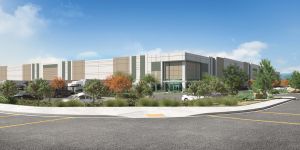
And it is not just signing a lease. If a big corporation is leasing a building like the 500,000-square-foot building we are building at Tejon Ranch, they might be putting $30 million of infrastructure improvements into it, investing capex or hiring hundreds of people. There is a lot that goes into that beyond signing the lease.
So they were asking, “Are we coming? Are we out? Are we in Mexico or in the U.S.? Are we outsourcing?”
I think it created a pause because they did not have clear visibility. After Liberation Day, I felt that throughout the marketplace.
Some of the same vacant buildings we had then may still be vacant now, but some of our typical logistics and transportation customers are back looking at them, having conversations with us and circling. That feels a lot better.
On certain properties where we, or any landlord, were just hoping for an offer, now we may have three offers. It’s like, “Wow, it has been a while.”
Are they at the same level or competitiveness economically that we used to see? Maybe not. We are getting buildings leased in the Inland Empire West — not at top-of-market rents, but you first have to get the excess inventory off the market. Then rents can move, and then the Inland Empire east can start moving.
So there is more activity. There are leases getting done.
As for what is different about the green shoots: advanced manufacturing, for example, and companies like Anduril taking significant space in Southern California, plus a number of other activities in that sector.
We have a big aerospace hub here, traditionally, in Southern California. As I have met with some of these companies, they say the skill sets of the educated workforce, the vendors and suppliers in the region, are why Southern California remains a strategic location for them.
All of a sudden, there is not as much availability of Class A space in infill L.A. areas. A few of those deals get done, and rents can move quickly in those infill areas because there is a limited amount of Class A inventory. It sat for a while, surprisingly long, but now in some of these areas we are seeing movement.
We are also seeing capital partners and equity groups that stayed on the sidelines for quite some time start to step back in. They are not flooding the market, but many of them are saying, “We have sat on some vacancy in Southern California. Maybe we were overallocated to industrial, but now we feel there is enough momentum and fundamental conviction around the strength of Southern California to start investing again.”
It is not happening at an overwhelming pace, but, if you are tracking every deal the way we are, you see some of the momentum starting. There are data points to back it up: capital markets transactions getting done, leases getting signed, and companies with a lot of capital on the sidelines starting to redeploy and invest in growth. We are seeing the beginning stages of that movement.
It sounds like you’re seeing stabilization in the South Bay and Inland Empire West. What about Orange County, L.A. infill, and the markets farther north? Are those still puttering along?
I would say the Inland Empire East is where a lot of people have circled. That is where there is more vacancy in certain-size segments.
You have seen strength across the board in the mega-big-box space — the million-square-foot range, plus or minus. That product is harder to deliver because it is difficult to assemble that amount of land, and there is still demand in that range.
Therefore, there is interest in that from both a tenant perspective and an investment perspective because you can see the dynamics.
But there are certain segments — say, in the Inland Empire — where the 300,000- to 500,000-square-foot segment has had approximately three years of oversupply. It is slowly getting leased up, but there is still a fair amount of competition and vacancy.
Another trend we have seen in some of these markets, with some of these vacant buildings, is owner-user activity coming in. We have been monitoring that and thinking that if interest rates drop, owning versus leasing gets more attractive. We are hoping that if interest rates start dropping, that trend might accelerate.
South Bay has some good momentum. Inland Empire East is something to keep an eye on and maybe look at as an opportunistic area.
Vacancy is a little higher in some other areas, like the San Fernando Valley, but it has condensed a bit. It is down a couple hundred basis points. When I sat down with leading brokers yesterday, they were walking me through it: “We were at 7 or 8 percent, and now we are down to 5 or 6 percent.”
Some of that relates to the advanced manufacturing activity I mentioned. A lot of those other markets are historically supply constrained. There was not a tremendous amount of land or overbuilding in North L.A. or Orange County. So you did not really have the capability to overbuild in these more mature markets.
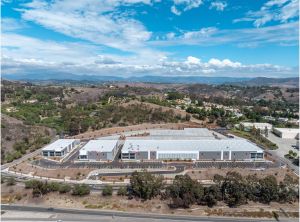
In Orange County, for instance, we have a project down there. We signed a good credit tenant on one building. We have a lease out with a major national retailer. We have good pricing with the other building and a letter of intent out on another building.
So we are going through leasing in Orange County at a good pace, what I would consider a normal market leasing pace on a new Class A project. At the same time, Orange County has segments that are a little slow and segments that are doing well.
Part of me does not want to give away the secret sauce of what we are targeting or trying to do, so competitors jump in and say, “Oh, that is what they are doing. We will jump in there.” But I think we are seeing good momentum in mid-bay product, serving entrepreneurs and small to midsize businesses. There is good vacancy and good activity there.
In Orange County, the 100,000- to 200,000-square-foot range had a number of buildings added, and leasing has been a little slow in that segment, but midbay product is moving pretty well.
This is a time when skilled operators who really understand and track the dynamics of their submarkets, and who use their relationships, data and monitoring, can find opportunities. There are certain size ranges and product types where people are optimistic and there is movement. Then there are other areas, in certain submarkets and size ranges, where you have to be careful.
We have these conversations with our sophisticated institutional private equity partners — the Carlyles, Blackstones and Artemises of the world. That is the same commentary I get from them. They are not saying, “We are back and toggled on to investing in everything.”
During COVID, every industrial and semi-industrial deal looked like a can’t-lose proposition. It was: Find deals that hit the returns, and go.
Now it is much more segmented and strategic.
That is why people like us, who are tracking every deal and certain niches, are valuable. They want to go deeper into the data and make sure we are covering the downside.
If we can prove the business case and have the information, intel and insights to back it up, they will invest. But it is much more targeted and strategic.
You have not said much about IOS, truck terminals or some of the more specialized industrial assets. How are those performing?
I was getting to that.
The IOS assets we do at Dedeaux Properties tie back to our heritage in logistics and the family logistics company. I use those insights from my background in forming this company. We have most of the major logistics and transportation companies in our portfolio, and we spend a lot of time with them. Those conversations help guide our investment decisions.
When we are hearing what a major shipping company says its freight flows are projected to be, and others are saying similar things, that affects our thinking. If they were projecting being down for the next several years — which they are not doing now — maybe we would not go buy a bunch of yards targeted to those tenants.
I think IOS has performed well in a wonkier, softer market compared with more commodity distribution buildings. There were just more commodity distribution buildings built.
There was never a large supply of logistics-oriented Class A IOS, which is what we do. That differentiates us. Some people may take a dumpy metal building with a big yard and classify it as IOS, but that is not the kind of IOS we look for or develop.
We target specific IOS that plays a role in the supply chain and supports the fast movement of goods. It has value for major national retailers and logistics companies. We did not feel there was a big oversupply of that, and that product was still needed.
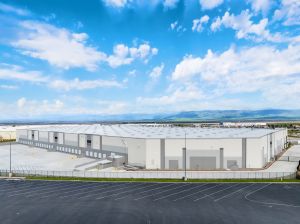
We are under contract on a 20-acre IOS site in Moreno Valley, and we are about to start construction on two different Class A yards.
Can you say where those are?
They are all in the Inland Empire.
One is a 20-acre sale-leaseback in the Inland Empire East. The other two are 7- and 8-acre yards where we have assets and an active portfolio.
They are key IOS hubs, and, because of our existing assets and tenant base, we have a good viewpoint.
We are developing more product in those traditional IOS hubs of the Inland Empire because they are near intermodal rail yards, similar to the ports, and close to the highway system that serves the Western U.S. They also have the proper zoning, generally heavy industrial.
Those characteristics are why we are reacting to the demand we are hearing from our leading tenants. They are gearing up and could use more space.
For a while, a lot of our tenant base — logistics companies, for example — might have been leasing a 300,000-square-foot building, but did not have it filled up. They had excess capacity within their network.
We were saying, “These guys are not looking to lease more. They are looking to fill up their own buildings,” because a lot of third-party logistics companies (3PLs) have multiple accounts in one larger building.
Now I think a lot of those guys are at capacity. That took a year or two. Now they are saying, “We need to take on more space. Our big retailer that we support is growing again.” We are reacting to those conversations.
So we are putting some of our sites back into production. Some of those sites had been put on hold for a little bit.
Was that driven by Liberation Day, tariff uncertainty and the pause among 3PLs?
I would say it affected almost any type of tenant — 3PLs, retailers, manufacturers, all of them. A lot of people do assembly here, too, because product gets shipped here from overseas and then assembled here.
But there was some activity. We did a big IOS deal in Rancho Cucamonga this year with a major shipping company, with solid economics. Their viewpoint was: “It is a 10-year lease. This is the most populous state in the country. Those consumers are not going anywhere. We have the biggest ports and the largest consumer base in the U.S. We need to service it. So whatever is happening with Liberation Day, we need to be in this market.”
Certain companies are thinking long term. If you have the right facility, in the right location, with the right amenities, then it gets done.
We feel the market has now recalibrated to the new reality. Companies cannot just not grow. They have to start making decisions again, and they are starting to grow again.
So the new normal is being priced in?
Yes, the new normal is being priced in and factored in. Companies are starting to move. Most of corporate America has a lot of capital on the sidelines, and they need to grow and deploy it. They are under some pressure to do that.
With leasing activity picking up, are tenants asking for things from properties now that they were not asking for five or 10 years ago?
The big fundamental change is power. When we talk to any of our leading tenants, the leading question is power.
Why? Buildings, distribution and advanced manufacturing are changing. Even distribution is becoming more semi-automated. Some of the IOS we have near the ports has to consider electric vehicles and electrification.
There is more automation, and there is a heavier need across the board for more power. That is a leading question, and it is easier said than done.
In Southern California, we are power constrained. The availability and cost affect how much power you can get to a site. Each site is different. Some have limitations, and some can get more.
As industrial landlords, we now have an internal electrical and power subcommittee. We are bringing in outside power experts for meetings so we can determine how we, as industrial landlords, can deliver strategic, plentiful and relatively cost-effective power to our buildings.
For the industry, the state and local markets, the better we get at that, the more competitive we will be.
Growing up in L.A. in the 1980s, this was a big aerospace market, but when Southern California changed, places like the South Bay saw old aerospace buildings converted into distribution buildings.
There are still logistics and distribution users, but, now, when we design a building, we may design it so that if it goes to advanced manufacturing — what would have been trailer parking can become auto parking. We make sure we can get a little more power there. We look at roof loading so it can carry equipment, HVAC or temperature control, and the power needed for equipment inside.
You are looking at how to design and engineer buildings to support those trends, and maybe designing with enough flexibility to go either way. Those are big trends, and something we are spending a lot of time on.
What else are you seeing in terms of specifications?
On the big-box side, higher clear heights are becoming more common. Now you are seeing 40- to 42-foot clear heights. We are doing a 36-foot clear minimum at Tejon Ranch because we evaluated that with users, but 36 feet and higher is becoming the new norm for Class A distribution buildings.
More companies are utilizing cubic square footage and demanding more of it. For a long time, 30 feet clear was Class A. Now, a 30-foot-clear building is considered Class B in the marketplace.
For midsize buildings, 30 feet clear is fine. But, once you start getting into 300,000 to 500,000 square feet and above, higher clear height is the new norm.
Gregory Cornfield can be reached at gcornfield@commercialobserver.com.