Hollywood’s Production Slump Hitting L.A. Studio Owners
Soundstage occupancy stayed stuck at 62 percent in the first half of last year while marquee owners are losing their grip on historic studio campuses
By Patrick Sisson May 12, 2026 11:30 am
reprints
The Hollywood economy continues to struggle mightily, as shoot days, steady employment, and streaming expansion finds homes outside of California, or disappears completely. Television production for the first three months of 2026 in L.A. was down nearly 30 percent from the same time last year, when concern turned into panic.
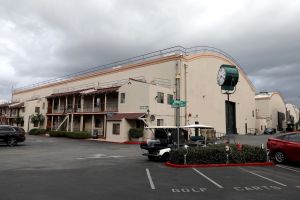
The upswing from just a few years ago, when investors enjoyed fully leased soundstage portfolios and saw a huge opportunity in riding the streaming boom — when the need for studio infrastructure permanently shifted the market — has crashed back to Earth.
“Now it’s a buyer’s market,” a leading studio real estate officer told Commercial Observer. “There’s more inventory, less production, and no desire or need to lock up a space for multiple shows.”
A recent run of headlines has played like a movie montage: Quixote, a gear supplier for movies and film, announced its pulling out of many L.A. studios as a cost-saving move amid a downturn. Lenders are pushing owner Hackman Capital Partners to sell landmark and historic L.A.-area studios, including Television City — where Hackman had planned a $1 billion expansion — and Manhattan Beach Studios, which the Hollywood mogul bought for a combined $1.4 billion in 2019. Netflix is also looking to buy the historic Radford Studios, which was recently repossessed from Hackman, for an astounding 83 percent off its $1.85 billion sale price in 2021.
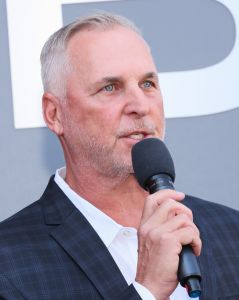
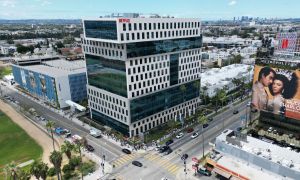
And Hudson Pacific Properties, the nation’s largest owner of studio real estate, announced mixed first-quarter earnings with a $53 million loss. CEO Victor Coleman said during the earnings call on Thursday that office assets were performing well, but “U.S. production remains subdued,” with quarterly studio revenue down $2.4 million.
Leasing of in-service studio stages nationwide was down from last quarter, dropping from 74.5 percent to 72.8 percent, with Hollywood studios hitting 97 percent occupancy. These are “the right assets in the right locations,” said Coleman, but they’re still operating in a challenging market.
That follows a fourth quarter where Hudson posted a $277.9 million loss, and also said it has $500 million in commercial mortgage-backed securities debt coming due later in 2026.
L.A. soundstage occupancy stayed at 62 percent in the first half of 2025, according to industry group FilmLA, similar to the rate the year before. Anne Wurts, FilmLA’s research program manager, expects that number will trend upward due to the sale of studios.
In many ways, the crash of entertainment industry exuberance is a sequel we’ve seen many times before. Numerous cities have been praised as the next Hollywood but then seen the energy and excitement at the idea of becoming the next film capital recede as the structural advantages of Southern California won out.
The 2023 labor strikes also contributed to the weakening of L.A.’s film industry; the uncertainty around the length of the strike led to a “storm before the calm,” as projects raced to finish before the picket lines started, emptying the pipeline of projects. The length of the labor action also led many productions to find a new home elsewhere in the U.S. or overseas, making it that much harder to restart the film and TV economy when labor agreements were signed. The cost of labor in L.A. has “eroded the moat around Hollywood production” over the preceding decades, said Robert Marich, a film industry analyst and author of Marketing to Moviegoers and it’s a topic that doesn’t get addressed amid the hand-wringing around subsidies.
Original television productions also peaked earlier in the decades. In 2022, 1,695 TV shows premiered, a figure that dropped to 1,122 in 2025. But that underutilized studio space is also attracting new types of users, and while Hollywood used to be all about television series and big budget movies, now, independent, lower-budget films are filling up the schedule. Wurts points to the Mila Kunis-helmed adaptation of a thriller “Nightwatching,” shot earlier this year at the Cinespace Studio in Woodland Hills, as an example of the atypical users sliding into studio lots.

Efforts to use increased government subsidies to prop up the industry and bring back productions have been slow to roll out, and have yet to fully move the needle. California recently expanded its Film & Television Tax Credit Program 4.0 to $750 million annually through June 2030, more than doubling the previous $330 million allocation, and leading gubernatorial candidates want to abolish the cap and increase support. But the expanded state film subsidies authorized last July have had a minimal impact so far. FilmLA found that by the end of March, 147 projects qualified and just 22 were guaranteed subsidies. The program is working as intended, with a CBS show relocating from Canada to snag the credit and 21.8 percent of film shoot days coming from incentivized projects — just not fast enough to change the narrative.
“2025 was one of the worst years on record,” said Philip Sokoloski, vice president of communications for FilmLA. “We’re not celebrating until there’s a wholesale return of production to Los Angeles. What we are seeing is the turning of a corner.”
The city’s new Low Impact Permitting Pilot seeks to slash red tape for indie productions, and FilmLA research shows it could save nearly 60 percent on permitting fees for some shoots, but it’s still being evaluated and won’t apply to the bigger shoots that provide jobs at scale. There’s even a proposal to prop up the filming of commercials, a category that’s plateaued in recent years, with a $15 million state fund.
The pressure seems likely to continue. The pending Paramount-Warner Bros. merger is predicted to eliminate additional industry jobs, and the drought in production isn’t just an L.A. exclusive — shooting in locations around the county, such as Louisiana and Georgia, has significantly slowed down. That’s why many have advocated for a federal film incentive, such as California Sen. Adam Schiff, who has been pushing for bipartisan action after claiming Hollywood lost 42,000 jobs between 2022 and 2024 alone. FilmLA is also seeking to coordinate with the LA 28 Summer Games to make sure the Olympics don’t slow down shooting schedules, like they did in 1984.
Without significant action, the current status quo will continue to damage studio real estate, including the seven new projects and renovations being tracked by FilmLA. And long term, a rebalancing of studio real estate values won’t move the needle much, either. Studio costs represent maybe 5 percent at most for a film’s budget; unless L.A. figures out better math around incentives and labor costs, it won’t change the calculus for productions. Losing a few studios won’t impact L.A.’s ability to backfill work or attract production at scale, said Sokoloski; the city has 8.3 million square feet total.
“I think that what you’re about to see is more shoes drop,” said the studio real estate executive. “You’re just seeing the first couple.”