Brooklyn Navy Yard CEO Lindsay Greene On How the 300-Acre Hub Fits Into the City
‘The concept is you can come here with an idea on a napkin and grow through prototyping and early production.’
By Amanda Schiavo January 26, 2026 9:11 am
reprints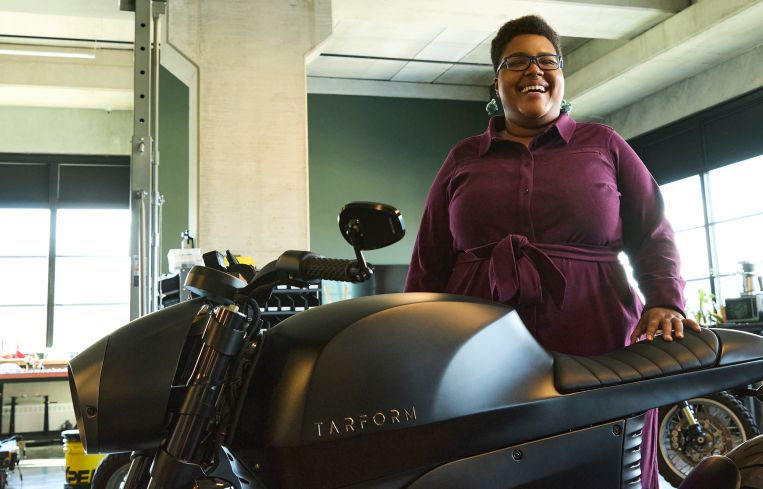
The Brooklyn Navy Yard has a storied history in Brooklyn and in New York City as a whole. At its start in 1801, the 300-acre waterfront site was a major U.S. naval shipbuilding center, where famed and tragic vessels were born, including the U.S.S. Arizona, which was later destroyed at Pearl Harbor.
After the Navy decommissioned the yard in 1966, the city acquired the site. It wasn’t until 1981, when then-Mayor Ed Koch established the Brooklyn Navy Yard Development Corporation (BNYDC), that the site began to transform into what it is today: a 50-building industrial park home to over 500 businesses that employ more than 11,000 people.
Lindsay Greene has been president and CEO of the nonprofit since 2022, honing its focus on job creation, manufacturing and economic development. The yard she runs also generates over $2.5 billion per year in economic impact for the city.
Greene’s career path to the top spot at BNYDC has been anything but linear. Commercial Observer caught up with Greene in late January to discuss her career, her goals for the BNYDC, how it evolved, and its impact on the surrounding community.
This interview has been edited for length and clarity.
Commercial Observer: How did your personal and professional paths lead you to the top spot at BNYDC?
Lindsay Greene: I grew up in Washington, D.C., and I’m definitely a child of the `80s and `90s, and think that a lot of things from the `90s are still really great, especially the music. And that was a time when D.C. was going through a lot of struggles as a city. We had a financial control board, we had our mayor who went to jail and came back and got re-elected twice, and it was during my formative years. I grew up in one corner of D.C. that was historically Black and working class, and then I went to prep school on the other side of town. So I was always living this reality of understanding what makes a good neighborhood or not, and that stuck with me.
I didn’t know that was a career or anything I could do, but it was something I cared about, and my solution to that at the time was to just go be successful, and figure out how to make an impact later in life. So I decided I wanted to go into business. I really liked numbers and science. So I approached college — I went to Harvard for undergrad — interested in business, but knowing I also really like science. When I got to undergrad I was scared away from electrical engineering, but I retained this interest in science and technology. But I was, like, I’ll just go into business.
I understood that investment brokers help people figure out how to get their money to make their things. Cool — I could do that. So that’s what I went to do. And then along the way, I started to realize that I was interested in real estate, a community development version of real estate. “Oh, I can blend the things that I cared about as a young person with my job.” That was a nice light bulb moment.
But it wasn’t a direct line to the Brooklyn Navy Yard, was it? After Goldman Sachs you worked in the food industry and then went to work in the public sector of New York City.
I came out of college, I went into investment banking, worked with industrial companies, and realized I wanted to do urban real estate. Goldman Sachs had, at the time, very recently [in 2001] created the Urban Investment Group, which was, for all intents and purposes, private equity funded by the other earnings of Goldman Sachs to reinvest in either urban real estate projects with mixed-income housing or invest in businesses owned by women and people of color.
My boss there was Alicia Glen, who had been an affordable housing tenants rights lawyer at the beginning of her career. Then she was relatively senior at the Department of Housing Preservation and Development, and then left HPD to run the urban investment group, and then became deputy mayor for housing and economic development.
So the through line is actually very short. I worked for Alicia. I left to learn about business, and I learned about the things inside the box, getting small business experience. Her portfolio was not just housing, but also economic development. And, ostensibly, you’re working to understand what it means for the city to regulate small businesses and try to support them and do industry growth and diversification.
I went and learned what it meant to work inside a business that wasn’t a financial business or a housing business. I had a nice spot to fall into in her team, where I’d gone to get a different experience, but still had the training and the relationships and so on. So I left the urban investment group, went to business school [at Yale]. Classmates would look at me like I was crazy with five heads when I said I left investment banking because I wanted to go work in food.
What was your experience like in the food industry?
I went to work in 2011 at Fresh Direct, and that was an incredibly humbling experience. But I learned a lot about food systems. I’m a much smarter grocery shopper as a result. I was in prepared foods, so I wasn’t near the growers, but I had colleagues who were, and learned a lot about the science behind things like how to grow an apple. I’m a nerd at heart.
I was running the prepared foods department — it was the land of rotisserie chickens and the bakery and the microwave meals. I was the category merchant and I was responsible for understanding things like: What was the mix of stuff that we sell? How do we sell more of it? What’s our promotion strategy like? What are the new items we’re introducing? What things should we discontinue? What do we have the capacity to make in our commissary kitchen versus what someone else should make and we should buy it? And are we selling it under their brand name? Are we selling it under the Fresh Direct label? I was doing all that. It was my first profit and loss responsibility job.
It was a really interesting learning experience. But I wanted to have a different experience, so in 2013 I went over to work at a brand doing chia seed products that I met through the vendors we were working with. They were trying to do a chia seed, nondairy alternative, on the backs of an economic development model that ultimately didn’t work.
I reconnected with Alicia, and she said “I’m doing this interesting stuff. Do you want to come work for me and work on business policy? Because you went and had all these interesting experiences.” That’s how I ended up in the city, and that was in September 2015.
What was your role at City Hall, because you are still not in real estate at this point, correct?
In City Hall, my portfolio was basically not housing and not real estate. It was the parts of the Economic Development Corporation (EDC) that were focused on industry transformation and growth. It was the workforce agencies. It was the Small Business Services (SBS). It was the Department of Consumer Affairs, which then became Consumer and Worker Protection, because when I was there we started the labor office. I was there when the nightlife office was created. I had this cocktail of agencies that was everything else that wasn’t real estate.
I was excited about that, and it gave me lots of exposure to the same universe of businesses I had just been with, but the agencies who ostensibly are facing them. SBS had this team of people whose job it was to help storefront businesses open faster and more efficiently, because they all just got lost in the alphabet soup of getting their permits from the Department of Buildings and a different permit from the Fire Department. If FDNY said one thing, and DOB said something different, you had to figure out how to make each of them happy, but they didn’t talk to each other. There was this years-long effort to consolidate kitchen fire suppression approval permitting into one umbrella. It was one of the big things that we did. It took years, but it mattered.
And how does that lead us to today and the Brooklyn Navy Yard?
I spent a lot of time with my Brooklyn Navy Yard predecessor, David Ehrenberg, who had been here since partway through 2013, and he did a lot of transformation and really great work here. I had left City Hall to go to the Economic Development Corporation in 2020, literally a week before the COVID lockdown. My first day there was March 5, 2020. So the job I went to EDC thinking I would be doing was not the job I got to do.
At the end of the Bill de Blasio administration, I was still at EDC, but I was on parental leave because my wife and I had our second kid. I came back and it looked like David was maybe ready to move on and pursue other things. At that point, I put my hat in the ring and said, “If David’s really leaving, I would love to be considered for the Navy Yard role.”
What is the history and the overall mission of the Brooklyn Navy Yard?
A really simple way to think about it is that it is an urban manufacturing and innovation campus. That’s what it functioned as when the Navy was here. It did a lot of ship repairs.
But the through line between what the Navy did when they were here and what we do now is innovation and inclusivity. The Navy built a lot of their most momentous ships here, and a lot of their first versions of ships here. And they did it while employing a lot of Black and brown New Yorkers and a lot of women, at a time when no one else was doing that. And, then, I learned through a queer history thing we did here, that they also were employing a lot of people from the LGBT community. It was a welcoming place to work. It was like, “Well, if you had a skill, you want to go do the thing, you want to weld, you want to do whatever, OK, great — come one, come all.”
Those two things kind of really animate what we do now. It’s just the universe and the context in which we do it has changed. The Navy was here through 1966, when the yard was decommissioned. In that time, the first diesel ship was built here. The first steamship was built here. Some of the first submariner safety equipment was built here. And, then, the two most important battleships for World War II were built here: the Arizona, which is entombed in Pearl Harbor, and the Missouri, which is where the Japanese surrendered. They were both built here. The Navy Yard was known as the can-do shipyard. It did all manner of things.
Through a combination of changing technologies and the evolution of private contracting for the military, the Navy no longer needed to have its own shipyards, and the ships all got too tall to fit under the Brooklyn Bridge. One of the last ships that left here, they had to detach the communications mast and put it on a hinge. And so there’s this great photo we have in the archives of a ship antenna that’s leaning under the Brooklyn Bridge.
It was the 1960s, and there was all this infrastructure here, and the Navy didn’t know what to do with it, and the city didn’t know what to do with it. It just kind of sat here and deteriorated for many decades.
Ed Koch created the Brooklyn Navy Yard Development Corporation, which is the nonprofit of which I’m CEO, and gave it the structure we have now. From a governance perspective, the Navy gave the property to the city. The city leases it and contracts with BNYDC to manage it on its behalf.
How did the nonprofit transform the Brooklyn Navy Yard from an abandoned industrial site to the bustling compound it is today?
The premise was urban renewal — let’s revitalize it, it’ll be a job center. It was a place that employed a lot of Black New Yorkers, and that’s a lot of the demographic that’s outside the gates. How do we do that again? Well, it turns out, when the property sits here for decades and nobody’s doing anything, the only business that is viable is usually distribution and warehousing.
It was overrun with wildlife. There were geese and wild dogs, and who knows what else. We do still have the geese, they still hang out. But, really, it took until the late 1990s, early 2000s for the city to have the wherewithal financially to invest into the Navy Yard and help bring the structures back to life in any kind of modern state. Much of the last several decades has been about doing adaptive reuse of the structures the Navy built and tenanting them with primarily small businesses, so that this place becomes a job center again.
When the Navy was here, at its peak in World War II, there were 70,000 people that worked at this place. When the city took over, the best record we had at one point was 3,000 or 4,000 jobs here.
Now there are 13,000 in this modern context, and they are employed at 550 businesses, the vast majority of which are smaller. The average business here has fewer than 20 employees. Some of our larger employers have 250 to 350 employees. But that’s only a handful of businesses, one of which is the shipyard.
How does the Brooklyn Navy Yard impact the Brooklyn community and New York City?
I talked a lot about the businesses — the model is you create a campus that can be occupied by businesses who then employ people. The inclusivity point comes in with how do we make sure that all those jobs are accessible to as many New Yorkers as possible? And, so, we have always had an on-site employment center here that literally connected the community to job openings inside the Navy Yard, and that gives us a front-row seat to how jobs in industrial spaces have changed over time.
As we’ve observed these changes, we noticed that there’s going to be a very different set of skills that are necessary. You’re going to have to know how to work these machines that used to be just purely craftsman hand trade, and need to know how to program them also. And then you have to know how to operate them and fix them when they break, which could be an electronics issue.
So we have embarked on two different paths. One was starting to understand and shape what a talent pipeline looks like that feeds into that. And that became a goal of having modern, next-generation career and technical education or vocational education.
In partnership with some entrepreneurial folks at the public schools, we created the Steam Center, which is a workplace emergent technical high school, where juniors and seniors from 10 different high schools come and spend half their day here every day for their last two years of school, and they get their Regents diploma, they get college credit, and they get professional certifications when they graduate.
They pick a pathway, and the pathways are informed by industry councils, which are assembled from tenants at the Navy Yard, and some from folks outside. We co-develop with the principals and their leadership teams to say these are the pathways that are based at the yard, that are growing in New York City, that require a different type of approach. And so the Steam Center scholars graduate having been enmeshed in what a modern media job looks like, what a modern design and engineering job looks like, and construction in a different context.
The pathways are construction, culinary, design and engineering, media and IT. Over time, they’ve evolved. It was originally networking and telecom. Now there’s a cybersecurity track, and we will eventually figure out how to incorporate robotics and AI.
Another thing we’ve been working on is how do we bring in that same type of infrastructure and make that possible for adults? That’s a training center concept that we’re working on for now. As we see the nature of those jobs change, we can translate that into the career pathways.
So, you can come here with a high school education, or associate’s degree education, and get the applied skills to actually come and get one of these jobs and be successful doing it. That’s our most direct way to positively impact Brooklynites and New Yorkers.
Are you able to do all of this on a budget from the city?
We are self-sustained. The city gives us city capital dollars for municipal bonds to upgrade the infrastructure and the buildings, but all of the repairs, maintenance and all the workforce programming we do, some of that is philanthropically funded. Like our CNC [computer numerical control] program is funded by a grant from the Robin Hood foundation, and we have a lot of other foundations that have helped fund the Steam Center. But we sustain ourselves all the rest of the time with the rent that the tenants pay us.
Speaking of the city government, have you met with Mayor Mamdani yet, and what do you hope to see from his administration?
I have not met with him yet. We have a lot of alignment in terms of the mayor’s goals to make the economy work for working people. We are the manifestation of your classic memory of working people in terms of the highest-wage jobs you can have without a college degree, which tended to be manufacturing jobs. We are the modern manifestation of that, and we want to capture that and make sure that we lead into the future and have helped the city keep up with the way manufacturing is changing.
I am pretty confident that it aligns with the mayor’s agenda, but we have to constantly tweak to make sure we remain accountable to connect that impact.
And, finally, if we were to fast forward to 2030, what does your ideal scenario for how the Brooklyn Navy Yard has grown and evolved look like?
One of the things we want to do here is make sure that our workforce model has evolved. A future state of success for me would be that we have helped to create Steam Centers of excellence in other places — that the Steam Center here, those pathways are up to date and working well, and the graduates are successful, which is what has been happening.
I would like to see that we have built, and are training people at, a new training center. We should be in construction on a new facility, ideally for the missing piece here at the Navy Yard, which is a mature manufacturer, someone who has gone through the growth phase.
The concept is you can come here with an idea on a napkin and grow through prototyping and early production and get to sort of semi-scale manufacturing. We don’t have that many companies here who have yet reached that milestone, but we want to.
Some of that will be natural growth, which is why we need new space for them to grow into. But, it would be great to bring someone whose business has already matured to the yard and say, “Look at New York City. Look at this region. You have so many customers here, you can bring your production here, cut out a lot of friction, and have a workforce that’s ready to do what you need them to do.”
Amanda Schiavo can be reached at aschiavo@commercialobserver.com.