
This year’s Power California illustrates the new map of the Golden State.
Los Angeles has always been good at reinventing itself, but some of the industries and asset classes that, as recently as a few years ago, seemed inseparable from the region are trading places.
Hollywood is consuming itself, for one.
Christopher Nolan’s “The Odyssey” helped power one of the strongest summers ever at the box office, and turned the iconic TCL Chinese Theatre on Hollywood Boulevard into the film’s highest-grossing IMAX location in the world. Yet, Hollywood itself stumbles further into distress, as soundstages yawn empty, studio moguls give the keys over to lenders, production services companies disappear, and the pending Paramount-Warner Bros. megamerger could dramatically alter some of Los Angeles’ most famous studio real estate (see Page 32).
At the same time, another distinctly Southern California industry is moving in the opposite direction.
Aerospace never really left the South Bay, but defense technology and advanced manufacturing have turned the markets from El Segundo to Long Beach into one of commercial real estate’s hottest growth stories. Colliers calls it a “total resurgence,” as industrial landlords increasingly chase tenants making satellites, drones and other technologies rather than simply moving boxes through warehouses. Even after the great e-commerce boom cooled, Prologis still controls 85 million square feet in the Inland Empire and has another 9.7 million square feet of potential Southern California development on its books.
But that turnaround doesn’t compare to the region’s suddenly thriving brick-and-mortar retail, which was marked for death not long ago.
Simon Property Group CEO Eli Simon calls it a “cultural moment.” In Beverly Hills, the capital of luxury retail, Bernard Arnault’s LVMH is raising the stakes rather than cashing out, spending more than $1 billion buying Rodeo Drive real estate and effectively becoming a developer of the legendary shopping street itself (see Page 30).
The office market also looked universally broken, and is separating into a story of winners and losers.
Century City is commanding record rents, Downtown L.A. buildings are changing hands after the COVID price reset, and leasing is showing enough life that brokers are talking more about recovery instead of survival.
Housing remains the region’s least surprising story because the shortage never goes away.
Related California’s new leadership inherited more than 21,000 units completed or underway, and a $10 billion market-rate development pipeline. Irvine Company delivered 2,244 Orange County apartments in April alone. Jamison is attacking the problems at once by converting unused offices into thousands of homes. And, even though many multifamily developers and investors have been leaving the region, BlackRock showed up this summer and made a $1.6 billion bet on 3,620 Southern California apartments.
And looming over everything is Southern California’s mega-event era.
The World Cup came through SoFi Stadium, the next Super Bowl is on the way in 2027, and the Olympics arrive in 2028. Meanwhile, Stan Kroenke is buying Major League Baseball’s L.A. Angels for $4 billion and surely contemplating another enormous development opportunity around Angel Stadium. Jonathan Goldstein is pushing ahead with the roughly $10 billion One Beverly Hills project after securing $4.3 billion in financing.
Perhaps fittingly, the people holding the map and drawing the new lines are changing, too. Laura Clark took over Rexford, Garrett Lee took the reins at Jamison, Gino Canori and Ann Silverberg succeeded Bill Witte at Related California, and Eli Simon followed his late father at Simon Property Group.
This year’s Power California is less about one dominant boom than a changing of the guard in the leasing companies, the defining industries and even Southern California’s identity.
Profiles were written by Tom Acitelli, Andrew Coen, Gregory Cornfield, Cathy Cunningham, Emily Davis, Isabelle Durso, Julia Echikson, Larry Getlen, Mark Hallum, Brian Pascus and Amanda Schiavo. Profiles were edited by Acitelli, Cornfield, Skip Card and Max Gross. Jim Sewastynowicz and Emily Assiran coordinated the photographs. Jeff Cuyubamba designed the layout.


Ed Ely, Cecile Chalifour and Brett Katz
J.P. Morgan
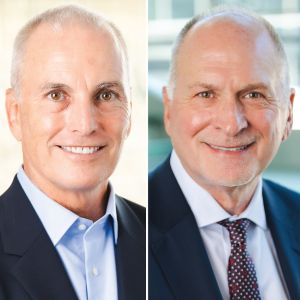
Michael McCann and Thomas Whitesell
Kennedy Wilson
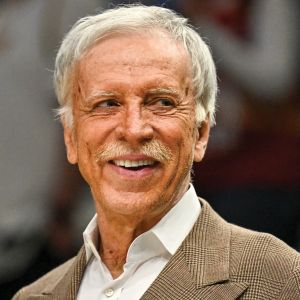
Stan Kroenke
Kroenke Sports & Entertainment

Bernard Arnault
LVMH
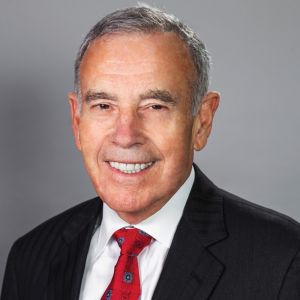
Ed Roski Jr.
Majestic Realty

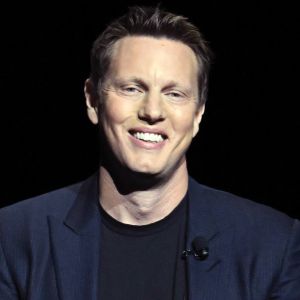
David Ellison
Paramount Skydance
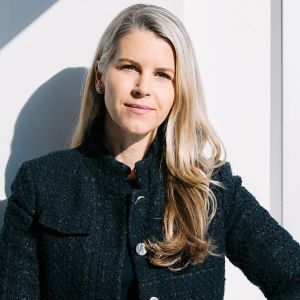
Megan Creecy-Herman
Prologis
The Stories Behind the List