Nithya Raman Inherits a Downtown L.A. Still Searching for its Comeback
The fragile recovery hinges on housing, investment and a new City Hall
By Patrick Sisson November 20, 2026 3:30 pm
reprints
“Downtown L.A. needs attention and it needs real care,” said Los Angeles Mayor-elect Nithya Raman during a May debate. “It needs a strategy.”
In the run-up to the election, she said, “Everything about the future of Los Angeles is currently being bet on Downtown L.A.”
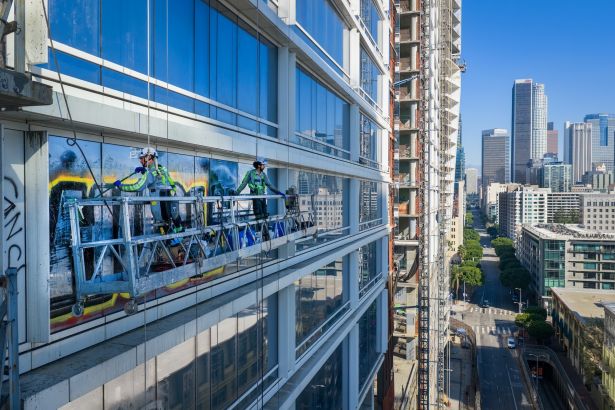
Raman will enter office Dec. 13 as the Downtown L.A. market enters a crucial turning point. Years of being “one of the deadest downtowns in the world,” per a Los Angeles Times headline earlier this year, have started to show signs of shifting. The so-called “Graffiti Towers” have been scoured and shorn of spray paint, and the continued departure of office tenants reversed in the third quarter, as increased signing of modest leases, including tenants at the U.S. Bank Tower, meant more office space being filled than vacated. The market overall saw 85,000 square feet in net absorption. Apartment occupancy downtown hit 91.4 percent, its highest level in the last three years.
“The last year has marked a huge shift in downtown progress,” said Nella McOsker, president and CEO of Central City Association of Los Angeles (CCA). “You’re seeing the tides turn. But there’s still a long way to go.”
And with a number of high-profile developments and events coming in the next 18 months — the $2.6 billion expansion of the downtown convention center, the hoped-for redevelopment of Oceanwide Plaza, the beginning buildout of the Fourth & Central megadevelopment, and the Olympics and the media attention it will bring — this may be a unique moment to revitalize the oft-maligned neighborhood. During the summer games, downtown will be a primary hub.
Advocates for downtown believe Raman has an innate respect for the importance of the city center.
“She is essentially an urbanista at heart,” said Nick Griffin, executive vice president at DTLA Alliance. “She understands in her bones the value of dense, dynamic urban centers and understands how they work and understands their importance to the city at large.”
But the challenges remain significant. Despite the improving sentiment, key stats are headed in the wrong direction: retail vacancy ticked up this year, and office vacancy increased 3 percent versus the same period last year.
Raman has outlined significant visions for public safety, homelessness, and incentivizing and encouraging more development. The oft-sclerotic downtown real estate market will put many of those strategies and platforms to the test, during a period when it will increasingly be in the spotlight. Downtown, as McOsker said, remains unique in that it’s a single neighborhood with an enormous mental health and homelessness crisis, as well as arguably the very place where you need to build the most housing and steer tourists toward.
Griffin hopes Raman can be a visible champion for L.A.’s downtown. He brought up New York Mayor Zohran Mamdani and San Francisco’s Daniel Lurie as examples of leaders using the bully pulpit to bring attention to their cities.
“From the development community’s perspective, they want to know that they’ve got a partner in the city who cares about it and who’s willing to do the things that need to be done to make the market viable,” he said.
Part of what many see as a pendulum swing in the right direction focuses on how big business sees downtown. McOsker argues that with more large firms buying their buildings, like Capital Group’s $210 million purchase of its home office tower in Bunker Hill in March, or signing leases, this terrible domino effect of one large company after another leaving has been stopped. One of the biggest players downtown remains the municipal government, and Raman’s statements that she’d bring more local government employees back to the office has been greeted as a positive sign.
But other news suggests there remains significant apprehension about DTLA.
Brookfield, which had already defaulted on loans for numerous downtown office tower properties, just pulled out of the $600 million Beaudry apartment towers downtown, viewing the effort to create high-rent, luxury rentals in DTLA as a failed one. Instead of refinancing the $360 million loan, Brookfield backed out, telling the Wall Street Journal that the move “reflects entrenched market challenges facing Downtown Los Angeles.’
And Raman’s ascension to the mayor’s office will place her in a different role in relation to the city’s downtown, especially in relation to her past votes, including as one of two City Council members opposing the convention center project, and her opposition to some of the fiscal arrangements surrounding the 2028 Summer Games.
This moment offers a unique leadership challenge and opportunity: to utilize her focus on bureaucratic reform and housing production to help accelerate development in the city core, and also to thread the needle, in regards to her focus on fiscal responsibility, to take advantage of the world stage the Olympics offers to help channel resources and focus on downtown.
Part of the longer-term vision for downtown is to continue to develop it as a key source of new housing, creating a more dense neighborhood, and more customers for growing local retail and dining options. The recently approved DTLA 2040 plan calls for promoting infill development, adding new housing typologies, and intensifying production and adaptive reuse, to accommodate an estimated 125,000-plus new residents by 2040.
Griffin argues that Raman’s stance as a YIMBY housing advocate will help accelerate housing development downtown; currently, roughly 2,500 units remain under construction, with an additional 28,000-plus proposed. He said that while outgoing Mayor Karen Bass was a good partner, she was very focused on homelessness, and wasn’t prioritizing development. Griffin sees a focus on both homeless services and the development of downtown as two key factors in solving the larger homelessness issue.
Raman’s housing proposals include a shot clock to speed up approvals, cutting red tape and bureaucratic delays, reforming the Measure ULA transfer tax, and pushing zoning reforms. In addition, her policy blueprint specifically calls out speeding up office-to-residential conversions, encouraging more missing-middle housing options, and creating high-rise zones, all of which will have additional impact downtown. Speeding up adaptive reuse of old office towers will remain a solution to two problems, both expediting downtown’s larger transformation, and also taking Class B office space out of the market, which a recent Kidder Matthews report argues will remain a challenge for a long time to come.
McOsker also said that Raman has also collaborated with CCA in the past around key housing issues, including working on the local ordinance that would help a state Assembly bill on adaptive reuse work on a local level.
“I think she wants to facilitate development. She wants to engage with the development community in a way that sends the message that has been missing, which is that Los Angeles, and specifically downtown, is amenable to development and wants to facilitate it,” said Griffin.
While a development game plan remains important, the immediate focus will likely remain public safety. The DTLA Alliance has pointed to improving crime stats, especially near the Seventh and Figueroa Metro Station, where a collaboration between the DTLA Alliance, LAPD and Metro have seen increased patrols. However, as Griffin argues, the organization “has never felt that you can arrest your way out of a lot of the problems we have.”
Raman has voiced support for programs like Vacant to Vibrant, the San Francisco effort to re-energize vacant commercial storefronts. McOsker wants to ideally collaborate with Raman and “figure out how serious she is about implementing these ideas.”
The real solution, Griffin said, is more people on the streets undertaking positive activity. Figuring out how to catalyze that kind of renewed, revitalized, resurgent and walkable downtown will be a defining challenge for the incoming administration.