New York City Life Sciences Real Estate Caught a Nasty Cold in 2026
Developers offloaded major projects and leasing slowed, but recovery antibodies are already present
By Emily Davis November 16, 2026 10:00 am
reprints
In September, Iron Horse Labs, an ambitious plan for a 200,000-square-foot, Class A research lab, disappeared from the Upper East Side market. Its developer, Taconic Partners, sold the would-be assemblage site at 309 East 94th Street to LCOR, a multifamily developer, for $73 million. The sale marked the latest blow to New York City’s once-promising life sciences sector.
Multiple laboratories in Manhattan and surrounding boroughs have traded this year at a loss after development costs and sold to landlords outside of the life sciences sector. These sales are a stark departure from the sector’s performance just a few years ago, but a meaningful increase in recent leasing momentum has offered a glimmer of hope.
“I would describe the life sciences real estate market in New York as in a really early stage of stabilization,” said Victor Rodriguez, CoStar’s senior director of analytics. “I wouldn’t call this a recovery, by any stretch.”
The arrival of the COVID-19 pandemic in 2020 “poured gasoline on the fire” of an already booming life sciences sector nationwide, a CBRE executive told Axios in 2021. The sector was boosted further by years of low interest rates and a growing biotechnology industry.
In 2022, Taconic announced that it would move its life sciences portfolio into a new subsidiary, Elevate Research Properties, in a deliberate hedge against a weakened office sector. Now, after four years, Manhattan’s office market is roaring back, life sciences leasing has lagged, and just one New York property remains in the Elevate portfolio.
“New York was just ripe for overdevelopment,” said Jonathan Schifrin, Savills’ senior managing director and life sciences lead in New York.
Higher interest rates in 2022 spooked investors, federal cuts tore into the research world in 2025, and new supply outpaced flagging demand. All of these elements converged upon New York City developments that hit the market after the 2020-to-2021 peak.
The macroeconomic changes “pulled the rug out from under New York,” Schifrin said. Private-sector demand for lab space, largely from early-stage startups, weakened after 2021, although the city’s smaller market, compared to Boston, saw less dramatic drops in rent.
A national sector report published by JLL in June ranked New York City’s life sciences availability rate as the highest in the country, at 37 percent.
Schifrin sees the current state of the sector as a market adjustment, rather than distress, as players reconcile with pullbacks from a dramatic and, in some cases, ill-timed rise. A recent third-quarter report by Savills documented a 22.8 percent vacancy rate for New York City’s labs, down from 32.5 percent in the second quarter, thanks to recent sales. Citywide inventory was 3.1 million square feet, and no new construction is underway.
“I think New York’s through the worst of it,” Schifrin said.
The third quarter of 2026 saw a total of 87,158 square feet of life sciences leasing activity across the New York area, according to CoStar data, up from 30,933 square feet in the prior quarter and 9,883 square feet in the same period of 2025.
“I think 2025 really showed how far things can slow down,” Rodriguez said.
In the first three quarters of 2026, the metro area saw 143,098 square feet of life sciences leasing, compared with just 61,433 square feet during the same period of 2025.
Demand is returning across New York and the U.S., albeit from a low base, Rodriguez said, noting that the recent strength has come after more than eight quarters of slowdowns. Continued recovery will rely on future quarters matching the third-quarter strength.
“When you compare this longer term, even on the availability side, we’re about 37 percent above where we were at the end of 2019,” Rodriguez said. “There’s still a lot of excess space out there. The leasing activity is a positive sign, but we’re going to kind of continue to need to see more of this.”
In June, the city’s Economic Development Corporation (EDC) announced plans to cut 75 percent of its dedicated life sciences workforce, even as the agency reaffirmed a $1 billion commitment to its LifeSci NYC initiative launched in 2016. Industry advocates lobbied hard against the move, and the EDC’s subsequent reorganization has managed to preserve many jobs and existing programs, said Jennifer Hawks Bland, chief executive officer of the life sciences trade association NewYorkBIO.
Despite improvements, it’s been a quiet year for lab leasing. The largest deal came in January, with Jackson Laboratory’s 41,000-square-foot lease at Hudson Research Center in Hell’s Kitchen — the sole New York asset remaining in Taconic’s Elevate portfolio. Rover Diagnostics’ 15,763-square-foot deal at InnoLabs in Queens’ Long Island City, reported in April, brought the building to full occupancy, according to owners GFP Real Estate and King Street Properties.
A project’s success can come down to timing, Schifrin said. City labs that delivered too late in the sector’s rise have borne the brunt of the market cycle’s downturn.
“There were a lot of large institutional funds and landlords that poured hundreds of millions of dollars into the life science strategy, and, at this point in the cycle, they’re not really willing to continue to fund a lot of these buildings,” Schifrin said.
Momentum proved hard to sustain. Tenants were reluctant to commit to new, empty lab buildings. Many of these projects came online at or after the market’s peak, and some owners found it easier to sell than to lease.
In January, Alexandria Real Estate Equities sold its Long Island City, Queens, life sciences center at 30-02 48th Avenue to a subsidiary of North River Company for $34.5 million. Alexandria had paid $75 million for the property in 2018, and, following a conversion, opened it in 2021, just as the market peaked.
City records in July documented Taconic’s sale of West End Labs, its Upper West Side life science building, to Bill Ackman’s Pershing Square Foundation. The $188 million price was far below the roughly $600 million Taconic secured for the project, finished in July 2023. The neighboring 320 West 66th Street is also reportedly in contract for roughly $70 million.
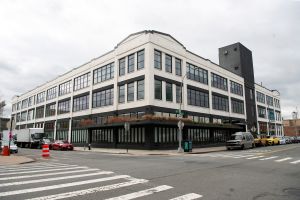
The next month, Longfellow sold its Hatch Life Sciences building, a 208,000-square-foot lab in Long Island City, to Pearl Realty Management for $86.9 million. The sale price was below the $92.5 million that Longfellow and Sculptor Real Estate paid in 2021 for the former parachute factory, and doesn’t count the $120 million they planned to invest in converting it. The building wasn’t finished until 2024.
The sale of the Iron Horse Labs site soon followed. Recent lab sales are reflective of a slowdown across the entire U.S. life sciences sector, Rodriguez said. But unlike Boston and San Diego, New York remains an emerging market.
“That emergence has significantly slowed over the past three years, so I truly view this as a supply and demand story,” Rodriguez said.
Beyond transactions, leased properties are facing their own challenges.
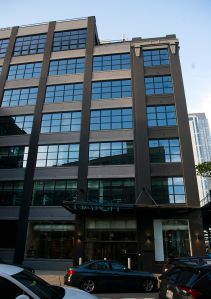
The Taystee Lab building at 450 West 126th Street, Janus Property’s $700 million conversion of a former Harlem bakery property, has been empty since opening in 2022 and now faces a foreclosure suit, Bisnow reported in August, chronicling the particularly poor leasing environment among Harlem’s life sciences buildings.
“There was a thought at one time that lab users would go anywhere, as long as you built the right kind of environment,” Schifrin said. “These lab users today, a lot of them are crossing with artificial intelligence companies. They’re the same types of people that work in tech companies and regular office buildings. They want to be well located.”
The Alexandria Center for Life Science in Kips Bay, a longtime life sciences campus, remains in a legal battle with the city over its third building under development. The site faces a $183 million loss in preconstruction costs, according to Bisnow, in a continued dispute over delays, lease obligations and allegations of missed deadlines. Alexandria has said in filings that the new development missed the peak of the life sciences market.
Projects completed prior to the boom appear to have weathered the pullback, like GFP’s InnoLabs and the historic portion of Alexandria’s Kips Bay Campus.
“If you look across the actual lab buildings that hit the market at the right time, I think the picture is a little rosier,” Schifrin said.
Schifrin has seen strong leasing velocity at Taconic’s Hudson Research Center and North River Company’s new LIC asset, despite the latter’s discounted sale. The owner-occupied CURE. Innovation Campus by Deerfield Management has done well, too, and 325 Hudson Street, which includes lab space, announced full occupancy in September.
There’s also been sharp increases in venture capital funding this year, particularly in the second quarter, when Savills reported that life sciences venture funding hit $1.9 billion in the New York area, up from $800 million during the same period in 2025. That may eventually translate to greater leasing demand, but the imbalance between capital and new tenants remains a tension for landlords.
“The city is looking to meet demand where it is, and that demand is in traditional office usage,” Rodriguez said. “The banks are looking for it. Tech, particularly AI, is looking for it. When we look at where that venture capital money is going, it’s not going to pharmaceutical bio lab entrepreneurs. They’re going to AI-driven companies.”
Those artificial intelligence companies have driven a small but increasing share of the city’s office leasing momentum this year, but industry advocates like New YorkBIO’s Hawks Bland said AI demand is flowing into life sciences companies, too.
Those companies appear more dynamic than past lab users, as the industry adapts to new uses and partnerships with AI.
“As companies evolve how they do their research and development, we have the opportunity for even more life science companies in New York that won’t be hamstrung by the need for wet lab space,” Hawks Bland said.
AI giant Anthropic acquired New York-based biotech startup Coefficient Bio in a $400 million deal in April, in a sign that momentum from AI-driven life sciences could balance out losses in the traditional biotech space.
There is no doubt that the biotech industry has been in a downturn, said Hawks Bland.
“But we’re seeing the market indices trending upward this year,” she said. “We’re seeing, generally speaking, more investment flow into early stage companies.”
Across key U.S. markets, the sciences sector still has a long way to go, with a supply/demand ratio sitting at 6 to 1 in JLL’s June report. The report stated that most market indicators portray a market that has bottomed out and begun recovery.
“Right now, I think a lot of owners are breathing a sigh of relief,” Rodriguez said. “They’re happy to take this improvement in leasing activity. They’ll take any leasing activity that they can get, and again, hoping that this wave can continue moving forward.”
For leasing agents like Schifrin, market downturns are a storm to be weathered. He sees clearer skies ahead.
“I’m seeing and hearing more demand for tours on the lab side, at square footage that were larger than they have been over the last 18 to 24 months,” Schifrin said. “I think it’s all part of a healthy turnover in the market.”
Spokespeople for Taconic, Longfellow and GFP did not respond to requests for comment.
Emily Davis can be reached at edavis@commercialobserver.com.