

Westlight Capital Founder Doug Faron On Going Long in Multifamily
His 10-month-old firm already has $750 million in assets under management, most of it multifamily — and a chunk in 'special situations'
By Brian Pascus September 29, 2026 7:15 am
reprints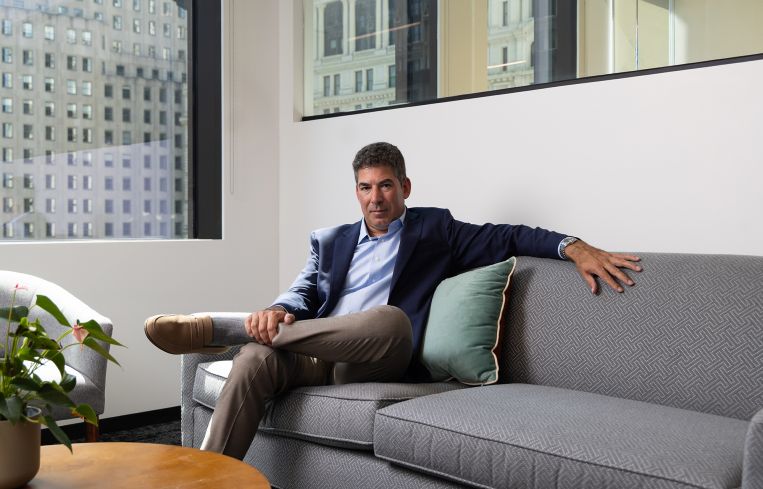
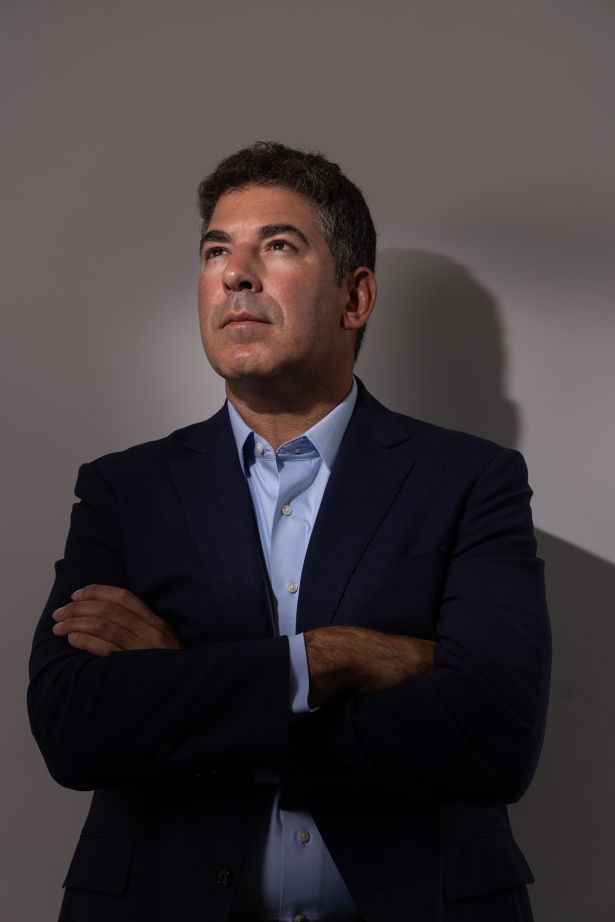
Doug Faron is the founder and managing partner at Westlight Capital, a West Palm Beach, Fla.-based real estate investment firm that specializes in multifamily. Formed only 10 months ago, Westlight already has $750 million in assets under management.
In the early part of the decade, Faron ran Shoreham Capital, an entrepreneurial venture that allowed him to carve a niche in the build-to-rent real estate space. But Faron’s capital markets experience was honed during the 10 years he spent at CIM Group, where he worked as a managing director and led the firm’s East Coast equity investments.
Over the last 15 years, Faron has overseen $10 billion of real estate investments and developments, and formed relationships with numerous general and limited capital partners.
Faron sat down with Commercial Observer late this summer to discuss the two entrepreneurial investment firms he’s started, the state of the multifamily space nationally — including in his home state of Florida — and what he’s learned about the importance of relationships when it comes to fundraising.
This conversation has been edited for length and clarity.
Commercial Observer: How did you first develop an appetite for a career in real estate?
Doug Faron: I had developed an interest in real estate in college and had started a real estate club at Brown University, where I went for undergrad. I started my career in investment banking, where I worked on mergers and acquisitions across asset classes while on Wall Street at Deutsche Bank, which was very fun.
But I went into M&A as sort of a generalist and did all asset classes — so, everything from real estate to consumer, being a sort of product, group and industry agnostic. I did get to work on a couple of interesting real estate deals, but, coming out of that experience, I went to work at a consumer-focused private equity fund called LNK Partners, where it really did sort of deep dives in consumer businesses.
I found that really interesting, and I liked the people I worked with, but I was also investing in real estate on nights and weekends.
I bought a small, multifamily building in bankruptcy in New York and I converted a commercial building into a hotel. So I knew as I prepared to go to business school at Northwestern University that I’d use the opportunity there to see if this nights and weekends real estate investing was what I wanted to do.
During my time at Northwestern, I had an opportunity to intern at the CIM Group, based out in Los Angeles. I went out to Los Angeles for only the second time ever, and lived in Hollywood. After I graduated from Northwestern, I went to CIM, effectively, for the next 10 years.
CIM was a large, institutional private equity firm, but also incredibly entrepreneurial. At the firm, we did all asset classes. We did debt and equity and could be working on everything from a $1 billion portfolio of office buildings to retail and industrial and multifamily, and you could be doing it in Boston or California or New York. So I really liked it as an entrance into the business, and I spent 10 years there overseeing our East Coast equity investment platforms.
Did you still have a specialty at CIM despite it being a broad platform?
No. On the investments team, you’re both investments and asset management, you oversee assets from the cradle to the grave, and you initially work across markets, and then you start to specialize in some markets. So, I thought it was a really great grounding and learning experience.
But I’ve always wanted to do something entrepreneurial, and one of the other reasons I moved from consumer finance to real estate was the idea that, in real estate, it was much easier to go out and become an entrepreneur. In a consumer fund, you need to raise a pretty big fund of capital, but, in real estate, you can start much smaller.
At the 10-year-mark at CIM, I said, “If I stay here, great, but I’ll never have scratched the itch of trying to build a business, and, if I don’t try it now, I never will.”
So, at the end of 2021, I left CIM and began an entrepreneurial venture with Shoreham Capital.
How did you start Shoreham Capital and how was it capitalized?
I had originally capitalized the business with a GP fund. I went to a few family offices that I’d built relationships with over time. When we launched in late 2021, early 2022, the backdrop was really a multifamily environment of 2.5 percent to 3.5 percent cap rates, good markets.
And I didn’t really understand how that would be long-term sustainable. Either I had to believe in incredible rent growth forever, or negative rates. I was trying to find pockets that made sense, and, at the time, the build-to-rent (BTR) world was really emerging. And what was interesting there is, in sort of the lowest risk within the development spectrum, you could develop BTR projects to a 6.5 percent cap rate even though multifamily was a 3 percent cap rate.
So, Shoreham Capital was launched with a residential focus, but a bend toward BTR. After we launched it, we were successfully able to do a number of deals, some of which were BTR, some of which ended up being traditional multifamily. But, as the market moved, suddenly rates went up, and, now, construction pricing stayed high, and you had these maybe 6 percent yield development deals. But, as rates went up, and people became a bit more stressed, I could buy an existing multifamily deal for high 5 percent cap rates or low 6 percent cap rates, so it became a better risk adjusted-return to buy in-place yields rather than develop.
And that was really the point at which I sort of shifted from the Shoreham Capital platform to the new focus of Westlight Capital, which is sort of a broader mandate as a real estate investment firm.
Can you take us inside the negotiations and partnerships involved in starting Shoreham Capital?
We went out and raised a GP fund. That was a collection of family offices to fill our portion of the piece, because my thought was, “I’ve been doing primarily $50 million to $300 million deals at CIM, and one lesson learned is a $10 million deal and a $200 million deal are pretty similar in terms of the work.”
So, we brought in some family offices to help us co-GP. And then it was an institution deal-by-deal raise. We’d go out and we’d talk to, for instance, Bridge Investment Group, Monarch Capital Partners, Heitman Capital Management, all of these folks have been partners with us.
Fortunately, I was able to build a network with either people that I worked with at CIM, or people that I met at conferences, and I called on folks I know in the industry.
Another advantage we have is knowing how to sell it like an LP. Myself, and the people that work here, all came from institutional LPs, and so we know what the GP books and models we got look like, and we try to build stuff that’s sort of plug and play at the institutional level.
Is Shoreham Capital still active?
Shoreham is sort of a subsidiary of where we are with Westlight today. We run all the projects, but it’s really an asset manager, and Westlight Capital is the vehicle. We’re winding down that platform.
Why did you start Westlight Capital and what is its focus?
Shoreham Capital had this BTR bent, and as we went into this new venture it made sense to pivot.
Westlight is a more generalist real estate investment firm. We’re doing a lot more traditional, multifamily and other asset classes. And, while we’ll still evaluate BTR, it’s sort of less than the focus it was at Shoreham. We originally partnered with a homebuilder and another person in that space, and they’ve sort of moved on to refocus in the homebuilding sector. Moving forward, Westlight will be involved in more generalist private equity real estate.
What is the value proposition of Westlight Capital?
We just completed our first close of Westlight Capital GP Fund II at $29 million, which includes both resubscribing investors from our first vehicle as well as the addition of several large new investors. This GP capital will support the pursuit and acquisition of an additional $1.5 billion to $2 billion of real estate.
Our differentiator is we have institutional analysis and relationships and sourcing capabilities, but also operator expertise in well-driven and well-owned multifamily and other assets. We try to be really great at sourcing deals through the market, using our relationships to find great opportunities, and create a package with our institutional capital to do these larger transactions.
We’re not sort of a one-market, scrappy firm doing $5 million or $10 million deals. Our first transaction was six assets in Gainesville, Fla. It was a $200 million deal with equity included. We’d rather do scale, but use our institutional relationships and knowledge.
Is it mainly acquisitions? Are you doing refinancings, bridge capital, construction?
We’re primarily doing acquisitions right now. We could do development, but our focus, where we think the most interesting risk-adjusted return is, is in acquisitions of existing deals.
You’re based in West Palm Beach, Fla. What makes the Florida market unique and how does one succeed there?
There’s really been a seismic shift in the major Florida markets. Between West Palm Beach and Miami and Tampa, the nature of these cities and towns has really changed. There’s always been talk of high quality of life, low cost of living and low tax environment. But the actual shift of people and capital moving to the Southeast was very slow.
Then COVID was this sort of gasoline on the fire of people moving down here. And what it did was, it sort of put enough roots in place where all of a sudden, there’s real employment here, and there’s different types of jobs here, and more people have been coming down to work with those jobs, so it’s become a very transient place, not unlike New York or L.A.
In certain markets, like Nashville and Austin, you have these incredible overhangs of supply. That being said, it doesn’t mean there’s not real growth going on. It doesn’t mean these places haven’t improved.
For us in Florida, we still believe in the growth of West Palm Beach or Miami and Tampa, and there’s interesting submarkets for us. Gainesville, for example, you get all the tax benefits, incredibly high quality of life, but you don’t have the huge overhang supply.
So, when we bought this $200 million portfolio in Gainesville, we saw grades from the `80s and `90s vintage assets, and really significant going-in yield, where we could have accretive cash-on-cash day one, and there were great rent growth dynamics, because you didn’t have supply, but you had real demand growth.
How would you describe the state of the national multifamily market today?
There were a number of markets that were sort of neglected with supply, even though there were steady demand drivers. We talked about Gainesville, Fla., but also the Northern Virginia and Washington, D.C., areas. There was very little supply coming out of COVID.
There’s very little development activity going on there, but there’s sort of steady growth in Alexandria and Arlington. We bought 1,500 units across a couple of properties in Northern Virginia, and those young assets continue to sort of see rent growth — they perform, not like rocket ships, but they’re just steady returns.
I think going forward we continue to see markets like that, where we can just see some contrarian plays. We’re evaluating New York, we’re evaluating D.C. proper, we’re not in San Francisco, because it’s out of our scope. And we’re also monitoring those growth markets we talked about: Nashville, Austin and Raleigh.
However, what we’re looking at is absorption versus supply. What we know is those markets are great and should still be great growth trajectory markets. We just have to look at how the supply is being absorbed, and when do we expect to see less new development versus people coming in. But, if you wait until you see it, it’s too late. So, it’s like a mix of these markets that have been neglected, that have seen growth today, and looking forward to those we think are due for big growth long term.
How do you cultivate these fundraising relationships as a real estate investor?
I bifurcate our fundraising between GP funds, which tend to be more family offices, and our deals, which tend to be more institutions. There are some large family options we also talk to, but our deals are $50 million to $300 million, and the equity check is anywhere from $20 million to more likely $50 million or $100 million.
So, you’re talking about the Bridge Investment Groups, the Monarchs, the Rockwood Capital Groups, the Carlyle Groups. On the fund side, these GP funds scale so significantly. It scales so much due to private equity partnerships that largely finance CRE transactions with debt. That $20 million target that we have for our fundraising will eventually be invested into $1.7 billion in real estate, because we’re in the 5 percent to 10 percent of the capital stack on the equity side — so the entry into family office relationships was sort of different for me.
It’s more doing what you can to be a good person over time. In some of those relationships, it’s with people I met at conferences, they asked a favor, and, even though we didn’t have to work together, I tried to give some insight or give some help, and it just goes to show that doing the right thing is eventually paid out over time.
And, so, it was either people that I’ve met, or I had introductions from people who had worked with me, that could say nice things about me, to sort of put me in front of these families.
Reputation is critical. You really have to have built a reputation because these family offices, really, they’re betting on you. They want to know, through your references, what you’ve done, and that you’re someone that they can trust to do business with.
You have some new hires. Talk to us about how you’re building out the team?
I think the unifying theme is we’ve tried to hire people with great institutional backgrounds, incredible work ethics, and a culture and desire to work together, be a team, and sort of build out this real estate business.
Choe Eiber came to us from Rockwood Capital. She was at Starwood Property Trust before that, so she has a great institutional background and is an incredible investor. She’s from Florida, so she’s excited to be back closer to home, as an expert in the state.
Jay Glickman comes from Vero Sade Capital, which was formerly Admiral. He was leading acquisitions over there. He’ll be focused on Texas and Tennessee for us. They really are the hub of our acquisitions team.
We’re bringing in a couple of junior folks who support them, and then we have some folks in the development side, asset management. Our CFO, sort of COO, Joe Nesseler, who was a longtime investment banker for Eastdil and Wells Fargo, has been a friend of mine for 15 years. He’s a critical part as well.
What other asset classes are you looking at?
Our mandate is 75 percent residential, 25 percent special situations. We’re primarily focused on residential, whether that’s acquisitions of existing multifamily, or alternatives like senior housing, student housing, BTR.
But, at CIM, I worked across all asset classes, so I have experience buying office buildings, industrial assets, data centers and hotels. But we like the risk-adjusted returns of residential. We think it’s much more resilient.
What typically comprises the 25 percent special situations?
That 25 percent is reserved for really amazing opportunities. It has a much higher bar. You just find something that’s an idiosyncratic disruption, and you can buy an amazing retail deal at a 10 cap rate and a great location, then we want to be able to show our investors that stuff as well.
But I think our day-to-day, bread-and-butter focus is on the multifamily daily side.
What is the critical component to start a successful business from scratch?
I think the critical part to being an entrepreneur is just grit. You’re gonna encounter challenges as an entrepreneur. I think what separates those who succeed from those who fail is you just do not accept “no” as an answer. When you wake up every day, you’re problem-solving, you’re getting through an issue.
As long as you can sort of maintain that mentality and continue to be a leader, an example for your team, with that mentality of “We’re gonna figure out how to do this,” I think, to me, that has been, at least in the early years, a critical part of success.
Best commercial real estate advice you can give someone?
I’m gonna give you two pieces.
One of them is: It’s a marathon, not a sprint. What are you building toward over time?
And the second one is: Never eat meals alone. Use those meals, especially during the workweek, as an opportunity to grow your network. Use that opportunity to network, because especially real estate, it’s such a collegial business, and relationships are really everything.
Brian Pascus can be reached at bpascus@commercialobserver.com.


