Lisa Silverstein Leads Silverstein Properties at an Auspicious Time
The development, lending and ownership firm best known for redeveloping New York’s World Trade Center is branching out
By Emily Davis September 9, 2026 6:00 am
reprints
Lisa Silverstein keeps a full calendar.
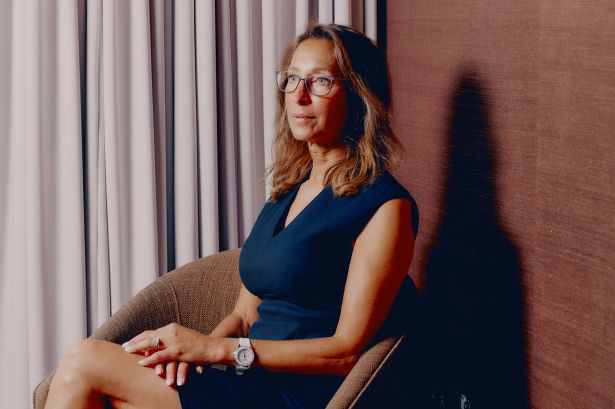
The Silverstein Properties CEO and vice chairman sat down with Commercial Observer on the afternoon of July 7, just a few hours after the groundbreaking of the 2 million-square-foot 2 World Trade Center tower.
That morning, Silverstein stood under a large event tent, posing with a ceremonial shovel and a pile of sand alongside New York Mayor Zohran Mamdani, Port Authority leaders and American Express executives, kicking off the construction of the rebuilt World Trade Center’s final office tower that the credit card giant will anchor.
It was an important moment, Silverstein acknowledged, but she’s not big on fanfare.
“I ran out of that tent as fast as I could,” Silverstein told CO.
Silverstein, who succeeded Marty Burger in 2023, keeps a relatively low profile, despite being one of the few women at the helm of New York City real estate development. Her 7 World Trade Center office towers above the site her father, Larry Silverstein, vowed to rebuild 25 years ago, following the attacks of Sept. 11, 2001.
With that monumental chapter nearing its close, Lisa Silverstein is looking beyond the Manhattan skyline. Her company is overseeing projects across the country through the Cantor Silverstein Opportunity Zone Trust, which has raised $1.1 billion since 2022, and the continued growth of Silverstein’s lending arm, Silverstein Capital Partners (SCP).
She has faced her fair share of hurdles during her long tenure in the family business, however, including a failed $7 billion casino proposal on the West Side last year and the stalled development of 5 World Trade Center, the campus’s first residential tower. The project was put on pause earlier this year due to escalating construction costs.
Outside of running the family business and raising three children (now grown), Lisa Silverstein has found time in her calendar for her own passion projects. She is a published children’s book author and co-founder of Talisa, a successful jewelry brand with her husband — and Silverstein’s president — Tal Kerret. (She’s also a gracious host, offering reporters fruit and cookies.)
Her 95-year-old father now spends much of the year aboard his boat but remains chairman of Silverstein, as well as her most valued adviser. And, when he’s in New York, he lives just an elevator ride away from Lisa and Tal.
We sat down with the younger Silverstein to discuss her path to leadership and her thoughts on succession, Silverstein Properties’ evolution, and her ambitious plans for a 50-book series.
This interview has been edited for length and clarity.
Commercial Observer: Were you always going to be Silverstein’s CEO at some point?
Lisa Silverstein: Always. I think it was inevitable, unless we decided to go a different route and put the company in a real estate investment trust.
I didn’t always have the interest, though. I wanted to do what you’re doing, at one time, because I love information, people and stories. Then I wanted to be a lawyer, to advocate for people who couldn’t advocate for themselves. After I took my LSATs, my father kept saying, “You should really invest your time here. We have something significant here.”
I thought this work was boring, actually. But he urged me to come sit in on meetings. He was actually very smart. He brought me to really interesting meetings with investors, architects, attorneys, designers and people from the finance world. He also gave me enough flexibility to spend time with my kids, too. That’s how it all started. I grew to find it more interesting than I thought it would be at the beginning.
You were working at Silverstein on Sept. 11, 2001. That must have been the most formidable experience of your career.
It was. I was here long before that, but yes. It’s something you never forget. I look out there now, and remember that it used to be like a war zone. You just have to have a lot of pride in what’s out there now.
That day changed the course of our life, and our professional lives, obviously. My father dedicated his life to focusing on this. It was years of grinding away at a lot of politics, financial issues, legal issues — terrible issues — but he really believed in it. This is what he wanted to accomplish, and the rest was just white noise. No matter how difficult it got, he didn’t let anything sway him.
I was beside him through that whole battle. There were times when I sat in the courtroom and I just thought, “How are we going to get through all this?” But he’d just say, “We will.” That gave me a lot of strength. At the end of the day, he fights for what he thinks is right, and that’s a big lesson to get through example.
It was a terrible day. It was a terrible time, but there were really tremendous lessons for me that I learned going through it with my father.
We’ve heard the story of 2 World Trade Center from your father. Rupert Murdoch was in as a tenant for his News Corp. and then he was out, the architects changed over the years, and then American Express came in.
I think sometimes things land where they’re supposed to land. You couldn’t have gotten a better outcome here. I have tremendous respect for the leadership at American Express. I don’t remember who approached who first, but they were looking to build a new global headquarters, and I think, deep down, they always wanted to remain downtown.
We started talking about five years ago, and it just got more and more intense. It was very complex, with the tri-party deal with the Port Authority, but I think it’s bigger than one economic deal. It’s big for downtown. It’s big for the World Trade Center. And it’s a big decision American Express made.
What takes five years in that kind of process?
Well, first of all, American Express is a public company, so nothing happens fast. They have the rigor of going through committee after committee, so that already slows things down. Then, there’s navigating the terms of the deal. Nothing of that magnitude happens quickly. I don’t care who you are, even if you aren’t a public company.
Does 2 World Trade signal that there’s going to be new development for Silverstein? The rumor mill said you weren’t interested in doing new construction. Now that assumption seems off the mark.
Through Silverstein Capital Partners and our Opportunity Zone fund, we’re doing buildings across the entire country. Development is our core competency. I’m just more focused, I’d say.
New York is our foundation, but it’s not our boundary. We’re expanding in a very conservative way, and I think SCP is an extension of being a builder. We’re more focused and diligent right now, which is where I’m very comfortable.
We didn’t contract, we refocused. With a fiduciary responsibility to investors who trust us with our execution and underwriting, I am not someone who’s comfortable running after 100 rabbits, and I felt like that’s where we were — all over the place. It’s not that we contracted at all, we’re just very focused on risk-adjusted returns and good, quality deals and development.
It’s also a difficult time to construct from the ground up in New York City.
I think that’s because of the construction costs. Like on 5 World Trade, in the years that we were going back and forth with our government partners, construction costs went up over 50 percent. That’s probably the No. 1 inhibitor of why things aren’t happening.
The administration needs to look at the affordable housing threshold. It shouldn’t be 30 percent, because we can’t make that work economically. I’m extremely philanthropic, but not in that area. I’d be broke. The numbers have to work.
We’ve been talking to the city. I think a lot of people would like to provide housing. It’s a big problem, but I think economics are an issue.
So construction costs are up 50 percent. How is that going to work with 2 World Trade Center?
American Express is building its building. We’re developing it. I’m not going to get into the finances, but it’s different than just building multifamily housing.
Going back to 2023, when you succeeded to the role of CEO, what was that transition like, stepping into your father’s shoes?
It was actually a very smooth transition, because I had so much responsibility here to begin with. I was ready to put in the time and take control of what we wanted to do and the way we wanted to do it.
He’s going to stay in his shoes forever, though. I don’t think of it as stepping into his shoes. It’s continuity and evolution. I feel like we each write our own legacy, and he’ll have his, but there’s a common root in our company’s values and mission that never changes. Strategies and tactics change, because markets change, tenant expectations and technologies change, but there’s some things that don’t, and that’s what keeps us what we are.
There’s a great synergy between us. I talk to him three or four times a day.
He lives nearby, right?
We live in the same building. When I lived in Westchester, I wanted him to buy a farm on the water. So he calls the building here his vertical farm. I came kicking and screaming from Westchester when our offices moved downtown and it became a little harder for me to commute with small kids. I spent three years building out an apartment a few blocks away from him, but he eventually convinced us to move into his building.
It’s really wonderful to live near each other. I have no complaints about that.
Before you became CEO, was there anything at the company that you thought, “I want to change that once I’m sitting in the chair”?
I don’t think I’ve changed much. I think my father’s focus was mostly the World Trade Center for the last 25 years. I’ve always been pushing to broaden out, and we did that over time. We developed a lending arm. We developed a fund. We started to broaden out into other markets. I just think he’s very New York-centric, and I have broader, more expansive views.
It just happened organically. It wasn’t as though I got in this seat and all of a sudden wanted to have a lending arm. It was already happening, it was symbiotic, which is the way it should be.
2 World Trade Center is a major capstone of Silverstein Properties’ work here. What’s the next chapter look like?
We have a site on the West Side of Manhattan, where we threw our hat in for a casino, but nobody in Manhattan got that. That’s a whole other story. I’m also intensely focused on other markets.
Speaking of other markets, how’s the U.S. Bank Tower in Downtown Los Angeles going?
That’s done a lot better than I thought it would. It’s a trophy building in a terrible market, but I don’t think it will always be a bad area. We’ve leased to some great companies: McKinsey, KPMG, King & Spalding. We put a lot of capital into it, about $60 million. It’s a beautiful building, very California.
It’s not a market I would have gone into, I’ll put it that way, but for the sake of that asset, I put a lot of attention on it. There are other markets that make more sense to me.
Like what?
Markets that we’re building in through Opportunity Zones. They’re areas in transition, but they have a diverse employment base and existing infrastructure. We’re building three towers in Tempe, Ariz., for example, as part of our Cantor Silverstein Opportunity Zone fund. SCP, our lending arm, has put out $3.5 billion in loans on a dozen projects around the country.
Besides being a developer, you also write a children’s series, Eli on the Run. Did your own children inspire those?
I traveled a lot with my kids when they were younger. I took a lot of photographs and made albums, and at night I would journal and log every park, restaurant and hike. One of my kids said, “Why don’t you do something with those?”
I decided to write the series Eli on the Run because my youngest son never walked, he just ran. Each book is set in a different country, and has some incident that Eli learns from. I have Eli on the Run: A Piece of Greece, Eli on the Run: A Thai Goodbye and Eli on the Run: New York.
Is Eli gonna go into the real estate business at some point?
That’s a good question. Is he going to go into the real estate business? I think he might, but I don’t think that’s on his mind yet. He’s very entrepreneurial, and he has the right character to handle all the different constituencies, but I think at this moment he’s thinking of so many things, as he should be. And my daughters have zero interest.
So you think differently about succession than your father did?
I want my children to do what they really want to do. You have one life. They should live it fully and find their passion. My father may feel differently, but if they don’t want this, that’s OK with me. I have a good runway now, and when I get to that point, I may be surprised.
My son may say “I’m interested” in the next five or 10 years, or he may decide he wants to do something else. I’ll cross that bridge when I get there. I’m not there yet.
The family business includes your husband, Tal Kerret. Did you meet him through work?
I met him at our old offices at 521 Fifth Avenue. I was in a meeting when my assistant told me Tal was there with another member of his team. He had an e-commerce platform, and he had sold some companies. I didn’t know how long I was going to be in my meeting and told her to tell him we should just cancel.
She came back with a sticky note that said “He’ll wait.” I thought that was just wild. I could have taken hours. Half an hour later, though, I went to introduce myself. We talked for about 45 minutes, and then we parted ways. I left on a vacation that night, and, when I called in my messages, one of them was from him. That’s how we met.
We were married in 2002, and he joined Silverstein in 2011. We have very different skill sets, but our strength is multiplied by that. If you have a basketball team with all point guards, it’s not a winning team. We’re very different.
You started a jewelry business with Tal, called Talisa. How did that start?
When I had my last boy, I couldn’t wear any jewelry, he was always pulling it. What little I wore, I wanted to be meaningful, so I engraved the initials of my kids on a few of my things. People seemed to like that, so we started a company that does customized, personalized jewelry that connects people. It just started to take off. It’s an online business, but we have a brick-and-mortar store in Bronxville, N.Y.
Last question. Is Eli going to go anywhere else? We’ve got him in Thailand, Greece and New York.
We’re squabbling about whether to do Italy, Croatia or Spain. I don’t know which one I’m going to do next, but I’m going to attack it this summer. I want 50 books. I want it to be a series that you can buy in a bundle.
Something always happened on our vacations with the kids. Some adventure, some mishap, but it always ended well. There’s always a lesson in these stories, asking, “What’s the right thing to do?”
Emily Davis can be reached at edavis@commercialobserver.com.