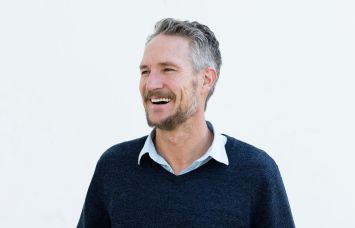
Munish Viralam of Newmark: 5 Questions
The newly minted executive vice chairman and leader of Newmark’s real estate strategy and consulting group talks expertise aggregation and occupancy strategies in the Big Apple
By Emily Davis August 4, 2026 3:30 pm
reprints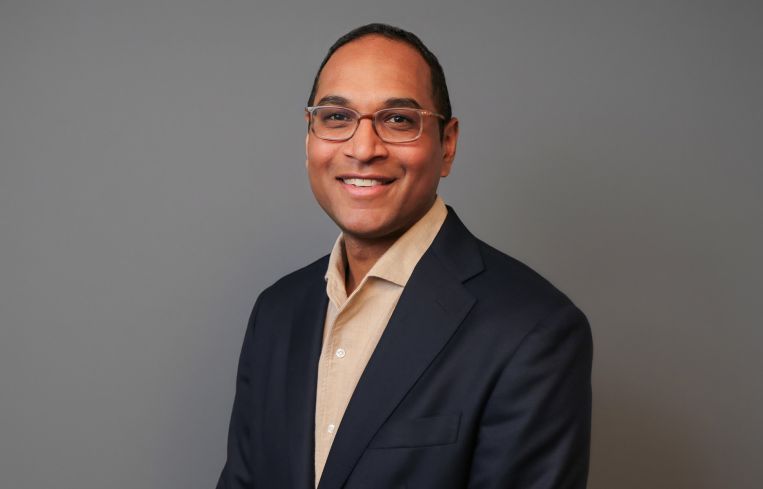
Munish Viralam arrived at Newmark in June, fresh off an 18-year stint at CBRE.
As executive vice chairman at Newmark, Viralam has been tasked with leading the firm’s newly centralized real estate strategy and consulting group, scaling up its strategic arm, and helping corporate tenants navigate the maze-like process of real estate strategy and negotiations.
Viralam found his niche at Emory University, where degrees in finance and real estate placed him at an intriguing crossroads between the business world and entrepreneurship. He landed a job at CBRE after graduation, where he proceeded to spend nearly two decades honing his craft as a real estate strategist and problem solver.
Viralam was serving as executive vice president in charge of CBRE’s consulting group in Manhattan when Newmark came a-knocking.
Commercial Observer sat down with Viralam in July, just a few weeks into his tenure at Newmark, to discuss his vision for the group, New York’s office occupancy challenges and where real estate consulting slots into the dealmaking mix.
This interview has been edited for length and clarity.
Commercial Observer: Can you describe the nature of the real estate strategy and consulting group’s work? Where does it fit into Newmark’s broader deal-making?
Munish Viralam: We called it the real estate strategy and consulting group because we want to emphasize both of those components of what the practice is. It is a transactional-based group and it’s focused on advising large corporate entities within New York City on their real estate and occupancy strategies. It’s a pretty analytical approach, if you will, but that doesn’t just mean numbers. It means assessing all of the risks and the pros of strategies that we could pursue.
The idea is to become a strategic hub for the organization. What I mean by that is there’s already so much talent and so much strength throughout Newmark — not only the corporate advisory side, but also research, workplace strategy, capital markets and all these other business lines that Newmark has.
The directive that I’ve been given is to figure out how to meld all of these different strengths together and develop a method where the group can become a central idea hub for the organization’s expertise, and develop that into a way for Newmark to deploy best practices on behalf of our clients.
Designing office occupancy strategies is a big part of what you do. What does that process require, and how’s that changing with today’s office market?
We’ve seen a lot of firms coming out of COVID-19 reinvest in their occupancy and start centering their businesses around New York City, because it really is just a great place to attract talent and grow businesses at scale.
From a corporate real estate perspective, that means we’ve seen incredible demand. Over the last few years, I think we’ve seen more activity year to year than we’ve ever seen, at least in my career, and I think that New York City’s economic environment explains a lot of the real estate trends.
I see my role here as being able to see what’s going on in a macroeconomic environment, and then figuring out how we develop real estate strategies on behalf of our clients to navigate these dynamics. For example, firms need to grow and plan for potential mergers, so how do we take a long-term view of this as real estate advisers? Not just from the occupancy advisory perspective, but also from a capital markets perspective, or even from the workplace strategies perspective.
With all of these requirements, we gather input and craft an occupancy strategy that takes it all into account, from not only what we’re seeing on the tenant side and in the demand cycle, but also what we’re seeing from the capital markets, the debt markets, and what’s going on with owners.
How does that impact what we’re going to do from building to building? A client says, “We’d love to expand in this building. What needs to happen for us to do that?” Beyond availability, what needs to happen from the ownership perspective? How can they fund it and finance it? Or, is there a risk that we see in 2028 or 2030 that we have to be cognizant of, and how do we protect against that risk? That’s been my directive.
When would a corporate office tenant typically intersect with your group? Are they approaching when lease expirations are near and decisions need to be made fast, or are they seeking long-term strategies?
A lot of it is lease expiration driven, but it really depends on what’s going on in the client’s organization. I think a lot of what we do is trying to position the real estate practice to mirror what they are trying to accomplish from a business perspective.
If an organization is experiencing massive growth, then that’s going to have real estate implications. We try to take the long-term view for all of our clients, so we generally say the earlier the better.
I wouldn’t say there’s a specific point in time that you want to engage, but part of the benefit of having a practice like the real estate strategy and consulting group is that it is planning forward. We are going to help you put together plans that won’t just cover you when your lease expires, but what we hope will be for the next 10 to 20 years of your occupancy.
Increasing demand for office space in New York City is good news for commercial real estate, but are there challenges this current office climate presents for your clients?
There’s such a concentration of demand for a similar type of asset. For those types of high-quality assets, we’re seeing a very tight market and low availability. We’ve been advising companies on how to manage their occupancy, like whether they have to split amongst multiple buildings.
One thing that we’ve certainly experienced is that, while there’s this robust tenant demand for high-quality assets, the lender appetite to provide capital to high-quality assets is still more conservative than what we’d like to see. So, while we’ve seen this incredible response from the market from a demand perspective, we’re seeing that it’s still lagging a little bit from a financing perspective.
Considering all the disruption that occurred in the capital markets environment over the last few years, particularly as inflation picked up, that has also presented a fair amount of risks looking forward. I see an important part of what we do as understanding what’s going on from the owner’s perspective, as well as the other tenants’ perspective, to help advise our clients.
The group was recently centralized. What was the idea behind that, and how do you want to see it evolve?
There was a consulting practice that provided advisory services –– it was kind of a partnership group that supported brokers within the organization. Then there was another practice that focused purely on financial analytics. The first directive I’ve had is to bring those two together and turn it into a seamless, more comprehensive platform.
That’s step No. 1, and then it’s figuring out ways to continue serving the rest of the organization. I feel like I’m swimming up multiple streams all at once, but that’s what is meant when we said we’re combining these two groups together.
I want to ensure that there’s a lot of collaboration going on across the organization that’s culminating into this group. I want this group to really become experts in all the fields of Newmark, and to be consistently fed inputs from everybody within the ecosystem here.
I really think that’s the best way for us to shine as a group, as well as the best way for us to help Newmark elevate the platform across the different business lines.
Emily Davis can be reached at edavis@commercialobserver.com.