Office Properties Drive Maturity Extension Wave
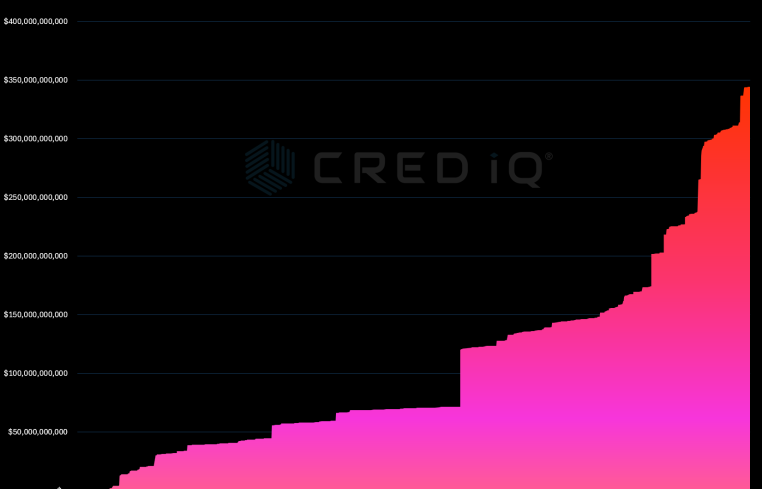
CRED iQ’s proprietary loan analytics platform tracks modification activity across the CMBS universe, capturing more than 7,800 individual loan modification events since 2019. Within that data set, maturity date extensions have emerged as the dominant workout structure by outstanding loan balance.
Of the 1,249 loans that received maturity extensions, the aggregate unpaid principal balance totals approximately $115 billion — reflecting the depth of refinancing stress concentrated in the legacy office sector and, increasingly, other property types navigating a prolonged high-rate environment.
Forbearance agreements account for the second-largest cohort by loan count at 1,445 loans ($38.7 billion principal balance), followed by combination modifications at 890 loans ($63 billion). Principal write-offs remain a relatively rare outcome, with only four recorded events totaling $155 million, underscoring that lenders and servicers continue to lean on time-based extensions over loss crystallization.
Office dominates extension activity. Among the 1,249 maturity extensions tracked by CRED iQ, office collateral accounts for 452 loans and $66.7 billion of the $104.3 billion in property-
type-identified extension balance — representing 64 percent of total extension volume. Mixed-use properties rank second at 17.1 percent ($17.9 billion), followed by multifamily at 6.4 percent ($6.7 billion) and hotel at 5.5 percent ($5.7 billion). Industrial and retail trail at 4.2 percent and 2.4 percent, respectively.
The outsize office concentration reflects the structural headwinds facing the sector: post-pandemic occupancy erosion, elevated capital expenditure requirements, and an inability to refinance at maturity as values have declined sharply from origination-era appraisals. Extensions are being used as a bridge mechanism while borrowers and servicers negotiate long-term resolutions.
Spotlight: Federal Center Plaza in Washington, D.C.
A representative example of the maturity extension dynamic is Federal Center Plaza, a 725,317-square-foot office complex at 400 and 500 C Street SW in Washington, D.C. The $130 million interest-
only loan was securitized in COMM 2013-CCRE6 and originally set to mature on Feb. 6, 2025. Unable to pay off at maturity, the loan was transferred to special servicing on Nov. 15, 2024, and received a formal maturity date extension executed on Feb. 4, 2026.
The property’s financial profile illustrates the broader challenges confronting D.C. office: Physical occupancy has declined from 74 percent in 2023 and 2024 to 68 percent as of the trailing nine-month period ending September 2025. More critically, CRED iQ’s most recent appraised value stands at $168 million — a 45.6 percent reduction from the $309 million valuation at loan contribution in 2013. Despite the value impairment, the loan continues to carry a debt service coverage ratio of 2.23x on a most recent net operating income basis, supported by the General Services Administration’s anchor lease covering 465,839 square feet. However, that GSA lease expires in August 2027, creating a concentrated rollover risk that will likely define the asset’s fate as the resolution date is April 30, 2026.
Mike Haas is founder and CEO of CREDiQ.