

James Whelan, the Real Estate Board of New York’s President, Talks Mamdani and More
The head of the city’s leading landlord lobby says it can work well with the new mayor, whatever the rhetoric from City Hall
By Larry Getlen January 21, 2026 6:00 am
reprints
While any mayor of New York will have an almost immeasurable number of challenges to face from day one, it’s pretty clear what new mayor Zohran Mamdani’s top challenge will be throughout his administration: Facing the city’s dire housing shortage and exorbitant rental prices head on, and doing whatever it takes to drastically increase housing production while bringing rents for at least some apartments down to more reasonable levels.
Mamdani’s promises in this area generated enough trust from city voters to put him in office, while putting people in the commercial real estate industry on edge. The industry’s top concern regarding the new mayor has been his pledge to freeze rents on rent-stabilized units for four years, a circumstance that owners of rent-stabilized properties claim is unworkable, as, they say, it would leave them unable to make major repairs or even, in many cases, perform the most basic maintenance and upkeep of their properties.
But, while many in the industry reacted to Mamdani’s agenda with more than a touch of panic, James Whelan, president of the Real Estate Board of New York (REBNY), takes a more measured approach.
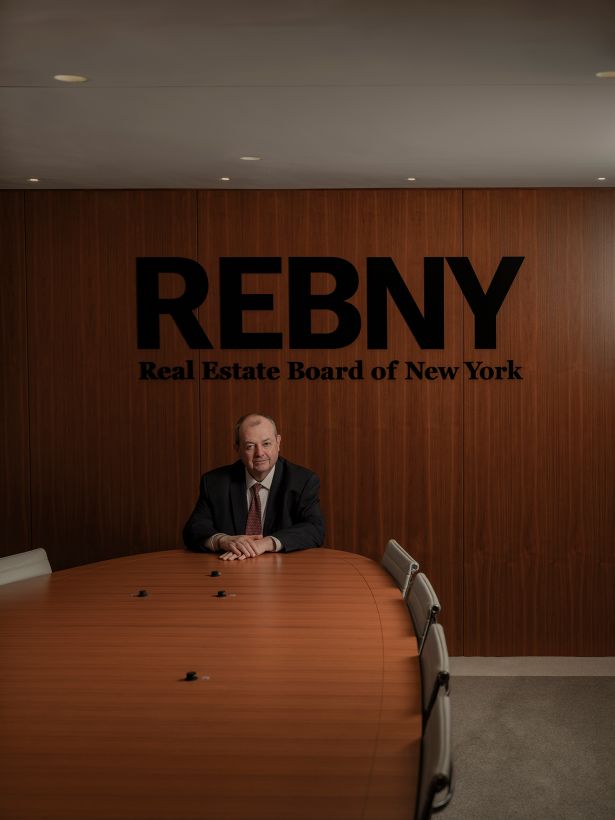
A REBNY executive since the Bloomberg administration and the organization’s leader since 2019, Whelan has seen enough to carry some optimism into his dealings with the new administration. Whelan worked as a chief of staff and policy adviser to the deputy mayor for economic development for two years during the Bloomberg administration, and he became REBNY president when the left-leaning Bill de Blasio was mayor.
Commercial Observer spoke to Whelan shortly after New Year’s about how REBNY was strategizing its upcoming dealings with Mamdani, and REBNY’s ideal plan for how the relationship should evolve.
This interview has been edited for length and clarity.
Commercial Observer: In general, how does REBNY interact with New York’s mayors? What is the structure of that relationship?
James Whelan: If you could bring it down to one single word, it would be engagement. We deal with a broad range of issues, so we look to engage with any mayoral administration both in terms of the deputy mayors at City Hall and the various aides and agencies there. We expect it will be no different with Mayor Mamdani.
When a new mayor is elected, is there some specific preparation that REBNY goes through to acclimate to the change and determine new strategy?
It would be in a sense of: What are the priorities of the new administration and how do they match up with what we’re working on? What adjustments need to be made? I don’t think it’s anything more formal than that.
Have you had direct contact yet with Mayor Mamdani?
Yes. I met with him during the summer, and we exchanged texts after his November victory. Now, we’re starting to focus on engaging with the individuals he’s appointing.
What was your impression of him?
He’s very personable and a very good listener.
What can you share with us about the contact you’ve had with him so far regarding the kind of things you talked about, and the tone of the communication overall?
It’s been positive. We’re starting to set up meetings now because he’s just putting his team into place. We’re going to be engaging with the deputy mayor for housing and planning, and items that are on the table coincide with some of the things they’ve announced already.
So, for example, he announced a task force looking to lower the cost of development and construction. That’s something we’re working on already, so we look forward to engaging them on that.
Different issues spill over from the prior year, like the land use ballot initiatives that were approved by the voters in November. There’s a proposal from the past administration called the Manhattan Plan, which was released by City Planning last month, about adding 100,000 new homes in the borough of Manhattan over time. That’s another thing we’ll be seeking to engage in from a big picture point of view.
That’s an example of what I was talking about before, about looking where their priorities are. The new mayor was very clear in his campaign that he was looking to move on the housing front in terms of more production, which is really the key to making the city more affordable. So that’s going to get a lot of our attention. It’s an area where we’re clearly looking to engage.
When you look at the mayor’s specific policy initiatives and priorities, is there any one in particular that REBNY will prioritize over all others?
We come from the premise that if the city does well, the industry is going to do well. The industry is responsible for generating over 50 percent of the tax revenue the city collects every year. So, if the real estate industry is doing well, that’s going to benefit the city, and vice versa. In that regard, the No. 1 thing for us in terms of the affordability agenda moving forward is housing.
Tell us about some of the steps you would like Mayor Mamdani to take to help accelerate housing production.
No. 1, some of the agencies need to be restaffed, particularly an agency like the New York City Department of Housing Preservation and Development (HPD), because that’s really going to help move the development pipeline.
No. 2, we need to be very conscious of what the policies are when it comes to housing to make sure the math works, because, at the end of the day, if the math doesn’t work, then someone’s not going to build that next multifamily rental apartment building. So that’s going to be a key issue moving forward.
Similarly, there are issues that we’re not necessarily on the same page about, like the proposed rent freeze at the Rent Guidelines Board. We’re going to be making a case both privately and publicly that we think such a move will make the city less affordable over time.
Out of all the things Mamdani has talked about doing for housing, are there any proposals he has put forth that REBNY is actually positive and excited about?
Greater use of vouchers, and looking to create more density, particularly in transit-rich areas. Those are two very critical ideas.
Regarding Mamdani’s pledge to freeze the rent for rent-stabilized apartments, are you optimistic that REBNY can make a case that will help him see why this is not the best idea for New York?
I believe we’re going to be able to make a strong empirical case that, for a large segment of the rent-regulated stock, a rent freeze is going to be counterproductive. Why do I say that? Because these are buildings that are already experiencing a lot of financial and operational difficulty, due to the fact that their revenue streams haven’t been able to keep up with the growth and expenses, and a rent freeze is just going to make that gap worse.
Have you had any indications that he might be receptive to that message?
At the end of the day, it’s not his decision. It will be his appointees on the Rent Guidelines Board. Under the law, they’re supposed to make their decisions based on the facts they’re presented with. That said, I have to acknowledge that there’s a political component to this process. So let’s see how it plays out over the next few months.
Do you know when you’ll be speaking with Mamdani next about some of these things?
We’re engaging with his staff this month. Historically, we meet quarterly with agencies like HPD. What’s going to develop over time is engagement with deputy mayors and agency heads as they come on board. Once their teams are in place, we’ll be resuming those types of meetings.
While Mamdani has talked about wanting to freeze the rent for rent-stabilized apartments, he’s acknowledged that there also needs to be lower expenses for building owners, especially in regard to property taxes and insurance. What are some of the specific steps REBNY would like to advocate for in those areas?
If there are opportunities to assist not only rent-regulated owners, but owners across the board in terms of more equitable assessment of property taxes, the cost of insurance and the cost of utilities, these are all going to be key steps that we’d look to work with him on. When you go through each one of them, they’re not easy to achieve because of various factors, and it’ll take time to play them through.
What does REBNY think about Mamdani’s revitalization of the Office to Protect Tenants?
That’s an office that’s been on the books, so it makes sense that there’s funding behind it. The concern is how is it going to be utilized?
For example, with the announcement of these hearings called the “rental ripoff” hearings, they seem to be predetermined already, which starts to raise concern about whether they’re going to be done on the up and up or if this is just an effort to demonize landlords and the industry.
So that’s something we don’t see being particularly productive if it’s going in that direction. It doesn’t really speak to the need for addressing the overall affordability concern when it comes to housing in New York City, where I think there’s a broad agreement that the chief thing that needs to be done is to create more supply.
On that note, 485x has led to a slew of 99-unit projects, and very few with more. What is your take on that development incentive, and what would you like to see Mamdani do in terms of restructuring or rehabilitating the program?
When it comes to housing, it comes down to math. If the math works, then someone’s going to build that next multifamily rental building under 485x. If the math works, that rent-
regulated owner is going to improve that vacant apartment and put it back on the market.
And what you see with 485x is that in many instances the math is not working, particularly regarding the rules they put in place with respect to the cost of construction labor. This has brought many developers to the conclusion that it doesn’t make sense to take full advantage of density on sites.
The ultimate answer is going to reside with Albany lawmakers, but the mayor is going to be a key voice moving forward. Albany lawmakers have to fix the math on 485x so that in the future developers will want to take full advantage of the density that a site presents and create more rental units, which is really the key thing to addressing the housing affordability crisis in New York City.
You’ve mentioned a few times that these things come down to math. But you also have the politics and image of it all, and Mamdani brings a lot of politics with him, and a lot of differences from what we’ve seen from other mayors. So, when you’re strategizing about how to deal with Mamdani on these issues, how do you deal with both of those factors? How do you plan to take the math and translate it into politics to get a positive result?
In fairness to the new mayor, he’s a political figure just like previous mayors. It’s inevitable that politics can be part of any calculation moving forward.
The key issue here is building coalitions as broadly as possible that share the same common interest, which in this case is creating a lot more rental housing. This is critical for New York City because New York is unique from any other city in the United States in that two-thirds of our housing market is rental. Usually, it’s the reverse. So this is really critical to take on, and the key to it is trying to build as broad a consensus as possible among other interest groups like REBNY, among the media, and among elected officials about the need to get the math right.
What are some other issues you’re looking forward to engaging with the mayor and his team on that will hopefully have some impact on housing?
Looking at more rezonings to boost density. To give you an example, at the tail end of the last administration, the rezoning in Midtown South was the first opportunity to take advantage of the change made in Albany in 2024 about lifting the 12 floor area ratio cap when it came to residential density. Stuff like that is going to be very important. Rezonings are purely within the city’s power.
Then, something that was very successful coming out of the housing package in Albany in 2024 was the incentive 467m to create affordable units when it comes to office conversions to residential. How do we keep that going and expanding? Because it has the benefit of not only creating more housing supply — which, as we’ve talked about over the last 20 minutes, is critically important — but helping with those parts of the office market that probably were not in the best shape to continue as office properties.
And, then, improving operations on the part of city government to facilitate and expedite development.
Given Mamdani’s political bent, do you anticipate that he might be the most challenging mayor the organization has had to deal with in a while?
Based on his early appointments, I don’t think it’s going to be dramatically different from other administrations. I think, by and large, the people he’s appointed have been coming to the job very capable and very competent. A number of them have experience in government and dealing with the issues that they’re responsible for overseeing. So, in that respect, I think it’s pretty positive.
What is an area of concern is the approach to rental owners, which is coming off, at least initially, as potentially divisive. If we’re going to address the challenges in the housing market, we probably need a different dynamic.
Are there one or two appointments he has made so far that you’re especially optimistic about?
There’s a number of them, starting with the deputy mayors: Dean Fuleihan, Julia Kerson and Leila Bozorg. These are all folks who come to the table with considerable experience in the areas they’re overseeing. Ahmed Tigani is someone we’ve dealt a lot with in the past. He’s going to be heading up the Department of Buildings.
So there are a number of appointments across the board that speak well to their ability to tackle some of these challenges moving forward.
Larry Getlen can be reached at lgetlen@commercialobserver.com.


