

Mamdani vs. Commercial Real Estate: The Death of a Narrative
CRE titans and other New York power players were going to pull investment — and themselves — from the city if the democratic socialist won. And then …
By Larry Getlen December 26, 2025 8:07 am
reprints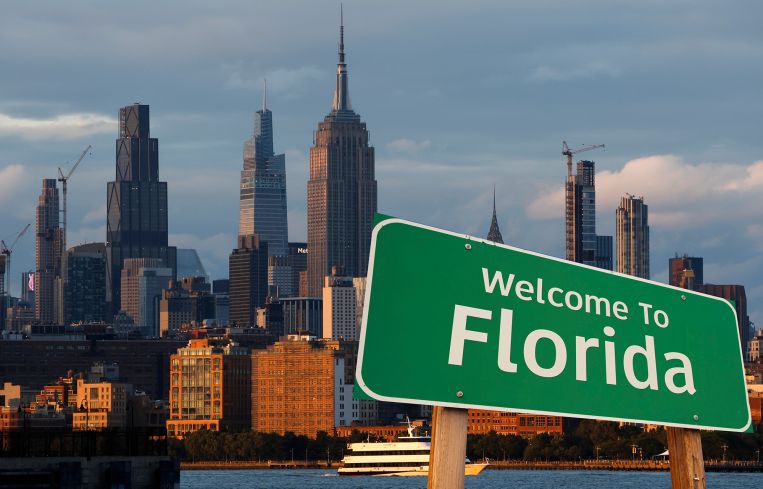
The battle cries were defiant. The panic raised goosebumps throughout the city.
The threat felt so real to so many: If Zohran Mamdani is elected mayor of New York, the rich would flee, the tax base would collapse, and New York City — the greatest city in the world — would be reduced to a tragic, collapsing, impoverished hellscape, a replica of its 1970s, Fort Apache, gang- and vermin-ridden self.
For months leading up to the Nov. 4 mayoral election, leaders of some of the most prestigious and dominant companies in commercial real estate sounded the alarm, backing up their desperation with millions of dollars placed in the election coffers of Mamdani’s opponent, former New York Gov. Andrew Cuomo. The CRE elite traded strategies, formed super PACs, and pooled their considerable dollars in any effort to stop the 34-year-old unabashed lefty from winning office.
But a funny thing happened in the wake of Mamdani’s decisive political victory, which saw him win 50.78 percent of the vote compared to Cuomo’s 41.32 percent. (Republican Curtis Sliwa got 7.01 percent.)
As soon as Mamdani’s victory became official, there was an almost tangible shift in the prevailing winds. Widespread defiance seemed to melt away all at once. Businesses decided to stay put. The wealthy who were so adamant about piling up on the South Florida coast lost their movers’ phone numbers en masse.
The rich and the powerful, in commercial real estate and beyond, decided that New York City was still, and would always be, their home, no matter how socialist — or democratically socialist, as the case may be — the city’s mayor was.
The day after the election, Vornado Chairman and Chief Executive Steven Roth, who had previously donated $50,000 to a Super PAC dedicated to Mamdani’s defeat, indicated on an earnings call that the prospect of Mamdani’s victory had done nothing to curb the enthusiasm for Class A office space in the city.
Others not only expressed optimism — even if of the cautious kind — but soon embraced the opportunity to help Mamdani shape his administration.
Jed Walentas, CEO of owner Two Trees Management and current chair of the Real Estate Board of New York, the city’s leading landlord lobby, agreed to serve on the housing committee of Mamdani’s transition team.
Kathryn Wylde, outgoing president and CEO of business group the Partnership for New York City — who noted in City & State New York back in June that the business community was “terrified” of a Mamdani mayoralty — not only agreed to serve on the Economic and Workforce Development Committee of Mamdani’s transition team, but also became his connection to the commercial real estate industry at large.
Wylde helped organize a series of meetings that gave industry bigwigs the opportunity to speak to Mamdani directly, expressing their concerns and hearing from the man himself that, while they would continue to disagree on fundamentals like his desire to freeze rents for rent-stabilized buildings, he understood their challenges and frustrations as well, and would seek ways to alleviate their financial burdens while keeping his door open to further discussions.
“He’s very young and inexperienced, and when they didn’t know him and thought he was an ideologue, being young and inexperienced was damning in terms of becoming a mayor,” Wylde told Commercial Observer. “Once they met him and realized he was smart and studious and was asking great questions, being young and inexperienced was not the same deep flaw.”
Wylde said that she arranged two meetings for Mamdani with business leaders in the week before she spoke to CO: one on child care, and one on housing.
“A lot of the people at the housing meeting, and some of the people at the child care meeting, had spent a lot of money against him,” said Wylde, “and they all walked out saying, ‘We can work with this.’ I’ve seen a dramatic change.”
Wylde also makes note of one segment of the business community that has been especially pro-Mamdani that has received less attention than others.
“I introduced him to leaders in the tech community, and there was a lot of enthusiasm for him,” said Wylde. “Not the California guys, who are in their own world, but the New York startup tech community — the venture capital guys. There was a lot of enthusiasm in that community. Mamdani’s a digital native. He gets them, and they get him.”
As for more enshrined, long-term business leaders like the Michael Bloombergs and Steven Roths of the world, Wylde notes that Jessica Tisch’s decision to stay on as Mamdani’s police commissioner was taken as a very positive sign about Mamdani within the city’s business community, and that people shouldn’t dismiss the odds of Mamdani fully winning them over.
“They were not against him. They were against the policies that were being espoused, but not against his objectives,” said Wylde. “We all know New York is too expensive and that it’s driving out young talent. The question is what are his solutions, and will he bring together a team that can execute on them. His retention of Jessica Tisch and, more importantly, her decision to stay, and how he has developed more nuanced policy positions in the last few months in general, have made an impression on those who have been exposed to him.”
At this point, Wylde believes that much of the negative impression of Mamdani before the election was propaganda.
“I think it was provoked by the negative campaign, particularly that Cuomo ran,” said Wylde. “I think there were a lot of people that honestly fell for it, because they thought they were getting a clear message that [Mamdani] was antisemitic, and a socialist, and that he was going to drive them out of New York. I don’t blame everybody who fell for it, but I think it was a deliberate campaign.”
As the commercial real estate industry’s fear of a Mamdani mayoralty has begun to thaw, evidence has accumulated as well that the projected exodus of wealth from the city might not be taking hold either.
Statistics on the sale and rental of luxury residential properties in New York City show there has been no shortage or decline in the number of wealthy people seeking to plant deeper roots in Mamdani’s New York.
Jonathan Miller, president and CEO of appraiser Miller Samuel, assembles various monthly reports on the state of the luxury real estate market based on actual signed contracts.
According to Miller, total November 2025 sales in New York City, at all price levels, were up 20.5 percent year-over-year.
By contrast, residential sales in the top 10 percent of the market — which in New York City consists of properties selling for at least $4 million — were up 43.1 percent in November from the same month last year.
And, while November sales figures for multifamily are not yet available, third-quarter sales in that category showed no slowdowns in anticipation of the then-potential new mayor, as multifamily sales in New York City for the quarter hit $2.55 billion in sales volume, up 14 percent quarter-over-quarter and 17 percent year-over-year, according to Ariel Property Advisors.
Since Mamdani’s victory, not only are the wealthy not decamping for warmer climates, but they’re also deepening their commitments to New York City way more than they previously had been.
“That’s why I found this whole [rich people are leaving] debate so offensive, because I’m looking at actual data that’s saying what’s really happening,” said Miller. “Anecdotes are not data.”
Miller finds similar results on the rental front.
“Rental prices are up, including at the high end,” said Miller. “How on Earth would somebody buy a $5 million or $10 million house or apartment in Manhattan if that cohort of the population is terrified and going to flee the city? It doesn’t make any sense.”
To further emphasize just how strong New York’s luxury market is with Mayor Mamdani on the horizon, Crain’s New York Business noted that during Thanksgiving week, 19 condos, co-ops and townhouses considered “high-end” — listing at $4 million or higher — went into contract, “topping the 10-year average for that period.”
One reason the wealthy have hardly been speeding southward — and may never have intended as such in most cases — comes from the tenuous definition of “leaving New York” when it comes to the wealthy compared to everyone else.
When most people move, it upends their lives completely — they start fresh jobs, their children enroll in new schools, friends are left behind, etc. For most people, moving out of New York means just that: leaving this life behind in total, and starting a new one somewhere else.
But for the wealthy, such as those with two or more homes, “leaving” New York becomes more of a technicality that involves dancing on the tightrope of how many days a year they can spend here compared to in their new “home,” which ties they need to cut, and which can be retained, etc.
The New York Times spelled this out in a December article noting that wealthy people who tried to “move out of” New York often reversed course when they learned it would involve actually leaving New York.
In one instance, a wealthy man who moved out of New York couldn’t help but return to go fly-fishing, and also couldn’t help checking “New York resident” on his fishing license to save $25. The Times notes that this savings was more than wiped away by the legal fees on his subsequent IRS audit.
But in listening to some of the city’s business leaders after Mamdani’s victory, one could be forgiven for wondering if the threats to emigrate were a charade the entire time.
Referring to fears of “an exodus of companies and capital” from the city, CNBC noted that “two of the city’s top commercial real estate executives say it’s simply not true, based on leasing activity and new building investments being made,” referring to RXR Chairman and CEO Scott Rechler, and Rudin’s former longtime CEO and current Co-Executive Chairman Bill Rudin, who both spoke at a CNBC-run conference on Nov. 13, just nine days after Mamdani’s victory.
“In our business right now, we are seeing CEO after CEO committing to the city,” said Rechler, who had told The New York Times in July that “it seems inappropriate to have a socialist mayor in a city like ours,” and said at the time that he had called on developers to work with Albany to “be sure any policies he puts in place are not ones that are meaningful.”
“We’re seeing a record level of leasing in office buildings,” Rechler said in November, post-election. “And it’s not just for next year — it’s for 2028, 2030, 2032.”
Rudin echoed a similar sentiment, noting that Manhattan would reach over 40 million square feet in commercial office leases signed by the end of 2025. (Rudin’s late father, Lew, was one of the business titans who helped steer New York through its very real fiscal crisis in the 1970s.)
“Companies are growing here,” Rudin said. “We haven’t seen any diminishment in meetings with brokerage firms” since Mamdani’s election.
“People keep saying, ‘Any impact?’ No one has put their pencils down. No one is calling the moving trucks. Companies are expanding and taking space.”
CNBC also cited the example that billionaire Ken Griffin of Citadel, a man “known for being outspoken with his conservative political views,” was breaking ground — in a venture along with Rudin and Vornado — on a new, 2 million-square-foot office building at 350 Park Avenue.
“Ken is committed and will have more employees at 350 Park than in Miami,” said Rudin.
And Citadel, Rudin and Vornado are hardly the only power players showing confidence in Mamdani’s New York not just in words, but in signatures on the dotted line. The pace of Manhattan office leasing by all accounts is at its most brisk since 2019, and volume could end at its highest annual total in a decade. Some major leases are behind that.
For instance, in late December, Bloomberg signed an 11-year, 495,753-square-foot lease renewal at 120 Park Avenue, adding to the company’s 950,000 square feet at 731 Lexington Avenue and 925,000 square feet at 919 Third Avenue.
Bloomberg is owned by former New York City Mayor Michael Bloomberg, who not only endorsed Cuomo in the election, but ultimately spent $13.3 million toward Mamdani’s hopeful defeat, according to The City.
Of course, part of the stark turnaround from the city’s business leaders is simply that the strongest leaders understand the need to adapt, sometimes quickly. Mamdani’s victory meant CRE’s leaders would have no choice but to learn to deal with Mamdani for at least the next four years if they wanted to successfully operate in one of the world’s great capitals of finance.
“The reality is that whether you supported Mamdani or didn’t, most people here want to see New York City be successful,” said Suri Kasirer, founder and president of the lobbying firm Kasirer. “These [business leaders] have serious business interests here — they’ve got real estate and family here. People say things during a campaign, but everybody wants the mayor-elect to do well, because if he does well, that’s good for the city. For most people, particularly business people, that’s in their own self-interest.”
Kasirer noted one aspect of Mamdani’s platform that has received less attention than some others, yet might be one of the most exciting plans for the city’s business community: his determination to implement universal child care.
“This is one of the things people are really excited about,” said Kasirer. “Universal child care is such a great thing for businesses. So many women left the workforce during the pandemic. Even if you’re working partially remote, it’s really expensive to get child care. It’s easier to just say, ‘It’s a wash. Whatever I’m going to pay in child care, I might as well be home with my own kids’ — because once you finish paying and pay taxes, there’s nothing left. So I think this idea of universal child care is going to be so significant for businesses, and it’s going to bring people back to the office. That’s going to be great for commercial real estate.”
While looking for positives in the wake of Mamdani’s victory, Wylde attributed at least some of the suddenly optimistic attitude in the city to what was likely the most important factor in this election: Mamdani himself.
“I think Mamdani created a positive energy in the city that was contagious,” said Wylde. “Like Michael Bloomberg, he may be the best marketer the city’s ever had. I mean, Mike Bloomberg was a great marketer of the city, and their style is not the same, quite the contrary. But I think Mamdani may be a terrific marketer for New York City to help us reaffirm our competitive status.”
Larry Getlen can be reached at lgetlen@commercialobserver.com.


