Welcome to Data Centerville, U.S.A.: How One Asset Class Changed Loudoun County, Va.
Long the world’s leading data center hub, the enclave now confronts tough choices over new development
By Brian Pascus October 26, 2026 6:30 am
reprints
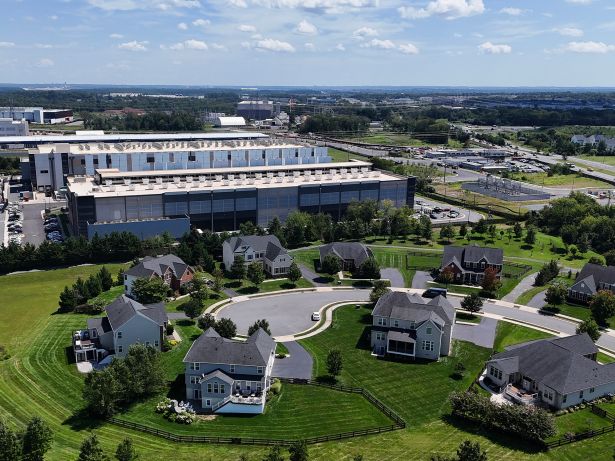
Driving past Dulles International Airport and turning onto the newly paved Loudoun County Parkway, stretching six pristine lanes across, the first thing that strikes any observer is the sheer size of the data centers that pepper the immediate horizon.
CloudHQ’s LC4 campus is three stories and 1.5 million square feet.
QTS’s Ashburn Shellhorn complex runs along the highway and stretches 24 acres deep into a wooded glen.
Digital Realty’s mix of six high-capacity buildings is nestled together over 96 acres and spans a cumulative 1.7 million square feet.
Roughly as tall and windowless as an NBA arena, but often the length of three or four NFL football fields, the data centers that define Loudoun County’s famous “Data Center Alley” stand like endless, imposing monoliths along the road of America’s increasingly digital future while simultaneously calling its present economy into question.
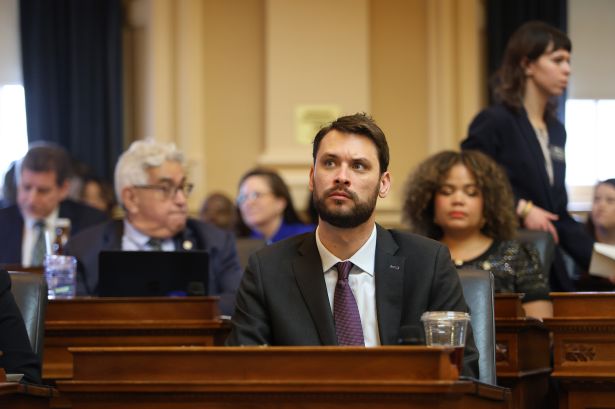
For John McAuliff, a 34-year-old Virginia delegate who took office this year after winning an election largely on a platform to limit future data center development, the changes across his Northern Virginia district are disquieting, to say the least.
“When Dulles was built in the 1970s, it was built on a farm. Loudoun County used to have more dairy farms than anywhere else in the country. There is now one left,” McAuliff said. “Today, we have more data centers than anywhere else in the world.”
The real estate technology that powers social media, cloud computing, and the rapidly evolving artificial intelligence revolution does not lie in Silicon Valley or Beijing, as some might assume. Instead, it rests in sleepy Loudoun County, a shire of rolling hills, Blue Ridge Mountain peaks, and dense woodlands in Northern Virginia about 36 miles outside of Washington, D.C., and one founded in 1757, nearly 20 years prior to the American Revolution.
With 253 existing data centers — collectively spanning 49 million square feet, and making up 25 percent of the United States’ entire data center development — and dozens grandfathered in for future development, Loudoun County is unquestionably the world’s data center capital.
It is also America’s richest county, with a median household income of over $170,000, where its 440,000 residents enjoy the lowest property taxes in the region, and reap the benefits from a local government that derives $1.3 billion per year in corporate and real estate tax revenue from the hundreds of data centers operating within county lines.
“We’ve had a AAA bond rating with every bond agency over the last 15 years, we’ve been one of the fastest-growing counties in the U.S., and we’ve built 10 schools over the last eight years,” said Mike Turner, vice chairman of the Loudoun County Board of Supervisors, an elected body of nine members that governs the community, and a man who doesn’t see the same dangers with data centers as McAuliff. “Loudoun County is a great place to live, in large part due to our tax revenue from data centers,” Turner said.
It is also a locality quickly becoming divided over a mysterious asset class that now powers modern life, and one that also demands tremendous amounts of electricity and water while emerging in the eyes of many Americans as a physical manifestation of the fears that AI could potentially threaten human life across the planet.
“People first started asking, ‘What is the big gray box that has sprung up next to my house or my kid’s school?’ and then it morphed into a wider understanding of the energy impacts,” said McAuliff, a Democrat who won his race against a Republican incumbent by a mere 636 votes in a district President Donald Trump carried by seven percentage points in the 2024 presidential election.
“People started to recognize the connection between higher electric bills and data center developments, and it led to an awakening of understanding here,” McAuliff added.
However, inside the data centers themselves, the co-location firms that power the American economy — and which serve as the nervous system for banking, finance, communication, cloud computing, Zoom meetings, online shopping and AI assistance — argue they have become more energy efficient as demand for their services has increased, largely thanks to modern equipment, liquid cooling, lower latency levels, aisle containment and high-efficiency power distribution units.
Kevin McNulty, director of public affairs at owner and operator Digital Realty, noted on a tour of his Loudoun County facility that the firm’s clients — meaning those who rent computing shelf space within a Digital Realty data center — range from the biggest tech companies to hospital systems, public schools, universities, financial institutions, and even local mom-and-pop Virginia businesses.
“Everybody in the modern economy is supported by a data center,” McNulty said.
Walking through Digital Realty’s data center in Loudoun County, one is struck by the science fiction quality inside the building.
Futuristic revolving glass and a gray metallic sheen define the lobby, where the several layers of security resemble Skynet headquarters, while the windowless corridors that stretch within for hundreds of feet in one direction are defined by silence and locked doors, creating the corporate unease of a Philip K. Dick story.
In the server rooms, rows of fenced computer server cages look like hundreds of vintage VCRs stacked atop one another, but they might as well hold one of Isaac Asimov’s Multivac underground supercomputers, given their relative power demands. Literary and cinematic comparisons aside, the assets themselves are home to nothing more than piping, heating, cooling and computing.
“If you look at the way the State of Virginia is formatting data center construction, they’re really concentrating in places next to highways, in an industrial park or near existing transmission,” said Matthew Gallagher, executive managing director at JLL. “And the biggest tenants are no secret: Amazon, Google, Microsoft, Meta.”
Yet, how Loudoun County attracted these major corporations, and became the nexus for America’s new AI economy, is a story crazier than any piece of sci-fi.
Supercomputer city
When we think of the American internet, Silicon Valley should get credit for inventing the chips that power our iPhones and laptops. Loudoun County, however, is responsible for the fiber optic cables and servers that allow the technology to go wireless and into invisible cloud systems.
As Judge Glock in The City Journal recounts, the U.S. Department of Defense recognized early in the Cold War that any future national computing networks would need to be near the U.S. capital, the intelligence agencies and the Pentagon, leading to the creation of the Defense Advanced Research Projects Agency in 1958, an entity which eventually powered the birth of different iterations of the internet over the next 35 years.
As private companies modified what was known as the World Wide Web in the early 1990s, even creating the first private Internet Exchange Point in nearby Fairfax County in 1992, now-defunct firms like AOL, MAE-East and MCI WorldCom chose Loudoun County as their headquarters. This was mainly due to its established telecommunications network of fiber-optic cables.
In 1998, future data center co-location giant Equinix planted its flag in Loudoun County. Later, after the dot-com bubble burst in the early 2000s, Amazon Web Services constructed its first data centers in the county in 2006.
While the proximity to the federal government’s military-industrial complex helped Loudoun become the site for so much early internet development, the county itself made individual zoning choices to spur the industry’s local growth. No vote was more critical than a 2000 decision by the Loudoun County Board of Supervisors to permit data centers to be built “by-right” anywhere office buildings might go, rather than treating them like traditional industrial facilities. This created a political umbrella investors could live under and thrive by, especially amid all the unfettered farmland.
Moreover, Buddy Rizer became the county’s chief of economic development in 2007, where he launched an aggressive marketing campaign to style Loudoun as America’s “Data Center Alley,” recognizing early on that data centers would deliver corporate tax revenues into county coffers and grow in scope as the nation’s economy became more and more dependent on the internet.
In 2010, Loudoun County issued a data center tax abatement program and passed a zoning ordinance in 2014 to make it even easier to build data centers on previously exempt land. Unlike anywhere else in America, where data centers are developed by fits and starts, the industry exploded its physical footprint, and has continued in this manner into this decade.
In 2019, Loudoun had roughly 20 million square feet of data centers. This year, the county’s 253 data facilities take up nearly 50 million square feet, according to City Journal.
“We realized in 2022, ‘Oh, my god, this is becoming exponential,’” said Turner of the Board of Supervisors. “It’s not the fault of anybody, but we had only those tools in the toolbox when we made those zoning decisions 20 years ago.”
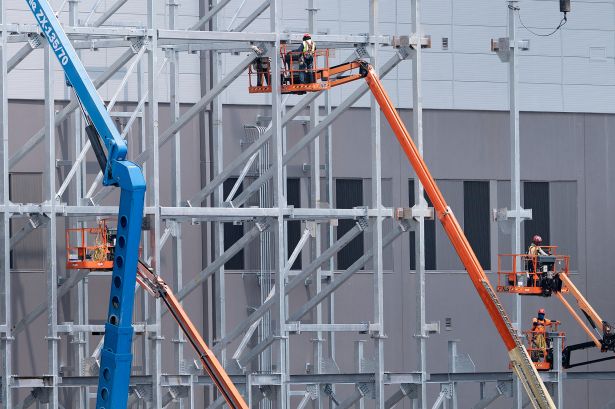
A former command pilot in the U.S. Air Force with more than 3,500 flying hours, Turner speaks in crisp, direct sentences, and compares attempts to slow down the county’s data center buildout to “trying to stop a bullet train,” admitting it might take a few miles, or years, for it to fully pause.
“The demand and energy that AI is imposing, and the new worldwide demand, is creating this exponential growth of data center development, and is causing them to pop up everywhere,” he said. “We overbuilt, but it wasn’t by intent.”
Turner was elected to the Board of Supervisors in 2019. However, as he sees it, the second half of 2022 became what he calls “the bend in the hockey stick” for data centers in Loudoun County.
This was a time when Chat GPT’s AI tool came online, leading to an explosion of computing power demand. That was around the same time when PJM, the regional grid network for 13 U.S. states, including Virginia, told Dominion Energy, the utility provider for Loudoun, it would place a three-year cap on its electrical capacity, catching the data centers in the county flat-footed. Even so, the data center building boom continued unabated, power limits be damned.
Between 2020 and 2025, permitted data center space in Loudoun increased by 150 percent, while the number of construction jobs in the county increased 63 percent, compared to increases of 6.3 percent and 8.3 percent, respectively, in neighboring Fairfax County and Prince George’s County, according to The Wall Street Journal. Overall employment in Loudoun County has risen 17.4 percent in the last six years.
“Those in the data center space would say their jobs in the industry have allowed them to create generational wealth and buy a home at a time of a major housing crisis,” said Colleen Gillis, a land-use attorney and founder and CEO at Curata Partners, as well as a 25-year resident of Loudoun County.
Gillis noted that the population has grown by more than 230,000 residents in the last 10 years alone, but due to the vast education budget buttressed by data center tax dollars, the school district recently announced it won’t need to build more schools for at least another decade.
Last year, the county debuted the Ashburn Recreation and Community Center, a $102 million facility that is 117,000 square feet and includes an Olympic-size swimming pool.
“Data centers have developed and grown here, but they’ve facilitated a lower homeowner tax rate, better amenities, better schools, and an ability to fully fund the school budget,” said Gillis. “When I first moved here, I wanted to be closer to D.C., but I love living in Loudoun County — it is now a destination, and so many people want to live here.”
Others, however, even longtime residents, have expressed their reservations to Delegate McAuliff, connecting in their minds the explosion of the asset class to the emergence of nebulous AI technology.
“People want a data center to exist so they can Zoom the meeting they don’t want to attend in person,” he said. “But when we’re talking about AI factories, this new generation of hyperscale data centers … that’s when folks are starting to ask, ‘Who is this for, and is it for me?’
“The question is how much is Loudoun County willing to give of itself for the sake of continued growth,” McAuliff added.
Old wars, new battles
Not far from West Market Street in Downtown Leesburg, Va. — the county seat in Loudoun — relics of the Battle of Ball’s Bluff rest on a Civil War battlefield, casting memories of a time when the country was fatally divided. New divisions are now forming near the site of this famed 1861 Confederate victory.
There, in the charming, tree-lined Leesburg historic district, attorney Bryan Turner practices land use law, where he represents local residents attempting to halt new data center transmission lines from cutting through their neighborhoods and children’s schools.
Turner, 48, is a second-generation land-use lawyer in Leesburg who inherited his father’s practice in an office converted out of a picturesque Revolutionary War-era home on West Market Street. He is presently working on no less than 11 cases across the county concerning data centers.
“I grew up in Loudoun County. Obviously, it was a different time, but the data centers are basically industrializing residential areas and impacting the quality of life of people who live next to them,” he explained.
As he works to mitigate the physical and environmental impacts of these developments in residential communities, Turner has become an ally and advocate of local homeowner associations (HOAs), which are filing lawsuits based on noise complaints, property obstructions, property devaluations (due to perceived proximity), and even unconfirmed links between data centers and childhood cancers.
“This was not part of the deal when we bought houses here, and these are the main assets in our lives,” said Victor Block, president of the Loudoun Valley Estates HOA. “So we’re asking ‘How can we do this differently, and how can we do this better?’ Because we have a problem.”
Turner insists he’s not opposed to data centers. In fact, he holds up his cellphone and says “we need data centers” and that they “do really good things for the nonprofit community” of Loudoun County. But the industry itself has not done enough to mitigate the most negative impacts created by its business model, he said, particularly around the environment, proximate property devaluations, health impacts and persistent noise.

“These are all things we’ve asked the industry to help with, but have been met with what I would call arrogant silence,” said Turner.
On the flip side of the coin, Curata Partners’ Gillis has represented data center developments and sponsors as a land-use attorney since the early 2000s, counting Google, Meta, Point One, SDC and Equinix as her clients. She said that what the public has been told and believes about the risk of data centers “is inaccurate.”
“I’m hearing from people who make their living here in the data center industry, working on construction, or the operation and management side, all the ancillary services that data centers demand, and those folks are coming along and going, ‘Wait a minute, your understanding of the data center business is incomplete,’ ” she said.
Bill Junda, principal at Gordon, a Virginia-based professional services design firm providing civil engineering, surveying and water resources work for mixed-use asset classes, including data centers, argued that Loudoun County data centers have mitigated noise complaints and improved their environmental footprint.
“There is one data center specifically that built on-site power generation with gas turbines that can be heard from nearby residents, and those are bad situations, but that doesn’t mean the other 95 percent of data centers are not built in Loudoun’s industrial area, away from homes, in the right place, and are doing things the right way,” he said.
“There’s also a lot of information that suggests data centers use a lot more water, and a lot more power, than they actually do, and there’s concerns over those resources rather than what is actually being consumed,” added Junda. He argued data center construction in Loudoun County has created a permanent construction economy as jobs roll over from development to development, year after year.
Even so, data centers do have an outsize impact on the environment and electrical grid.
Data centers could consume up to 9 percent of total U.S. electricity by 2030 — more than double the amount currently used — according to a recent report by EPRI, a nonprofit research and development organization.
Moreover, the Interstate Commission on the Potomac River Basin found that Loudoun County data centers currently consume between 2 percent and 8 percent of water volume in the Potomac River basin, but that number could rise to 33 percent by 2050 if the industry continues to grow at its present rate, according to Mike Doble of the nonprofit Piedmont Environmental Council.
“It has exploded way past the borders of Loudoun County,” said McAuliff. “There’s no way of telling the story of data centers without writing about the benefits of tax dollars it has brought, but folks have recognized that the downsides have added up.”
Future fights
Beneath the Loudoun County Government Center — a tree-shaded, five-story, brick-and-glass complex that opened in 1996 — stands Kristen Umstattd, 72, a former Naval Reserve officer and CIA analyst, Yale-educated attorney and Leesburg mayor from 2002 to 2016.
Today Umstattd is one of nine members (six Democrats, two Republicans, one independent) on the Loudoun County Board of Supervisors, the governing body that holds the future of local data center development in the palms of its bipartisan hands.
While she understands the concerns of her constituents, Umstattd firmly believes in the fiscal upside of data center developments.
“The data center industry has been such a financial blessing to the county,” she said. “For every $1 in services a data center requires, it pays $26 in taxes to the county.”
Umstattd can effortlessly rattle off all the economic benefits Loudoun residents have gained from data centers: The $1.3 billion in expected taxes derived from data centers in 2027 will cover 45 percent of Loudoun’s total budget on the county and school side; data centers now pay anywhere from $1 million to $6 million per acre in taxes to the county; and, for a region that lost 100,000 jobs due to federal clawbacks under Trump, data center construction provides a stable safety net for thousands of workers.
“By 2030, because our Board of Supervisors is becoming more reluctant to approve data centers due to public opposition, we’ll see a financial crunch because data center revenue will plateau,” said Umstattd. “But the board is approving every residential upzoning that has come down the pipe, and that doesn’t pay for itself.”
She noted that a typical home in Loudoun County is going to pay, through its real estate taxes, about $9,000 per year in taxes, but one student in Loudoun’s public schools costs $25,000.
“As we became more used to data centers and the revenue they generated, we extended the use of those funds into operational costs,” she said. “They are a huge, huge contributor to our economy.”
But Umstattd and her board are also evolving along with public opinion. Last year, the board voted to end the 2000s-era zoning ordinance that allowed by-right construction of data centers as if they were office buildings. This year, the board debated rescinding a clause that grandfathered in previous agreed-on data center developments (the measure was narrowly tabled this month and is viewed by many as an illegal action to cancel existing contracts), and is now considering instituting a zoning ordinance that would slow-roll future data center developments.
“The board is questioning whether we have enough,” said Tony Howard, president and CEO of the Loudoun County Chamber of Commerce. “There’s a need for jobs and a need for tax revenue. But having listened to the debate, the majority of the board is saying, ‘We probably have all that we need.’ ”
And the board itself is now torn by an internecine conflict. Supervisor Julie Briskman, a former State Department official, educator and avowed data center opponent, is now challenging Chair Phyllis J. Randall, who has led the board since 2015 and is seen by some in the county as insufficiently critical of the industry. Both are Democrats.
“Phyllis Randall is categorically the finest public servant I’ve ever worked with,” said Mike Turner, who has served as vice chair beneath Randall for six years. “Why Supervisor Briskman would use this time and this place to challenge this Democratic chair is beyond me, but it has increased tensions on the board.”
Junda, a Loudoun County resident, said much of the constituent pressure to alter or stop data center development is unfounded, but board members are going along with it due to the pressure to get re-elected.
“On this board, there are certain members that have made this the primary issue of their election campaigns, trying to stop future data centers that have already been approved,” he said. “If they could stop any construction, they would.”
Umstattd believes the public has become hostile to data centers only in the last two years.
Other parts of the state are following public opinion. Virginia Gov. Abigail Spanberger signed an executive order this year creating new regulations and oversight of the data center industry, and has proposed legislation that would end by-right development across the state of those assets that use more than 25 megawatts of power.
If Loudoun’s data centers are in the process of being taken offline, the consequences for the county remain unclear.
“I’m not sure there’s anywhere else in the world that’s so dependent on the data center industry, so we’d survive, but some hard decisions would get made about what that looks like,” said McAuliff. The entire county is dependent on the data center industry, he said, as “the stock market is being propped up on the hopes of CEOs who say this AI technology is what they say it is.”
In the event the AI industry were to crash, and take data center development down with it, the investment exposure of the third-party data center market is relatively insulated from demand pullback, according to John Andril, manager of market intelligence at Avison Young. Also, there will always be demand for established assets, especially near major metros and connectively hubs like Loudoun.
“Even if additional demand growth goes south, they still have an existing operational base, and I don’t see those workloads going down anytime soon,” Andril said. “If no new data centers got built tomorrow, they’d still have a pretty healthy cash cow bringing in property tax revenue into the foreseeable future.”
But, for an asset class inextricably linked to the evolving technology of artificial intelligence, a truly uncharted frontier, it’s impossible to know what the future holds — for the nation, for the world and, especially, for Loudoun County.
“We have to diversify this economy — we can’t be totally reliant on just the tech sector for money,” said McAuliff. “And that will require a coordinated effort from our entire economic development team to welcome new industries.”
Brian Pascus can be reached at bpascus@commercialobserver.com.