Roof of Concept: Meet Jeff Thramann, a Data Center Disruptor
The inventor and neurosurgeon aims to upend the big-box data center industry from the top down with his firm LT350
By Brian Pascus October 23, 2026 12:16 pm
reprints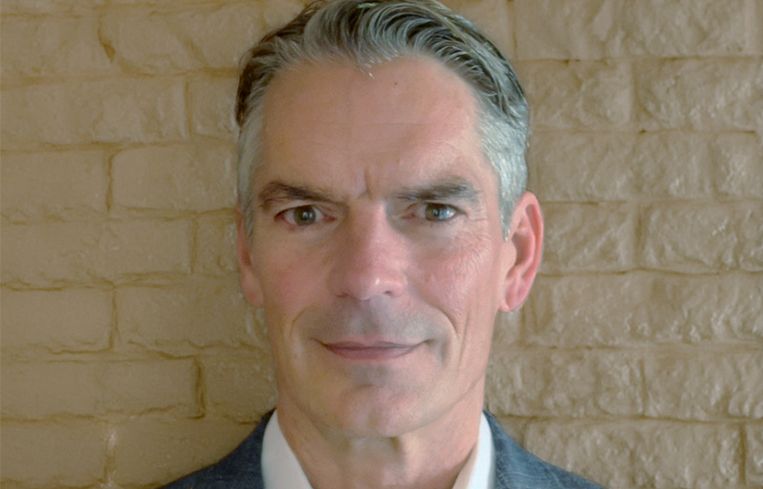
Jeff Thramann, a neurosurgeon with a degree from Cornell Medical School, is an entrepreneur at heart and an inventor by nature. He’s been issued at least 130 patents and seen his startups like U.S. Radiosurgery sold to a publicly traded company and Denver CyberKnife (another cancer treatment facility) bought by a private firm.
But it was in the renewable energy space — particularly his interest in creating technology that mitigates the effects of air pollution — where Thramann found his current calling, one that has indirectly pushed him into the data center space, where he and a well-known former politician are creating a new innovation that may disrupt the entire data center industry.
Today, Thramann is the CEO of LT350, a data center infrastructure company he formed last year with former U.S. Secretary of Defense Mark Esper, which aims to install mini data centers on the roofs of solar power canopies above the open-air parking lots of properties such as malls, hospitals or schools.
The thinking is this: By integrating solar panels with small modular cartridges that consist of graphics processing units (GPU), battery storage and inverters, the tech-fitted roof will essentially turn the airspace above any parking lot into a data center for low latency inference.
How Thramann got to this new business plan is a story in itself.
After investing into solar panels and the uses of battery-powered technology 20 years ago, Thramann was drawn to electric cars through an association made with Kimle Musk (Elon’s brother) in Boulder, Colo. (Fun fact: Thramann purchased Tesla car No. 541 off the assembly line back in 2008.)
But he quickly realized the intermittency issue with car batteries — unpredictable power losses, random no-start conditions — were just as complicated as the expensive maintenance of commercial solar technology and the fits and starts associated with reliable battery development.
“So I filed patents on taking battery cartridges, putting them up there in the ceiling of the canopies,” explained Thramann, who lives in Boulder. “Now, I would have two revenue strings, but one infrastructure build, if we include my solar business. I did the same thing for EV charging. Now I have three revenue streams, but none of those revenue streams are all that great.”
But then data centers came around.
“And I thought, ‘OK, now I can put those up there. I can marry them up with the batteries,’” he said. “Because we’re all about using batteries to help the grid. And now I could do that, and then deploy these data centers in parking lots, using their airspace without taking away any of the parking.”
Thramann’s novel technology works like this: After sizing up a parking lot’s electrical capacity, and figuring out the grid network that it’s attached to, LT350 builds batteries that fit a particular electrical demand (ensuring they don’t draw too much power) and constructs a new parking lot canopy with solar panels on the roof.
But beneath those solar panel girders are cartridge boxes that hold GPU servers with battery storage cartridges inside. These canopies typically make only a 2,000-square-foot footprint, while the GPU servers themselves can draw as much as nearly 1 megawatt of electricity (enough to support between 400 to 1,000 U.S. homes at any given moment) to power their modular data centers.
“And what we do is, we fill up the batteries off-peak, and, during the peak, we go off the grid so the grid doesn’t see it, and those GPUs are sitting there, and they can run like any data center,” he explained. “And they can be a co-location model for one of the hyperscalers, if they want to deploy out close to the edge, or we could be a main services provider to the actual enterprise parking lot that we’re in [like a hospital, mall or university].”
The big commercial real estate model LT350 is targeting is health care, as these assets are most concerned about protecting personal health information, especially as this data goes out through AI models and enters the cloud.
“Here we can put a data center, and still run a cloud model and have it be behind their firewalls, so they’d be super safe,” said Thramann. “Our big things are low latency and data security. So we look at health care for that, we look at financial services, the government, defense contractors, any type of secure government data. Those are key targets.”
Thramann is betting on LT350’s comparative advantage on an inference basis, where his modular data centers can run inference loads — the operational demand of running pre-trained AI models to generate answers or actions for users in real time — physically closer to end users due to their locations in residential, commercial or retail locations, compared to the enormous data center factories disaggregated in the middle of nowhere or off busy highways.
“So we also look at our customers on a co-location model — think of the hyperscalars, the neo clouds, the frontier model labs — they’re all trying to get closer [to users], but their question is: Where can we put these things to be close?” he said. “And we think we have that solution.”
LT350 is still pre-revenue (the firm forecasts $12.4 million of revenue per year for each 2,000-square-foot unit) and still designing its models. However, the firm is currently involved in a merger with Auddia, a publicly traded AI audio technology company Thramann founded with a $6 million market cap, and will be owned by Thramann Holdings, which is valued at $250 million.
LT350 will break ground on a data center parking lot early next year at a hospital in Dallas. The firm is in negotiations to partner with quick-service restaurants, convenience stores and gas stations — anything that already has canopies — as well as malls, big-box retail, and even large data center customers who want to distribute their footprint.
“We’re in discussions with all of those to present to the hyperscalers and the neo clouds and the frontier models, whose footprint is on gigawatt scale, that they can be distributed across thousands of properties through this network, which we think is going to be the leading network on the inference side,” added Thramann.
And then there’s the national security implications, which is where former Secretary Esper comes in. He was drawn to join Thramann as his first — and thus far only — board member, due to his concerns about the need for the United States to have critical digital infrastructure, resiliency and redundancy during any type of attack, whether that’s by an enemy or from a natural disaster.
“He talks a lot about, in the next conflict, the first strike is really gonna be cybersecurity nationally, at the critical infrastructure,” said Thramann. “And, if you can distribute these capabilities out, where they’re not mapped, where they’re unknown, where it’s a network that can move all over the place, then that’s very difficult to take out.”
Worst-case scenario World War III preparations aside, Thramann and Esper are now presenting their business model to numerous commercial real estate developers, offering them an opportunity to open up their assets and invest in a data center disruptor.
Thramann and Esper expect development costs to be significantly discounted compared to data center builders, mainly because LT350 plans to deliver its tech to AI-ready co-location facilities. That will not require them to buy surrounding land, secure permitting, or construct infrastructure beyond plugging prefabricated cartridges into the solar panels that can be installed on the parking lot canopies.
“One of the reasons we’re getting so much traction from the commercial folks is we basically tell them, ‘Look, this is a huge opportunity here to revenue share on these,’” said Thramann.
“So we come in, we put these in the parking lots, and we say we’ll either pay them rent, or we can share some of the revenue on the data centerpiece with them,” he added. “And it’s super lucrative when you play that out.”
Brian Pascus can be reached at bpascus@commercialobserver.com.