CloudHQ CEO Hossein Fateh On What Could Curb the Data Center Boom
'There could be foreign interference, trying to slow America down or the Western world down. … On the other side of it, we also have hypocrites.'
By Nicholas Rizzi October 27, 2026 6:29 am
reprints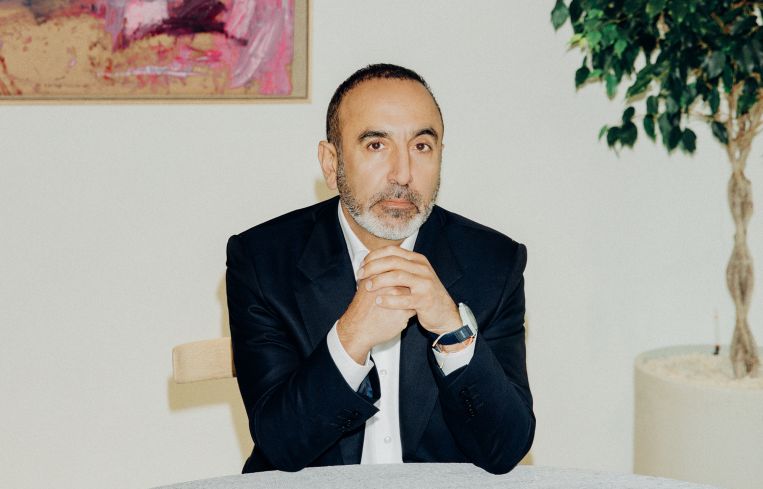
It’s been a — mostly — great time to be a data center developer.
The market was already on the upswing when the rise of artificial intelligence companies kicked that into overdrive by clamoring for server space to run their models.
In the first half of the year, the United States added a record number of new data centers, and that space was gobbled up almost immediately, with vacancy falling to a record low of 1.4 percent in the first half of the year, according to a CBRE report.
And that demand has led to investors lining up to drop money into the space. Case in point: Washington, D.C.-based data center developer CloudHQ closed an oversubscribed $1.4 billion asset-backed securities (ABS) facility in May backed by two of its Virginia data centers. The ABS loans secured AAA ratings from Moody’s, Kroll Bond Rating Agency and Fitch. It was the first data center ABS loan that Fitch rated AAA.
Hossein Fateh, the founder and CEO of CloudHQ, likened the industry’s construction spending to the railroad construction boom in America 175 years ago, and said the ABS facility will help fuel CloudHQ’s growth.
“This is a seventh-generation thing that we are going forward with,” Fateh said. “And, really, it’s about the amount of blue-collar jobs that we’re creating. These are blue-collar electricians and mechanical steamfitters that are making $150,000 a year.”
But all this growth has not gone on unopposed, to say the least. A populist movement against the construction of data centers has arisen, with citizens protesting against the copious amounts of water and power these sites often consume. And governments at all levels globally have implemented or are considering passing laws to limit the development of the centers.
It’s safe to say Fateh has already seen a lot in the industry. He got introduced to the space during the dot-com boom in the early 2000s, when he leased a warehouse he owned to a data center provider. He later moved on to starting his own data center real estate investment trust (REIT), DuPont Fabros Technology, which went public in 2007.
After eight years, Fateh thought the REIT model no longer worked for him — as he felt REITs didn’t get enough value for development projects — so he launched CloudHQ in 2016.
The company now owns more than 30 million square feet of data centers spread across 12 countries with an IT load of more than 2,000 megawatts. And Fateh isn’t stopping, with massive projects currently under development in the Chicago area, Mexico and Japan.
Commercial Observer sat down with Fateh in late October to talk about navigating the changing political landscape, building centers during the AI boom and raising the money to fuel the growth.
This interview has been edited for length and clarity.
Commercial Observer: How did you get into the data center space?
Hossein Fateh: In the year 2000, I was building a warehouse in Ashburn, Va., and a company called Exodus Communications came in and leased it before the dot-com bubble burst. They were renting racks, and, at that time, it was a full-service lease. It came with some amount of bandwidth and some amount of power, and there were month-to-month license agreements.
At the time, the payback for these things was almost one year. Within a year, they would get all their money back and have the building for free essentially.
All these data center providers raised junk bonds, and, when the demand went away, they all went bankrupt. The tenant had put in $55 million of generators, switchboards, C boards, D boards, and air conditioners in my building. I gave up my claim against the bankrupt estate of Exodus and, in return, they gave me ownership of all the equipment they couldn’t pull out anyway.
Then, what I did — with the help of my team — we constructed the first full-service, triple-net lease for a data center. We needed lenders to be comfortable lending against the asset, so in making it triple net, if the operating expenses, the taxes and the insurance went up, the tenant would pay for it.
A lot of people have been jumping into the space now because it’s a hot market. What are you seeing a little bit differently than some of the newer players?
The risk is we see some newer players signing deals and not really reading about the consequences of it.
One example I’m dealing with is a security agreement for one of the AI companies. They were requesting so much security that we had to, on a triple-net model, hire an extra 20 people for security. They had originally wanted everything that’s delivered to the site to be escorted into the site. I mean, how do you have every piece of construction escorted to the site? They haven’t thought about it.
It’s going to cost them an extra few million dollars a year, but we were told that others are simply signing those agreements without the triple-net in place. And I don’t understand how someone is signing the agreements without reading them. I think people are signing agreements and dealing with the problems later.
On a positive note, this is an industry that has been around for a long time and people have moved around. So there is a small group of us that’ve known each other for a very long time, and that’s helpful to be able to call the people that you know and say, “This thing doesn’t make a lot of sense. Can you talk to the rest of the team?”
Artificial intelligence is fueling a huge demand for data centers. How do you plan differently when developing data centers for AI customers?
AI has two things: training and inference. Training is where you show a computer a picture of a horse and you explain to the computer that a horse with stripes is a zebra. Inference is when you’ve already trained it. You show the computer a picture of a zebra and it goes, “That’s a zebra.”
Training, generally, is not allowed in Europe. The training is going to America. The inference needs to be local and it’s yet to be very fast, so the distance limitations are not as sensitive as for the public cloud.
Public cloud needs to be closer to population centers because you want your Google Maps to work instantly. When you ask an AI a question, it’s thinking for a while anyway, so, while it’s thinking, the latency could be resolved. If the thinking becomes faster, then you’ll need them closer to population centers.
Do the buildings have to be constructed any differently for AI tenants?
They’re more high density. The density per rack goes up, so the buildings become smaller but more powerful. The Nvidia chips, the chips that do AI, use a lot more power, but on a smaller footprint.
What kind of projects are you targeting now?
We’re targeting mostly inference and public cloud. We have yet to do a training deal. Those training deals are normally in the middle-of-nowhere kind of areas, and those become more of a credit deal and not like a real estate deal.
I’m not 100 percent sure what happens after the 20-year lease is over in some of those buildings. I’m not sure of the value of that piece of land. But I am very comfortable on sites, say, in Ashburn, that have 200 megawatts because that lease would never not be renewed.
You recently closed on a $1.4 billion ABS facility that got AAA ratings. Can you talk about what that means for your company?
Generally, the buyers of that financial instrument are insurance companies. What we’ve been able to do is get our cash flow streams rated by the rating agencies — whether it’s S&P, whether it’s DBRS. The higher the rating, the more creditworthy these assets are, and then you can sell the financial instrument in markets like [commercial mortgage-backed securities] and ABS.
With the amount of investment that we need to make, we need new sources of capital. ABS, CMBS, we’re going to be targeting all the instruments. We need more velocity of capital in and out of this industry.
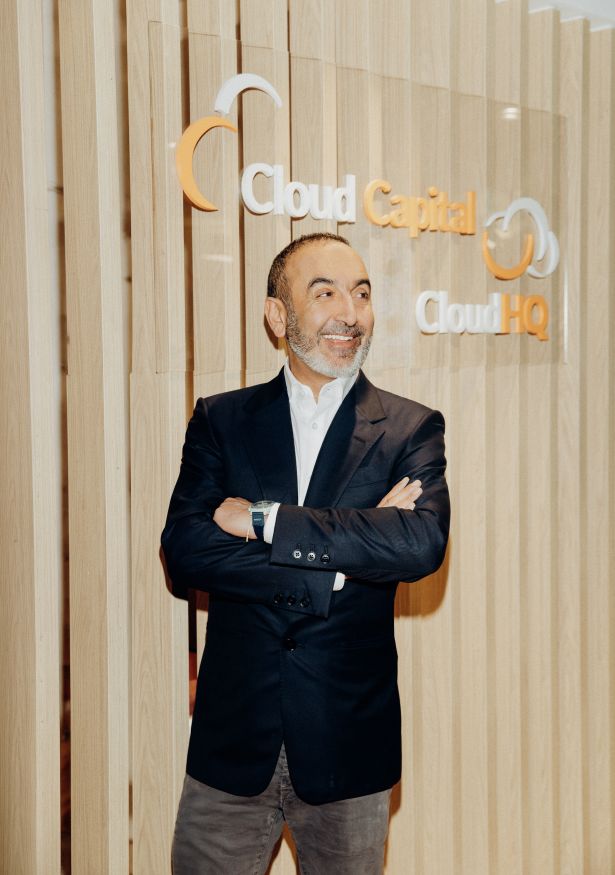
You also launched your own investment firm, Cloud Capital, in 2020, and it closed on a $520 million ABS financing this July. Can you talk a bit about what Cloud Capital is targeting?
It’s a private equity investor in data centers only. We raise money from sovereign wealth funds and pension funds, and we invest that money in data centers. We have an open-end fund. We have an edge data center deal. We have a joint venture for core funds, and we also have just launched a value-add fund. It buys some assets from CloudHQ, but Cloud Capital also buys third-party assets.
There’s obviously been a lot of pushback against the construction of new data centers around the world. How are you working through that?
Some of it is based on lies. They talk about water usage. Fifty percent of the data centers we built have zero consumption, because it’s a closed water loop. It’s like the radiator in your car. In Chicago, we have the biggest data center I built, going up with 240 megawatts of IT load. The water usage on the adiabatic system [which uses water evaporation to cool the center] is the same amount as one hole of a golf course per year.
Trying to get the right narrative out is difficult. An email came out from a government official in England saying, “Delete your emails and you’re saving water.” I called that department and told them, “You know that’s not true.” They said, “We now realize that.” Then I said, “When I was the CEO of a public company, if I said something that’s not true, I had to issue a K-1 correcting myself.” The guy at the other end of the phone said, “Well, we’re not a public company.”
Where do you think some of this sentiment against data centers is coming from?
There could be foreign interference, trying to slow America down or the Western world down. China doesn’t have the chips, but they have the power. They have the energy. We have the chips and we’re running out of power. It also could be the fear of people losing their jobs to AI.
And, look, there are some data centers that have been built in the wrong location. There have been some bad players. Some of it has been too close to residential, and you have this massive warehouse next to residential. Some data centers have noisy air conditioning. I can tell you mine, you can’t hear it on the ground.
There has been some legislation passed to limit or make it harder to develop new data centers. Has that been impacting where you’re looking to build?
There have been delays. In Europe, specifically, there is more diligence on our approvals. Previously, in Italy and in Austria, we were getting approval for our environmental permits locally. Now we have to get those permits federally. And that has led to some slowdown. If it is foreign interference, they are being successful.
On the other side of it, we also have hypocrites. Tucker Carlson comes out against data centers. Meanwhile, his entire life revolves around YouTube and Instagram. He has no audience without the internet.
We ought to be protecting this industry because we are an essential industry. During COVID, England called us an essential industry and we were allowed to work. We ought to be treated that way. Now, bearing in mind, data centers need to be built in close locations. But close to airports is perfect. If you’re close to an airport, that’s a good industrial location and close to industrial areas. That’s where we’re targeting.
We don’t want to be next to big residential areas because you don’t build airports in the middle of residential areas, either.