

Amazon’s Lessons for Multifamily Operators
By Andrea Zubow October 7, 2026 7:00 am
reprints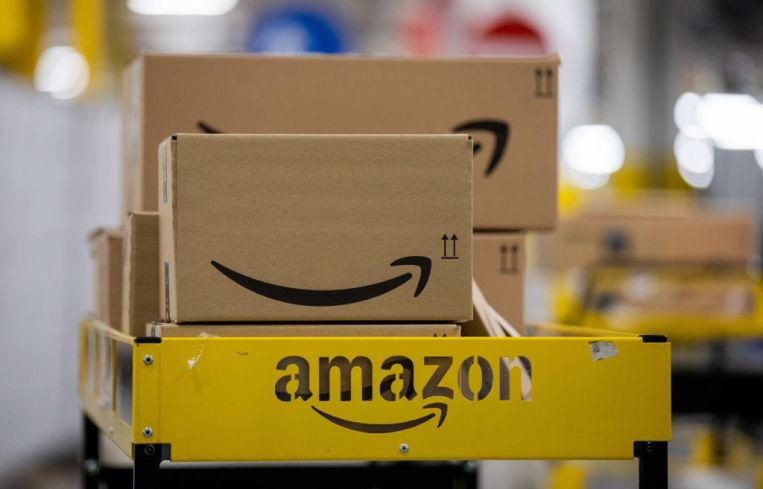
Property maintenance remains the most underinvested net operating income lever in multifamily operations.
Maintenance has long been treated as a necessary expense to keep properties operational, but that limited perspective misses its much broader influence on asset performance.
I like to think of multifamily maintenance, now a multibillion-dollar global industry, as the hidden supply chain of high-performing communities. Behind the scenes, maintenance is the ecosystem quietly influencing occupancy rates, resident retention, turn speed, operating expenses and asset performance.

Take Amazon as a prime example. The e-commerce giant turned non-brick-and-mortar retail into one of the most sophisticated logistics empires in the world. Amazon’s ability to deliver products overnight to consumers at the click of a button was not mere happenstance.
The company’s success and profitability didn’t come by cutting corners and trying to unearth the cheapest storage and delivery options. Rather, it changed the logistics game entirely, creating a modernized fulfillment ecosystem near dense population centers across the country. Just this year alone, Amazon reported more than 1 billion items delivered same day or overnight through increasingly localized distribution networks, and it boasted more than $77 billion in net profit for full year 2025.
A similar strategy must be applied to multifamily maintenance today. For communities and residents to thrive in the volatile economic environment — where skilled labor shortages and rising expenses are making operations even more complex — maintenance can no longer be a reactionary means to an end. The next wave of NOI growth will come from operators who modernize their maintenance supply chains.
Below is a guide for operators ready to take a page from Amazon’s playbook.
Stop ignoring your total cost to maintain. The most expensive maintenance issues are rarely found on an invoice. They’re hidden throughout the maintenance supply chain, and show up as vendor coordination overhead, emergency repair premiums, delayed unit turns and overall asset degradation due to deferred maintenance.
When a resident waits an extra week for a repair, or a unit sits vacant because a turn is delayed or multiple vendors are dispatched to resolve the same issue, those costs add up. They may never appear on an invoice, but they still impact NOI all the same.
In sticking to our analogy: Imagine if Amazon evaluated the success of its distribution strategy solely based on the cost of its delivery fleet or warehouse leases. That would ignore all of the interconnected, and oftentimes unplanned, factors that influence total costs and business performance, such as inventory bottlenecks, delivery delays, fulfillment inefficiency and customer returns/dissatisfaction.
To maximize asset and portfolio performance, operators must move away from managing costs per maintenance work order and focus instead on optimizing their total cost to maintain. Simply put, total cost to maintain refers to every operational and financial consequence surrounding a maintenance issue, not just the cost of the repair itself.
That requires a shift from managing individual work orders to managing maintenance as a portfolio-wide operating system. Owners need visibility into how work moves across their communities, standardized workflows that reduce execution variability, smarter vendor coordination that minimizes delays, and data-driven insights that help identify inefficiencies before they become costly problems.
Reduce fragmentation. It’s quietly eroding your NOI. The traditional multifamily maintenance model was built for smaller portfolios. But that model breaks down at scale.
As portfolios grow across markets, that fragmented maintenance model becomes quite expensive. Multifamily operators must break the habit of responding to one-off maintenance issues at the property or individual unit level, and instead solve for the holistic health of entire portfolios.
To remain competitive and gain that NOI advantage, adoption of intelligent operating platforms that combine software, data and AI is paramount. These platforms give on-site management teams, maintenance crews, technicians and vendors end-to-end visibility and control over property services. Rather than simply tracking maintenance activity at the individual property or unit level, these platforms standardize how work is routed, assigned, completed and optimized across portfolios over long periods of time.
The aim is not to have the largest maintenance team. It’s to create an efficient operating model at scale that standardizes maintenance workflows across portfolios, eliminates coordination bottlenecks and leverages data and actionable insights to prevent problems, not just respond to them.
Just as consumers don’t think about how their packages make it to their doorsteps — they merely care that they arrive on time and undamaged — the same is true for residents of thriving multifamily communities. Residents want exceptional service, a seamless process for submitting maintenance requests, timely communication updates, and confidence that issues will be resolved quickly and correctly the first time.
Every delayed work order, missed communication, repeat service call or prolonged unit turn represents friction within the maintenance supply chain that ultimately impacts resident satisfaction, retention and NOI.
The most successful multifamily operators that will outperform over the next decade are those discarding reactive and fragmented maintenance practices in order to build intelligent operating systems that are predictable, repeatable, transparent and scalable.
Andrea Zubow is the senior vice president of the residential division at property maintenance technology company Lessen.


