Marx Realty CEO Craig Deitelzweig Spied the Office-Hospitality Connection Early
He and the firm have brought the complementary relationship to life at properties such as 10 Grand Central and 545 Madison Avenue
By Amanda Schiavo July 21, 2026 10:00 am
reprints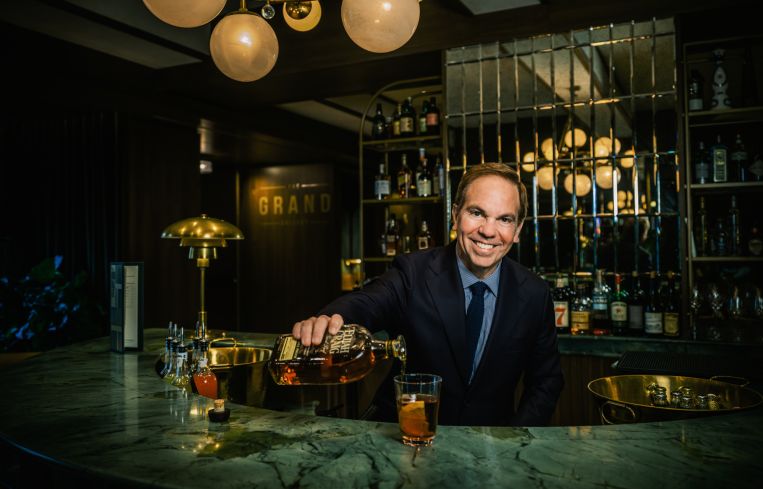
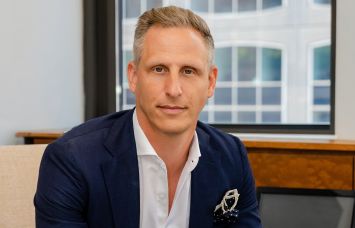
When he isn’t home tending to his alpacas — yes, he has alpacas — Craig Deitelzweig, the chief executive officer of owner Marx Realty, is working out ways to beautify the company’s office portfolio, intent on making where people go to work a destination, not a chore.
Deitelzweig, a former lawyer who graduated from Fordham University’s law school, became CEO of Marx Realty in 2017 and set out to reposition the firm’s portfolio, grow the company, and improve the value of the office properties in the key markets where the firm operates.
Repositioning, Deitelzweig said, is an area where he developed a voracious appetite, relishing the process of turning something old into something new, which the firm has done with two of its crown jewels in Manhattan: 10 Grand Central and 545 Madison Avenue.
And, while Marx Realty owns some of Manhattan’s most prominent office buildings, the firm’s portfolio also consists of properties in Washington, D.C., including the Herald at 1307 New York Avenue and the Grogan at 819 Seventh Street.
Commercial Observer caught up with Deitelzweig in June to discuss what Marx Realty has been up to, and the importance of creating distinctive, hospitality-infused office spaces.
This interview has been edited for length and clarity.
Commercial Observer: What was your career journey from law to CEO of Marx Realty?
Craig Deitelzweig: I started my career first in the litigation group and then in the real estate group at Skadden Arps. Then, from that firm I went to a private developer, and while at the developer I was initially in the legal and business side of things, but then, over time, I realized that I had this aptitude for repositioning office properties.
First they put me on some properties that they had in Boston, which were sort of the redheaded stepchild of the company. They were just really troubled assets, and they sort of let me do my thing before I even knew I had a thing to do, and those repositionings were really successful. Even back then we were always thinking of how we can make a building distinctive and special, and really my goal has always been to make people feel good in a space.
I’m not sure where that came from, but I just never understood why office buildings had to be so unspecial, so sterile, white, cold and harsh. I always thought that there should be warmth, spirit and a sense of place in these office buildings.
So that’s what I first did in Boston, and then once that was a success, I did the same in D.C. and then in New York. Then from that developer I went to a private equity firm and did the same thing there. I worked on different asset classes in addition to office, including multifamily and hotels. The hotel world was really where I realized how special spaces can be, and also really tried to apply some of those design techniques, and just bringing in the general hospitable nature of hotels into other sectors. What’s happened over time is all these sectors have converged.
From that private equity firm I went back to a developer, then back to a private equity firm, and then ultimately landed here at Marx.
What assets and markets make up the Marx portfolio?
We’re in 16 states, which surprises a lot of people. I think a lot of people think of us just here in New York, but we have a pretty big portfolio in D.C. as well, and then we have a mix of office and retail.
On the retail front, we own Cross County Center in Yonkers, N.Y., which is the nation’s first open-air shopping center. We’ve also invested a lot into that over the years. Similar to what some people were saying about office being dead, they were saying the same with retail, and we’ve proven that to be false.
We’re constantly evolving all of our retail spaces, so in that center right now we’re under construction on two new large retail spaces for another 58,000 square feet, and a 4-acre park in between, which will have trees and different seating areas, and will act as a front door to the center. We’re doing that because we just want to make sure that the center is future-proofed, and we just believe that people want spaces to collaborate and to have fun, and to feel good.
You said you developed an aptitude for repositioning. What is it about repositioning that you feel drawn to?
I love the idea of making something that is not performing the way it should be, that’s not wowing, and making that building into something that does well, and figuring out how to do it. When I look at a building, I can see what it should be. I can really look past all of the elements that are tired or inconsistent, and just really focus on what that building can be, and in my head come up with a creative way to make the building what it should be.
Marx is known for its hospitality-infused approach to the office, and we’re sitting in a shining example of that at 10 Grand Central. How did you first approach the idea of office and hospitality coming together?
I’d been thinking about it for years before coming to Marx. Again, I just never understood why every office building had to feel the same. We call it the “REIT special,” because all these buildings are often owned by real estate investment trusts, and they just aren’t necessarily very thoughtful about their approach to design. All of their buildings kind of check the box, and we never want to just check the box.
So, when I came to Marx, I wanted to infuse hospitality across our portfolio and really rethink about what the office should be. We were pioneers, and doing this well before the market understood the demand and shifted in terms of what tenants desired. That shift started before COVID-19, but accelerated after COVID.
When we started to renovate this building in 2018, we told our architects that we wanted our lobby to look like no other lobby in the city. At that time — and it’s easy to forget, because since then people have copied us — every lobby was either white or gray marble, with harsh bright, white lights. They also had security guards who acted more like prison guards, and at our buildings instead of security guards we have doormen and concierges.
I had been working in a REIT building for many years, and the guards all knew me, and one day when I forgot my wallet they wouldn’t let me in. I had to call up to my assistant, who said yes, in fact, I do work here, and they required her to come down and vouch for me. And I just thought this doesn’t feel good, and this isn’t what people want in an office. Certainly, we want good security, but we also want to be thoughtful and make people feel special at work.
What elements go into welcoming employees into your office buildings?
Ours were the first office buildings to have doormen outside in proper uniforms, smiling and welcoming, and also knowing everybody, and opening the doors, which is also a security feature.
And in the lobby we have a lot of warm elements, and it took a lot of iterations. It was interesting because our brokers at the time thought that what we were doing was wrong. They just couldn’t get their heads around it. They thought it would only be attractive to creative tenants, and what we found as soon as we repositioned the property was that it actually had broad appeal. Our first tenant was actually an insurance company. That tenant really wanted spaces that inspired their employees, and actually they wanted their brand to change a little bit, to feel a little less fuddy-duddy.
A lot of tenants actually want their brand to be associated with the building brand, and what we do, which is also very different from other office owners, is each of our buildings is its own brand.
10 Grand Central is a different brand than 545 Madison Avenue, which is a different brand than 430 Park Avenue, which is a different brand than the Herald. All of them are very distinct, and everything we do is on point with that brand, so it has to be authentic.
What was done throughout 10 Grand Central?
Whenever we reposition a building we look at the history, and with 10 Grand Central we had discovered that the initial entrance to the building was actually where our entrance is today. It was moved to Third Avenue, so we moved it back to where it should be, and really embraced Grand Central, turned our back to Third, and became part of the Grand Central mix.
In addition to tenants preferring to be in the Grand Central submarket, it also was just helpful with the whole rebranding of the building.
Then we did an amenity floor. We thought it was important because we want our buildings to be like a hotel. The best hotels will have everything in it, from breakfast to dinner. The way we look at it is from cappuccino to cocktails, and that’s why we recently introduced a speakeasy here called Highball Ltd. We partnered with Jeff Bell of Please Don’t Tell, who really understands cocktails, and the food is by Michelin-star chef Marc Forgione.
The space itself was inspired by luxury train cars from the 1930s and that’s why it’s called highball, because that’s when you go fast on a train, and the cocktails are sort of related to that as well, so it just seemed like a really good fit. The point was that we wanted our tenants to have a place in the evening where they could also have cocktails for a business meeting, or to celebrate life success, or birthdays, all in the same building.
The tenants love it, and when we tour tenants it’s one of the things that resonates the most.
Why invest in revamping an older building versus starting fresh from the ground up?
There are some elements in an older building that you can’t get in a brand-new building. You don’t get that soul. So, if you can actually marry the soul and heritage of an older building with all the new elements that you would get from a brand-new construction, you really have the best of both worlds.
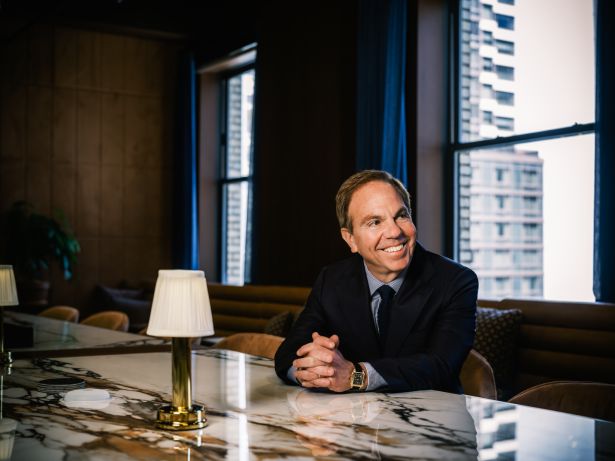
We often think about hotels in the same way. Some of the best hotels in the world are from these older properties. Like the George V in Paris. If that was a brand-new property, it wouldn’t have the charm and the specialness that you get from a building that has heritage to it.
We just think it’s really special, especially for New York, to have these buildings from different time periods, and that’s what makes a city special.
We do have new buildings that are glass and steel, and we find those actually harder to reposition because there you have to sort of make a story from one that doesn’t really exist.
Can you give us an example of that?
So, with 545 Madison Avenue, that building was constructed just 14 years ago, and it seemed sort of lackluster. So we had to really give it a spirit, and to do that we partnered with Baccarat. 545 Madison is the first luxury co-branded office building in the country. We used those Baccarat elements in everything we did throughout the building.
We also created what we call a new international style, taking the building’s prior history from the 1960s and redoing it in a modern, international-style way and rethinking what that would look like. We wanted to be groovy, so that’s why we have a fireplace extended from the ceiling of the Leonard Lounge.
You mentioned that offices started to change slowly before the pandemic. How has the makeup of the workplace evolved since then?
Well, so, when we did the new lobby and the new amenity floor here at 10 Grand Central, it took off immediately. Demand just was super strong. I think the tenants and the brokerage community were pleasantly surprised, as it was something they had never seen before, and so they just really gravitated toward it.
I think if you go into any great space, it just feels so right, and I think that’s how it felt here. It all resonated very quickly, and then they wanted it for their spaces as well.
Back then there was still this kind of consensus that everyone needed those open floor plates. What’s happened is there’s still those open floor plates, but there’s a lot more collaboration areas — so more lounges and couches — and then also we’re finding today that there are a lot more perimeter offices, too.
We’ve also had spaces come back to us. We had a space come back to us that we did seven years ago, and we found that we don’t have to do anything to it. The tenants said, “This is perfect, and we don’t need any changes.”
I think if you actually design space right from the get-go, it ends up being reusable and really adaptable as well.
Let’s wrap up with the question on everyone’s mind: How did you end up owning alpacas?
My daughter is going to get mad at me for telling this story. Well, first, I grew up in Queens, and my dream as a kid was to live on a farm. And now we live on a farm in Westchester, and we have alpacas — Zeus, Lucky and Bruno — and chickens, and a big vegetable and flower garden as well.
But my daughter lived in Peru for a summer and fell in love with these alpacas. When she came home, she said, “Daddy, can I have an alpaca for my birthday?” and I was like, “Of course not, what a ridiculous thing to ask.” But then she was getting ready to go off to college and she said, “You know, Daddy, can I please have an alpaca? I’ll come home from college.” I said, “Of course.” But now they have become my alpacas. I get up at 5 every morning and feed the animals. I love it. It’s really special.
Amanda Schiavo can be reached at aschiavo@commercialobserver.com.