New York State Would Cut Environmental Red Tape to Speed Housing Under New Budget
But commercial real estate leaders warn that a pied-à-terre tax in the same budget would hinder development
By Mark Hallum May 7, 2026 1:46 pm
reprints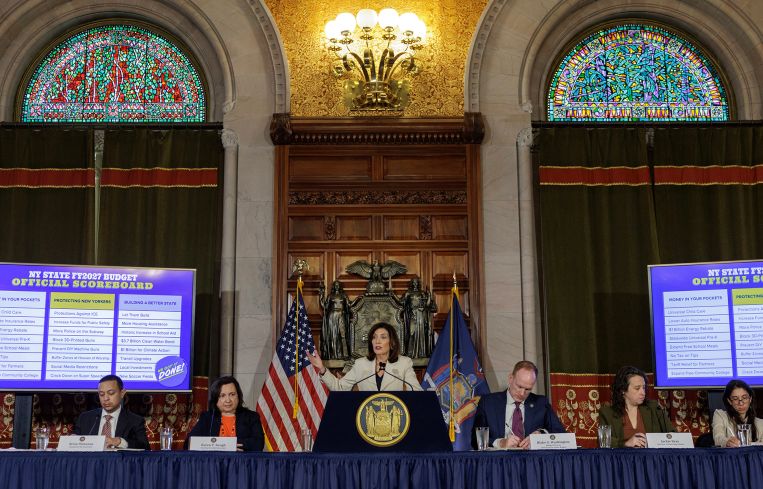
New York lawmakers and Gov. Kathy Hochul have reached a tentative $268 billion state budget agreement for the fiscal year 2027 that reduces red tape for developers.
Hochul announced Thursday that the state would reform the 50-year-old State Environmental Quality Review Act (SEQRA), making housing and other infrastructure projects easier to pencil with a shorter assessment period that could lower development costs.
The reforms would cut the review process for projects that typically have no negative environmental impacts, such as housing developments up to 500 units in medium- and high-density areas of New York City and projects up to 250 units regardless of density being exempted.
Clean water infrastructure, public parks, trails, green infrastructure and public schools would also be exempt.
“This initiative must also, however, provide for more staff for those projects that must be reviewed — too many housing developments and rezonings are delayed because city agencies lack the proper staff support,” Mitchell Korbey, an urban planning and land use attorney at Herrick, told Commercial Observer. “A predictable, time-limited process with dedicated staff resources will have a direct positive result on sorely needed new housing projects.”
The Real Estate Board of New York (REBNY), however, was cautious about giving the governor too much credit for the proposed environmental reforms due to the belief that a potential pied-à-terre tax — the details of which have not been fully hashed out — could scare off investment in New York.
“Poorly designed or hastily implemented taxes risk reducing, rather than increasing, overall revenue for the city, state, and the Metropolitan Transportation Authority by discouraging investment and transactions,” James Whelan, the president of REBNY, said in a statement. “If New York’s objectives are to promote economic growth, housing production, and long-term competitiveness, new policies must be designed to strengthen confidence in the market and support those goals, not undermine them.”
Ken Griffin, who was targeted in a viral video by Mayor Zohran Mamdani announcing his intention to create a new tax on pricier second homes to raise $500 million for the state — has said that Citadel will continue to invest in South Florida due to the regulatory inclinations of New York’s leadership.
While a release from the governor’s office included the intention to move forward with a tax on second homes valued above $5 million, the announcement provided no further details about the tax rate that will be imposed or any further details.
But Hochul has reiterated that the state needs money to help New York City close its own budget gaps, which amount to $12.6 billion over two years, according to city Comptroller Mark Levine.
“To help out New York City, we’re finalizing the details of pied-à-terre tax to help close the city’s budget gap without eroding its tax base or burdening hardworking New Yorkers,” Hochul said in a morning press conference. “I’ll have more to say on that soon, but I want to be very clear: My commitment to New York City has been and always will be ironclad. This budget already includes $28 billion in total aid for the city, a $9 billion increase since I came into office. So the facts matter. More details on that will be forthcoming.”
Mark Hallum can be reached at mhallum@commercialobserver.com.