Simon Property Forges Ahead With New Leadership and a Reliably Bold Playbook
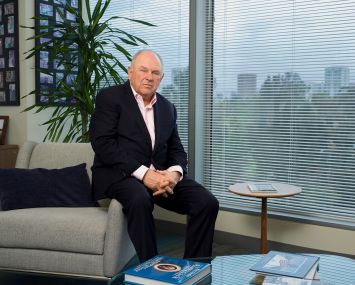
The late David Simon’s eldest son, Eli, is in charge of the mall giant now, and working off his father’s post-pandemic success
By Emily Davis April 9, 2026 9:35 am
reprints
The death of David Simon on March 22 occurred at a moment of incredible financial and operational strength for his company, Simon Property Group.
The Indianapolis-based real estate investment trust (REIT), the nation’s largest mall owner with ownership interests in more than 250 retail properties worldwide, accumulated $4.8 billion in real estate funds from operations in 2025. It racked up 4,600 leases for more than 17 million square feet, and retail sales per square foot increased 8.1 percent from 2024. By the end of last year, occupancy in its malls and outlets sat above 96.4 percent.
This is the substantial torch that Eli Simon, the eldest son of David Simon, now inherits. David’s death marked the end of a three-decade leadership that transformed the company into the global retail real estate powerhouse it is today.
“Simon is obviously the behemoth in our industry,” Bryan Ley, managing director of commercial investment sales at Northmarq, told Commercial Observer.
David’s exacting personality earned his business a reputation for fierce deal-making and bold bets. He famously defied mall market naysayers by successfully modernizing his properties and acquiring struggling brands to keep storefronts filled.
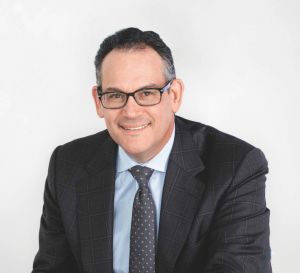
Well-laid succession plans paved the way for Simon’s board to appoint Eli as chief executive officer and president on March 23, while continuing as chief operating officer and director. Larry Glasscock, veteran business executive and lead independent director at Simon, was named the non-executive chairman of the board. Analysts, partners and tenants are waiting to see how that characteristic Simon culture will survive a leadership transition and keep up with a volatile retail marketplace.
The aggressive accumulation of mall and outlet properties in the 1990s and early 2000s, followed by a timely wave of investment in tenant brands in the mid- to late 2000s and 2020, made Simon Property Group incredibly powerful, with enough leverage and negotiating pull to earn the respect of partners and the demand of gold star tenants.
All signs point toward a company now focused on reaping the rewards of its existing assets, Ley told CO, one reimagining its current stock of malls with movie theaters, shopping centers with daily necessities, pricey gyms, high-end restaurants and boutique brands — all while ridding itself of lower-tier assets.
The company’s generous balance sheet has historically allowed it a lower degree of constraint in reinvestments and acquisitions than other mall owners, said Vince Tibone, a managing director at analyst Green Street who leads the firm’s U.S. industrial and retail research.
“Simon just had this much better access to capital,” Tibone said.
And Simon knows how to spend it. The company announced in early 2026 plans to invest $250 million into modernizing its malls in Nashville, Denver and Tampa with architectural enhancements, expanded outdoor spaces and high-end storefronts to attract bigger brands.
Simon is forging ahead with architectural overhauls inside its malls to keep up with modern consumers’ desires, too. It shared plans in February to transform the hollowed-out Neiman Marcus at Boston’s Copley Place mall into a diverse luxury hub, with international high-end brands and fine-dining restaurants Casa Tua Cucina and Estiatorio Milos.
Simon’s acquisition sprees remain in the rearview mirror, but its redevelopment moves signal the continuation of Simon’s reliable post-pandemic playbook: overhauling its malls from strictly retail spaces into experiential, communal hubs.
“Every major retail REIT, I think, compares themselves a bit to the trajectory that Simon has led,” Ley said.
(Representatives from Simon Property Group did not respond to requests for comment for this article.)
Going shopping
Long before it was the most powerful mall REIT in the nation, however, Simon Property Group was Melvin Simon & Associates. The Indianapolis company founded by David’s father and uncle, Melvin and Herbert Simon, was building strip centers when a 31-year-old David arrived in 1990, fresh off an investment banking career on Wall Street.
In just a few short years, David turned the regional family enterprise into a retail real estate giant, achieving in 1993 the then-largest REIT public stock offering in history, raising $840 million.
David wasted no time in racking up the aggressive acquisitions that his company became known for, starting with deals for Corporate Property Investors and DeBartolo Realty Corporation, the latter of which solidified Simon as the largest name in U.S. shopping centers. These massive moves were followed by an aggressive entry into outlet malls around 2004, with acquisitions like Chelsea Property Group, the Mills Corporation and Prime Outlets. The Prime Outlets deal rendered Simon the largest owner and operator of outlets in the country.
The larger industry has long considered this string of achievements largely due to David’s special brand of management, as well as the dedicated team he built around him. David himself acknowledged in a rare interview with the Wall Street Journal in 2025 that he was a “domineering-type CEO,” with micro-managing tendencies and a ruthless competitive side. Former employees recounted heated conversations and calls from David at all hours of the day.
The 64-year-old still led the company’s February earnings call in his final weeks battling pancreatic cancer. He discussed tariff uncertainty and headwinds in their Northern U.S. properties due to protests by “really pissed off” Canadians.
Ripco Real Estate’s Adam Gang, along with many other past and present partners who shared tributes in the wake of David’s death, were candid in their assessment of the CEO, calling him “fiery” and a tough negotiator.
“I think he was a true lion in the industry,” Gang told CO. “They’re not going to make another one like him for quite some time.”
Gang, who worked closely with Simon Property Group in his prior leadership roles at luxury retailers such as LVMH, Kering and Coach, called Simon an early adopter of luxury corridors in malls and brand investment that helped the company weather the COVID-19 pandemic’s retail woes.
Gang recalled a 2019 meeting with David during his time at LVMH, when Simon Property Group gathered big names in luxury retail at a New Jersey mall. David walked the mall floor with his lieutenants, soliciting feedback and taking notes about retailers’ operational needs. Those discussions included moving away from scattered store placements in favor of concentrated luxury spaces to draw in and keep shoppers.
“What I gathered from that was that he didn’t just listen, but he actually acted on a lot of it, which is not typical,” Gang said.
Simon Property was among the first in the mall business to start negotiating with tenants amid the pandemic in early 2020, even as REIT and retail stock were both down. The company used the pandemic as leverage to get big luxury players into their stores at a rapid clip.
The luxury-focused approach, combined with investments in experiential offerings, set Simon on a positive course as lockdowns lifted and shoppers craved a new kind of communal shopping space. These high-end zones are a hallmark of the Simon portfolio, manifesting in the transformations of properties like Town Center at Boca Raton in Florida and SouthPark Mall in Charlotte, N.C.
“He was able to see things that no one else saw,” Gang said. “He was able to see the value of things and how to properly merchandise them, in order to get them to be more powerful.”
The luxury zone strategy worked in tandem with Simon’s bold approach to keeping storefronts occupied: buying the brands.
Analysts like Ley see the company as a trailblazer in this regard. The strategy began in 2016. As e-commerce grew alongside retail tenant bankruptcies, Simon opted to acquire ailing retailers to keep mall occupancy up. A key partnership with Authentic Brands Group in 2016 allowed Simon’s malls to thrive by propping up chains like Aeropostale, Brooks Brothers, Lucky Brand, Forever 21, Eddie Bauer and Nautica.
“That took a lot of courage and strength, and I think a lot of risk at the same time,” Ley said.
The approach prevented dead-zone vacancies and turned out profitable. So profitable, in fact, that leadership received a rare rebuke from the board for the “relative magnitude” of the company’s transaction-based awards after making a lucrative exit from Authentic in early 2024, including $41.6 million for David Simon and $5.8 million for Eli Simon.
Simon, in a move spearheaded by Eli, also undertook the acquisition of Taubman Realty Group during the pandemic. The deal for the shopping center REIT was secured for $3.6 billion two decades after David launched an unsuccessful takeover bid. The 80 percent stake in Taubman was ultimately negotiated at a lower price due to unkind market conditions, according to Tibone. The acquisition was completed in late 2025 in a transaction valued by analysts at roughly $900 million.
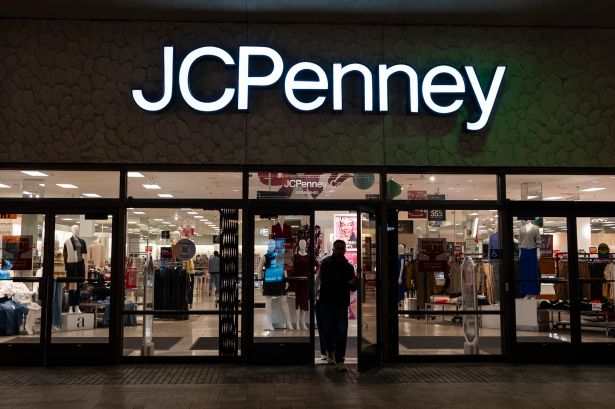
That deal took place around the same time as Simon and Brookfield Asset Management’s 2020 joint partnership to purchase JCPenney out of bankruptcy for roughly $1.75 billion. If liquidated, the department store would have created a giant hole in retail assets across the country.
“It really prevented a lot of problems,” Tibone said. “It wasn’t a huge check, but it was a very savvy decision.”
Simon emerged from 2020 as a stabilizing force for the retail industry, with cash on hand and hopeful tenants on waitlists at some of their top-performing locations. Unmatched leverage suited David well. The “jockey” mindset he described to the Wall Street Journal and his well-known fiery negotiating style enabled him to build a bargaining position that today allows Simon to command $60.97 base minimum rent per square foot. By comparison, U.S. malls averaged an asking rent of $36 per square foot in the fourth quarter of 2025, according to a Colliers U.S. retail market report.
Like father, like …
Those close to the company feel that David’s bold business playbook is in safe hands.
“Eli Simon has been rising up through the ranks for a number of years, and I’m sure he will just continue on in his dad’s honor, as well as do great things,” Ley said.
Eli joined the company in 2019 from Sculptor Capital Management, formerly Och-Ziff Capital Management Group. Eli managed the Taubman acquisition while serving as chief investment officer, and even negotiated terms during his engagement party, according to the Journal.
Despite a reportedly quieter approach compared to his father, Eli told the outlet that he can be “forceful” when he needs to be. But whether he will replicate his father’s past wins with an acquisition spree or remain price-disciplined in a stagnant market remains to be seen. Tibone said Eli’s own investment expertise, as well as familial exposure to operations and Simon’s strong leasing teams, give him confidence in the company, but the market will be the ultimate judge of Eli’s success.
“Even if he’s maybe not as charismatic, it unfortunately could impact the valuation or the perceptions,” Tibone said. “How is this initial reception for a younger CEO of a very large enterprise? Will he immediately garner the respect of the investment community, or [need] a few years to prove that he’s ready?”
Analysts and business partners told CO that perceptions of Eli are that of a competent, well-groomed leader. All signs — from a $250 million Neiman Marcus makeover in Boston to a 50,000-square-foot outdoor expansion at Simon’s International Plaza property in Tampa, Fla. — point to a company continuing its strategy of fortifying existing assets.
“We were a tad over-retailed as a society,” Ley said. “And I think we came to realize over the last sort of 15 years that not every city in America needs a mall.”
A boost in new development activity in the mall space is not expected anytime soon, according to Cushman & Wakefield’s recent report on U.S. shopping centers. Tenant demand is high and quality retail space remains scarce, but overall mall sales remain flat after a modestly positive holiday season and concentrated demand.
A February report by analytics firm Placer.ai found foot traffic across all types of U.S. malls grew substantially over the last month and the previous year, which luxury- and experience-focused Simon is positioned to take advantage of. The majority of lower-tier malls are left out of the equation, however. A March Dealbook report revealed that around 100 top-of-the-line malls now hold about half of the sector’s total volume, out of roughly 700 malls nationwide.
Just like the succession plan, Simon’s strategy ahead seems well-defined and pre-emptively paved by David.
“His vision and thoroughness will be hard to replace, but I believe that his thoroughness extended to building a thoughtful and strong executive team around him, an executive team that will continue to execute his vision,” Richard Johnson, co-founder of Odyssey Retail Advisors, told CO.
Simon claims a $9.1 billion liquidity position, a nice buffer against risks in the year ahead. The true test of Simon’s new leadership will unlikely be the transition itself, Green Street’s Tibone said, but how well the Simon team handles the next recession or department store bankruptcy.
“There is such confidence in the leadership team from the investment community that when there’s that first test, it’s not to say Eli won’t be up for the task, it’s just that investors haven’t seen it yet,” Tibone said.
Despite losing its longtime champion, the company’s current position is a testament to what David built.
“I don’t see Simon Property Group slowing down at all,” Johnson said. “If anything, I imagine the company will be motivated and inspired to continue to build David’s legacy.”
Emily Davis can be reached at edavis@commercialobserver.com.